
This article discusses, in depth, the House of the Dragon Season 3 premiere.
For quite a while now, House of the Dragon has frustrated its fans. Following a disjointed debut season, repeatedly disrupted by time jumps and cast changes, Season 2 of HBO’s Game of Thrones prequel smoothed out the story and slowed down the action—so much so that many grew impatient with its talkiness. (Not me, though. I’ll take character intrigue over combat any day.) A plot that seemed to be escalating toward an epic battle culminated, instead, in a relatively quiet season finale. Plans were hatched. Armies were on the march but not yet in conflict. A new rider met her dragon. We’ve been waiting two years to see what happens next.
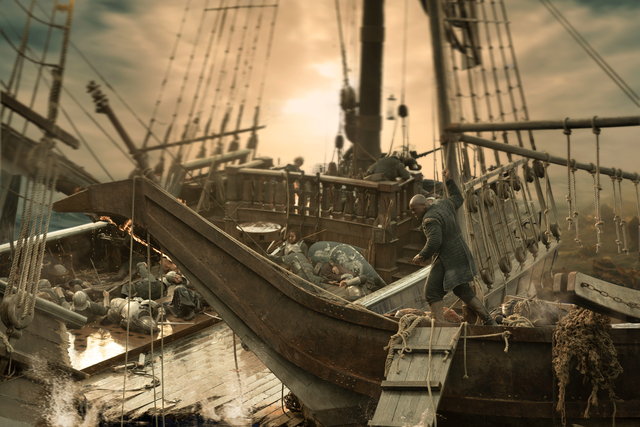
Sunday’s Season 3 premiere finally returned us to Westeros, where a civil war is escalating among the incestuous, platinum-tressed, dragon-wielding, ae-dipthong-loving House Targaryen. In its final quarter, showrunner Ryan Condal gave viewers that long-awaited burst of action: the Battle of the Gullet. But the maritime melee didn’t exactly deliver catharsis. True to not just Dragon’s use of dragons as a metaphor for weapons of mass destruction, but also the Song of Ice and Fire saga’s abiding ambivalence toward the glorification of warfare, the battle was a series of heartbreaking moments. Regardless of their courage or cunning, characters on both sides of the conflict came out of it worse off than they were going in. And that’s if they lived.
Emma D'Arcy, left, and Olivia Cooke in the House of the Dragon Season 2 finale —Liam Daniel—HBOIf the episode had a unifying theme, it was plans going awry. In the Season 2 finale, Alicent threw herself on the mercy of her childhood best friend turned stepdaughter turned mortal enemy, Rhaenyra, whose identification of three new, non-noble dragonriders had already put the would-be queen’s Black faction at a great advantage in a war that would, after all, go down in history as the Dance of the Dragons. When the Blacks marched into King’s Landing, Alicent promised, the sadistic prince regent Aemond and his Green forces would be far away; Rhaenyra could waltz right into the Red Keep and take the Iron Throne. All Alicent asked was an escape into quiet exile for herself and her daughter, Helaena. She even seemed open, when Rhaenyra forced the issue, to giving up her son Aegon—the nominal but irreparably wounded Green king—less because he posed a genuine threat to the queen’s rule than as retribution for Rhaenyra’s son Lucerys’ death at the hands of Aemond. The two women spoke of coming together for the greater purpose of ending the war and, in particular, keeping the bloodthirsty Aemond from killing more innocent people. Yet Rhaenyra’s son-for-a-son bargain suggested that, while preferable to the alternative, she was not exactly a paragon of nonviolence, either.
Anyway, Alicent’s scheme falls apart almost immediately in the premiere. Aegon’s closest adviser, Larys, convinces the still-bedridden Green leader to flee King’s Landing and hide out until Rhaenyra and Aemond destroy each other. That plan works for about five minutes. The pair are apprehended the instant they reach Black territory, when Aegon-in-disguise refuses to pledge loyalty to Rhaenyra and Larys blows their cover in an attempt to keep them from being slaughtered on the spot. (I guess we’ll find out what becomes of them later in the season.) Back at the Red Keep, Aemond quickly notices Aegon’s absence and decides his brother has abdicated. Upon her return from Dragonstone, Alicent finds him on the Iron Throne. She does eventually persuade him to seek action at Harrenhal—but not before queasily enduring his not-at-all-filial kiss. (The Game of Thrones universe remains wildly inconsistent in its depiction of incest. On one hand, a son tongue-kissing his mom is framed as repulsive, which, of course, it is. But we’re also supposed to root for Rhaenyra and Daemon’s niece-uncle marriage?)
Harry Collett and Emma D'Arcy in House of the Dragon Season 3 —Ollie Upton—HBOMeanwhile, at Dragonstone, Rhaenyra can’t even get out the door to King’s Landing. Her bratty heir, Jacaerys, doesn’t trust Alicent; in his teenage wisdom, he decides that his mother has fallen for “a ruse, cloaked in stale friendship” and that what actually awaits her at the capital is a trap. So, with help from the guards sworn to protect and obey Rhaenyra, he locks her inside her chambers, a queen held prisoner by her own son and staff. (After his spirit quest with Alys Rivers, last season, Daemon has become enlightened enough to submit to his wife’s rule. But he’s too busy, now, smashing skulls on the battlefield to help stop the sexist madness at home.) Then Jace and his dragon, Vermax, take off on an unsanctioned mission to help Lord Corlys’ fleet, with a somewhat wary Baela and her dragon, Moondancer, in tow.
The Sea Snake’s voyage doesn’t go quite as planned, either. In the Season 2 finale, Tyland Lannister successfully enlisted the Westeros-loathing Triarchy—by winning over their mercurial, genderqueer admiral, Sharako Lohar and, er, agreeing to impregnate Lohar’s wives—as allies in breaking the Blacks’ shipping blockade. The navies collide at the Gullet, with awful surprises in store for both sides. Lohar reveals to Tyland that his true motive in allying with the Greens is a personal vendetta against Corlys: “Do you think I sailed across the Narrow Sea to win your king’s war for him?” he scoffs. “The Sea Snake led the persecution and slaughter of my mates for more than 20 years.” What Lohar really wants to do is sack Corlys’ castle, High Tide. Correctly guessing his enemy’s agenda, Corlys lures Lohar's fleet into a shallow pass that only the Sea Snake knows how to navigate. While Team Triarchy loses two ships to Lohar's folly, the admiral's own boat barely makes it past the spiky Teeth. Having cleared the pass, Lohar regroups, rams Corlys’ vessel, and ultimately cleaves the ship down the middle (R.I.P. The Queen Who Never Was, née The Sea Snake).
Steve Toussaint in House of the Dragon Season 3 —Ollie Upton—HBOAs ever in Game of Thrones world, the violence is vivid. There are swordfights, crossbows, drownings, hand-to-hand combat between warriors up to their necks in seawater, split-second closeups of bloody viscera flayed out on ships’ decks, destruction on every scale. When the dragons enter the fray, it’s devastating not just because they can flame-broil an entire crew with a single breath, but because their hubristic young riders are so unprepared for what they’ve gotten themselves into. Having taken a wild first spin on the feral dragon Sheepstealer in the opening scene of the premiere, Baela’s sister Rhaena spots the chaos in the Gullet and rides in “to help.” Once there, she’s horrified to find that she can’t control Sheepstealer, who starts chasing Vermax, as a confused Jace assumes, until he’s close enough to recognize Rhaena, that this dragon and its rider are Greens. The friendly fire ends with Vermax dead in the water; Jace finds a floating board to cling to, à la Jack in Titanic, but is immediately riddled with arrows.
The Blacks’ crown prince isn’t the only notable casualty. We learn that Addam of Hull does care about Corlys, the father who has been so slow to claim him, when Lohar attacks the older man and Addam comes to his rescue, killing the Triarchy admiral. Villain or not, Lohar was one of my favorite characters, a true oddball in an ensemble that could use more of them, and I’m disappointed we only got a couple episodes of his and Tyland’s Jaime-and-Brienne-style buddy comedy. More worrisome is Corlys’ disappearance once Addam joins the fight. I’ve replayed the scene a few times, and I’m pretty sure we don’t see him again once he falls into the water.
Abigail Thorn in House of the Dragon Season 3 —Ollie Upton—HBOBy the end of the episode, we’re down countless combatants, umpteen ships, one heir, one dragon, an eccentric admiral, and possibly even a Sea Snake. (I can’t imagine Condal would kill off a character as important as Corlys without actually showing us his final breath, but at the very least, he’s going to be in rough shape.) Rhaena is saddled with a lifetime’s worth of guilt—not to mention the all-but-inevitable wrath of Rhaenyra—over the death of Jace, who, as those who’ve studied the tangled Targaryen family tree will recall, is both her cousin and her stepbrother. Aegon and Aemond are still alive, though each is also in mortal danger. Rhaenyra is no closer, physically at least, to the Iron Throne than she was at the end of Season 2. The irony is that she and Alicent made their secret alliance with the stated aim of saving Westeros from precisely the kind of horror that played out in the Gullet.
As Dragon lays the historical groundwork for Thrones, in which Daenerys and her dragon babies rise from the ashes of a dynasty, we are watching the two factions of House Targaryen kill off their youngest generation and the fire-breathing creatures that have kept them in power. Who is to blame for all of this? Jace certainly turned out to be a little cretin. But in defying a mother much wiser and better prepared for battle than himself, he was only exploiting the Targaryens’ longstanding tradition of brutal patriarchy—which, as we learned in Season 1, would rather see a queen die in childbirth than risk losing a male heir. Lohar reminded us of Corlys’ violent seafaring career. The women aren’t entirely innocent, either. Alicent traded Rhaenyra’s friendship for proximity to powerful men. Rhaenyra couldn’t let a palpably remorseful Alicent’s betrayal go without demanding the (badly burned) head of Alicent’s son. Even the best laid plans for using violence to end violence seem doomed to beget more violence.
So, yeah, we got that battle everyone’s been clamoring for since Biden was in the White House. It had some thrilling moments! But in the end, the Battle of the Gullet was a feel-bad experience, rife with unforced errors and wasted potential, its only real glimpse of heroism a bastard son’s defense of a deadbeat dad who might not even survive to repair their relationship. On a meta level, this might have been a shot across the bow of “bad fans” who come to this franchise not to engage with its characters or political commentary, but to see computer-generated monsters lay waste to computer-generated cities, like a video game that does the playing for you. At the very least, Dragon’s Season 3 premiere was a reminder to be careful what we wish for.
Hence then, the article about house of the dragon finally delivered that long awaited battle and dared us to enjoy it was published today ( ) and is available on Time ( Middle East ) The editorial team at PressBee has edited and verified it, and it may have been modified, fully republished, or quoted. You can read and follow the updates of this news or article from its original source.
Read More Details
Finally We wish PressBee provided you with enough information of ( House of the Dragon Finally Delivered That Long-Awaited Battle—And Dared Us to Enjoy It )


Also on site :
- 1957 Rock and Roll Ballad, Written by 15-Year-Old Paul Anka, Is Still a Pop Culture Staple Nearly 7 Decades Later
- I Tried the Viral 'Ocean Water' Lemonade, and It's Like Sipping Happiness
- Amazon’s ‘Buttery-Soft’ Gingham Comforter Set Is ‘Absolutely Beautiful’ With Shabby-Chic Farmhouse Charm