
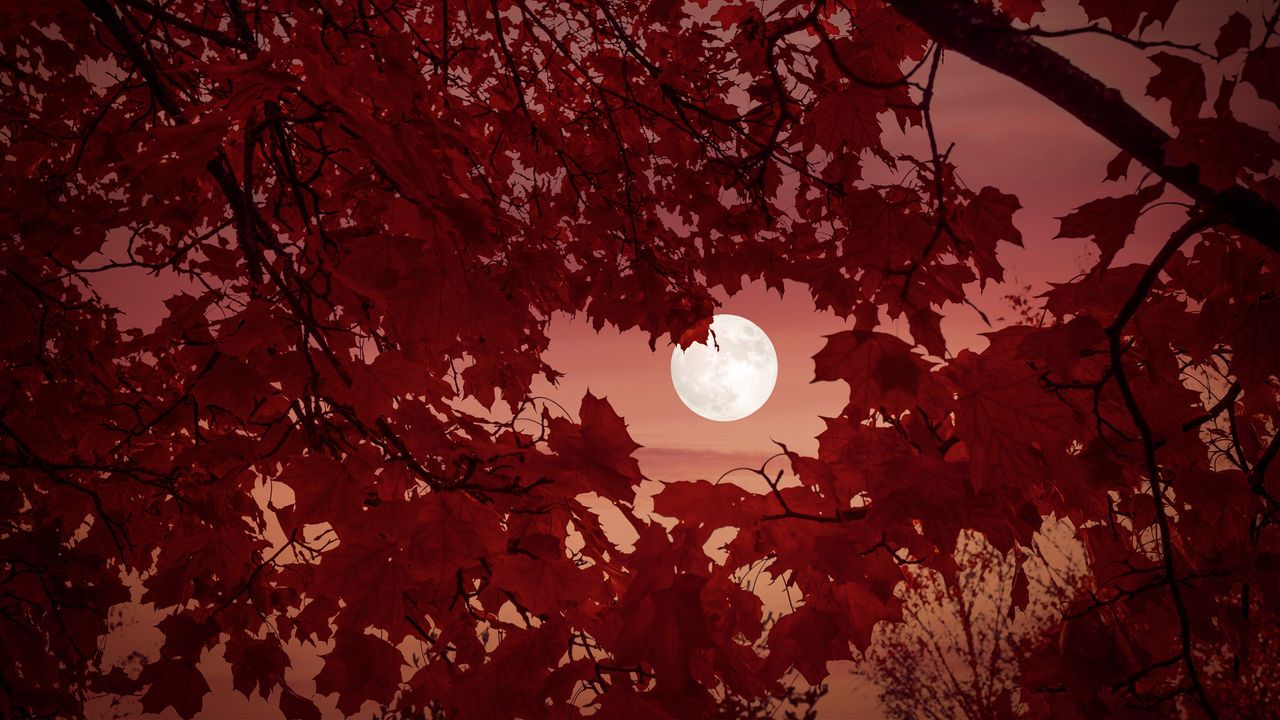
With fall now upon us, many of us will be dusting off our binoculars and telescopes ready for the longer nights this season brings. Earlier sunsets mean more stargazing hours, and we'll start to see the return of some favorite celestial sights and deep-sky objects that we haven’t seen since before spring.
Fall is also an excellent time for casual stargazers, with the earlier evenings and cooler temperatures offering a comfortable compromise before we head into those freezing winter nights when we can't feel our toes. Don't worry if you're just starting out and don't have any gear yet, as many of this season's celestial objects are visible with the naked eye — and some are actually best viewed that way.
This September, October and November are great times to view the distant planets at opposition, catch several meteor showers and photograph far-flung galaxies and nebulas with your smart telescope. Plus, November brings the first full supermoon of the year. So, grab your telescope, your headlamp and a cozy sweater, and let's see what lies ahead.
Lunar & Planetary events
(Image credit: Getty Images)
Neptune reaches opposition on September 26 at 02:00 UTC, which is the best time to view it at its brightest, magnitude +7.8. Unfortunately, the full moon will somewhat ruin the party, and Neptune isn't particularly easy to spot at the best of times. That said, the opposition window lasts for several weeks, so waiting a couple of weeks to observe during the new moon week won't make any noticeable difference.
You'll need a good telescope to spot the big blue planet — at least a 6-inch aperture, although an 8-inch or bigger will give you the best chance. Make sure you have a good quality, high-powered eyepiece (something like a 6mm or 9mm) or a good Barlow lens to boost the magnification of your existing eyepieces.
But even with high magnification, Neptune will only appear as a small disc with a bluish hue — you won't see any cloud bands or surface features, because it’s just too far away. Still, it's worth trying to get a glimpse anyway.
Saturn at opposition
(Image credit: NASA / Hubble)A week later, on October 4 at 12:00 UTC, Saturn reaches opposition, shining at magnitude +0.3. It will be easily visible to the naked eye, although to see Saturn's rings or any of its largest moons, you'll need a telescope.
The moon will be just below 50% illuminated and doesn't rise until past midnight, so you'll have a good portion of the late evening to observe Saturn while it's high in the sky before the moonlight affects visibility. Even though the rings are only partially tilted, you can still make out a lovely golden oval around the planet, and in larger telescopes you'll be able to spot the Cassini division. We recommend a telescope with at least 4 or 5 inches of aperture, and a good quality, high-powered eyepiece to observe the finer details.
(Image credit: Dawn Villwok-Joerg/Getty Images)
November 24 brings the first full supermoon of fall/winter, when the bright Beaver Moon will light up the skies, shining around 15% brighter than a normal full moon.
You can enjoy this moon without any gear whatsoever, but observing with binoculars or a telescope, or capturing its magnificence with a camera, makes the experience much more enjoyable.
Until then, you can catch the other full moons of the season on September 26 and October 26.
Uranus at opposition
(Image credit: ARTUR PLAWGO / SCIENCE PHOTO LIBRARY via Getty Images)The third planetary opposition of the fall belongs to Uranus on November 25 at 23:00 UTC. But like Neptune in September, the almost full moon will dampen its visibility, so we'd recommend waiting until the new moon week.
Like the other outer planets, you'll need a larger telescope with an aperture of at least 6 or 8 inches to view Uranus, alongside a good quality, high-powered eyepiece for the best views. These larger scopes gather enough light to distinguish Uranus's turquoise color, although you'll need to go even bigger if you want to see its brightest moons.
Hence then, the article about fall stargazing 2026 the best skywatching sights in autumn and how to see them was published today ( ) and is available on Live Science ( Middle East ) The editorial team at PressBee has edited and verified it, and it may have been modified, fully republished, or quoted. You can read and follow the updates of this news or article from its original source.
Read More Details
Finally We wish PressBee provided you with enough information of ( Fall stargazing 2026: The best skywatching sights in autumn (and how to see them) )


Also on site :
- Black Lake founder Yuxiang Zhou pitted an AI agent against his top sales coach. His most experienced salespeople chose the AI
- Juventus vs Sassuolo: Match Time, Channels and Live Streaming Details
- Figure Skating Legend, Known as ‘Fred Astaire on Skates,’ Has Fans Saying Thank You for Bringing Back His Iconic Performances