
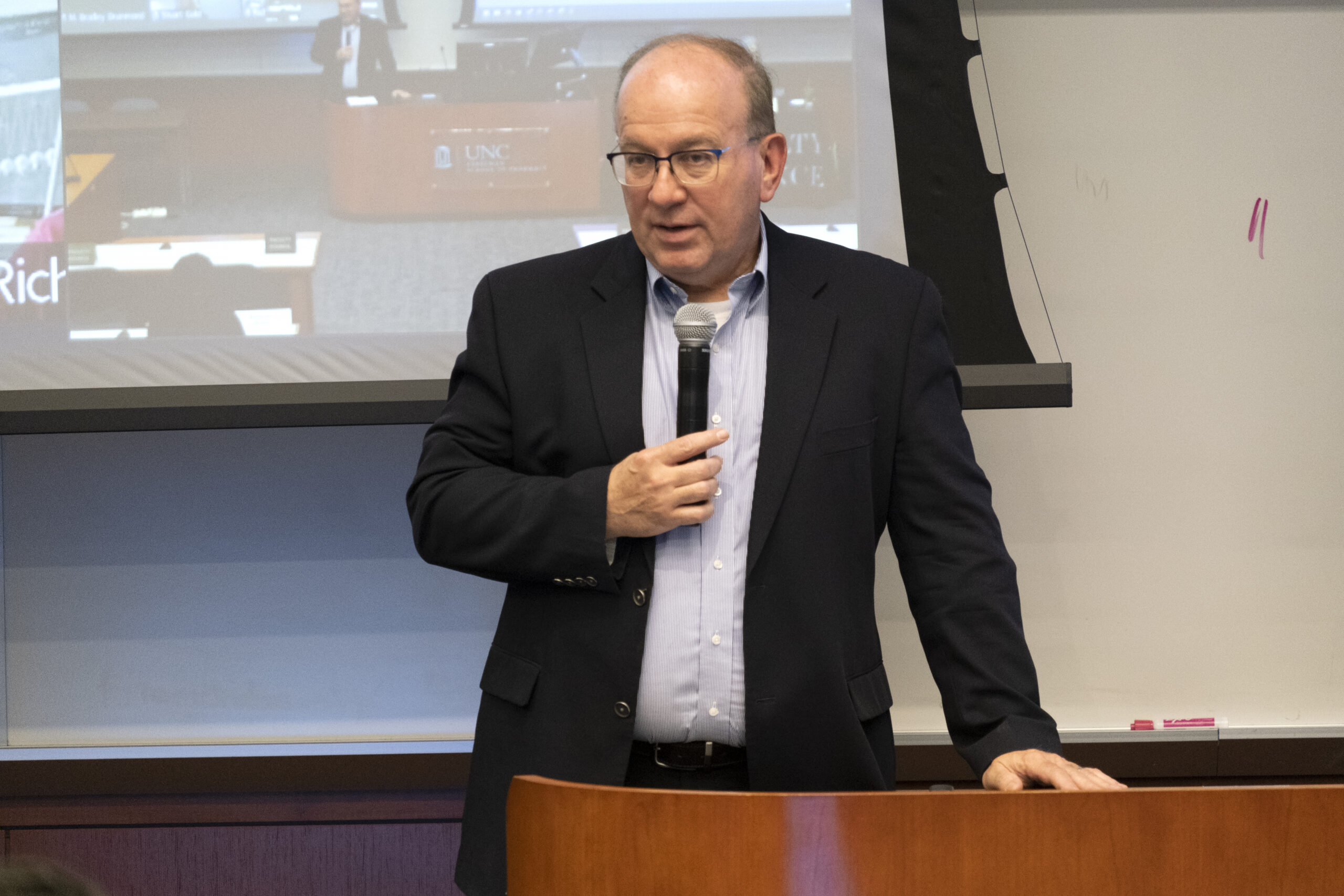
Chris Clemens, a former provost of UNC who stepped down in the spring, is suing the university and 14 members of its Board of Trustees for allegedly violating North Carolina’s open meeting laws.
The lawsuit, filed Monday morning in Orange County Superior Court, accuses the advisory board of “systemically” using closed sessions to discuss matters meant to be completed in open sessions as well as “deliberately communicating about public business” on apps that auto-delete messages. While the pattern of violations dates back to at least Nov. 2023, Clemens and his representation say, the inciting incident for the lawsuit stemmed from a March meeting of the Board of Trustees where policies and practices around tenure were debated in closed session.
“Each episode follows the same pattern: the Board invokes a statutory exemption, enters closed session, then discusses broad policy or budget matters that must be debated publicly,” reads the complaint. “The Board compounds these violations by maintaining inadequate general accounts that prevent public understanding of what transpired.”
The lawsuit details Clemens’ account of the Mar. 20 meeting, which had actions on tenure cases listed on the public agenda and where the board properly entered closed session to discuss personnel matters. But once in closed session, Clemens says the trustees pivoted from discussing individual cases he had prepared and began “a closed-door policy referendum on whether tenure should exist at UNC-Chapel Hill and whether the Board should even vote on the pending recommendations.” Citing long-term spending projections and concerns about the current budget outlook for the university, the trustees tabled the vote to their May meeting without evaluating any of the faculty candidates.
North Carolina’s open meeting laws require public bodies, like the UNC Board of Trustees, to conduct their “hearings, deliberations and actions” in a manner open to members of the public, whether in-person or online. In the filing, Clemens and his representation allege the discussion of UNC’s approach to academic tenure was a policy deliberation instead of strict personnel matters. The lawsuit also references other instances of matters of public knowledge — including Carolina Athletics’ finances and conference realignment discussions in Nov. 2023, May 2024 and Dec. 2024 — being debated under closed session. As a result, the physics and astronomy professor claims the board’s actions are resulting in “less transparency, less accountability, erratic governance, and a steady erosion of public trust.”
Clemens’ attorney David McKenzie, who sued the university and trustees in 2024 for similar violations around athletics spending discussions, declined a request from Chapelboro for comment, pointing to the complaint itself. UNC Media Relations did not respond to a request for comment.
The lawsuit also provides more detail around Clemens’ exit from the provost role in April, which he says stemmed from telling UNC deans about the board’s choice to discuss policy instead of tenure cases. Clemens posits that informing the university’s 15 deans, which took place during a regularly-scheduled briefing with the provost, provided context for why no tenure cases were updated in the trustees’ meeting earlier in the day. From there, the former provost alleges a “retaliation campaign” started after the School of Civic Life and Leadership Dean Jed Atkins told then-Board Chair John Preyer about Clemens sharing closed session discussions, and Preyer began rallying other trustees to hold a vote of no confidence in Clemens. The board asked Clemens to resign as provost on Mar. 31 citing “inappropriate disclosure of the closed session discussion” as the principal reason and Clemens left the position in May.
According to the complaint, the majority of those communications between Atkins, Preyer and the other trustees took place on the app Signal or other texting platforms that deleted messages. While Clemens maintains his discussion of the tenure delay was fair — partially because it was an unlawful policy discussion in a closed session — he also argues the trustees’ communications outside of the meetings constitute as public records subject to the state’s open meetings law. By using apps or platforms that auto-delete or obscure messages, the lawsuit alleges trustees could discuss “controversial or consequential Board matters” meant for public sessions while also violating the state’s Public Records Law regarding retention and access.
Then-Board Chair John Preyer makes opening remarks during a UNC Board of Trustees meeting in May 2024. (Photo via Jon Gardiner/UNC-Chapel Hill)
The Board of Trustees’ tenure deliberations did make their way to open sessions by July, after the advisory body approved only a handful of cases during its May meeting and advanced 33 in a specially-called meeting in June. During a presentation by Interim Provost James Dean Jr. about the university’s tenure track approaches and policies, some members questioned the financial feasibility of providing long-term salaries to faculty members and asked whether UNC should explore reviewing tenured faculty’s eligibility in subsequent years. The Daily Tar Heel reported in June on emails about some trustees’ philosophical differences on tenure as an academic practice, further fueling criticism and concerns shared by UNC faculty leaders and the American Association of University Professors. When asked following the trustees’ meeting in July, UNC Chancellor Lee Roberts said academic tenure is “a competitive imperative” the university will continue using.
“We can’t be the kind of university that we have been historically, and that we aspire to be in the future, without using tenure,” Roberts told reporters. “That’s true for the foreseeable for the future, and there’s just no two ways about that.”
Monday’s filing says Clemens is seeking “reasonable attorneys’ fees” from the case, as well as a training requirement for all trustees and relevant UNC staff on open meetings and public records laws. Access the full complaint here.
Featured image via UNC-Chapel Hill/Jon Gardiner.
Chapelboro.com does not charge subscription fees, and you can directly support our efforts in local journalism here. Want more of what you see on Chapelboro? Let us bring free local news and community information to you by signing up for our newsletter.
Former UNC Provost Sues Board of Trustees Over ‘Pattern’ of Closed Session Violations Chapelboro.com.
Hence then, the article about former unc provost sues board of trustees over pattern of closed session violations was published today ( ) and is available on chapelboro ( Middle East ) The editorial team at PressBee has edited and verified it, and it may have been modified, fully republished, or quoted. You can read and follow the updates of this news or article from its original source.
Read More Details
Finally We wish PressBee provided you with enough information of ( Former UNC Provost Sues Board of Trustees Over ‘Pattern’ of Closed Session Violations )


Also on site :
- My Husband Thinks Our 10-Year-Old Daughter Has an Innovative “Side Hustle.” I Think She’s a Scammer!
- Ex-Olympian says Reflecting Pool case is about ‘defending democracy’ as judge likely to block Trump from going after him again
- Art Garfunkel Looks Back at Becoming an Actor That Led to the Folk Rock Duo’s Split: ‘I Was So Nervous’