
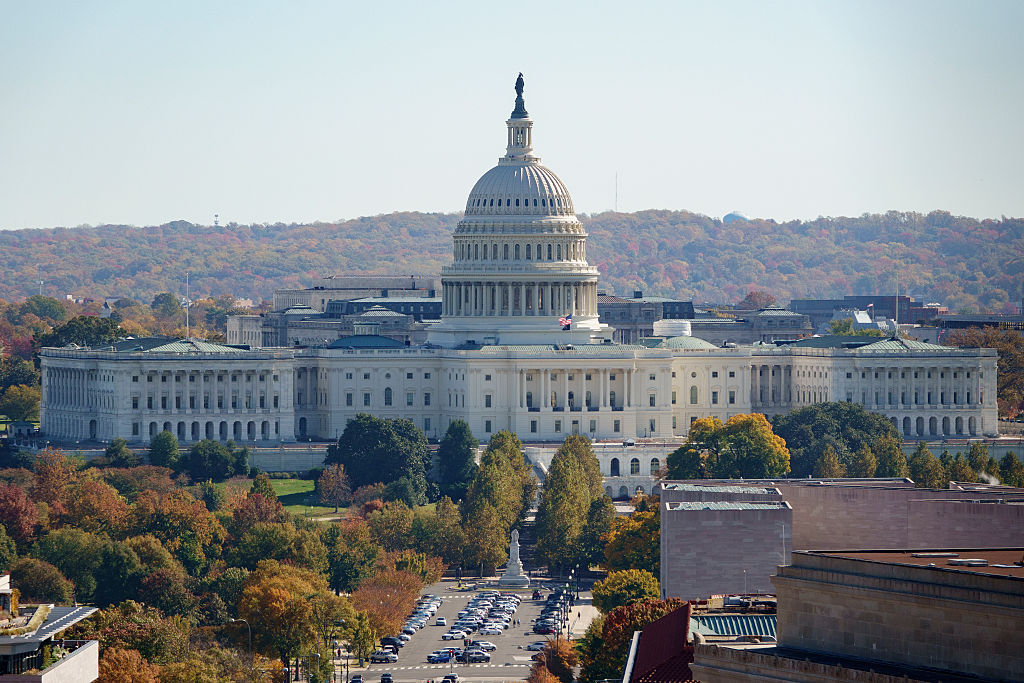
Following two years of anti-climate legislation from Washington, Tuesday’s blue tidal wave—giving Democrats control of both the Senate and the House—could provide an opportunity to change course.
Following his 2024 reelection, President Trump withdrew from the Paris Agreement, rolled back the landmark endangerment finding, and leased public lands for oil and gas drilling—with Democrats unable to do much about it.
The next two years likely won’t bring aggressive climate policy, nonetheless a shift is expected as a result of the midterms. “Are we going to see ambitious climate action? The answer is no,” says Ken Gillingham, professor of environmental and energy economics at the Yale School of the Environment. “We still have an executive branch with a veto power controlled by President Trump, and so anything that is done would have to make it through the veto.”
But while Democrats might be unable to reverse many of the rollbacks, the midterms now give them, “a stronger hand to play,” says Geoffrey Henderson, assistant professor of environmental policy and planning at the University of Michigan.
One priority might be to reinstate billions of dollars in climate funding that President Trump has withheld. Chellie Pingree, a Democrat who won reelection in Maine, serves on the House Appropriations Committee and has said that she plans to force the administration to spend climate money.
Democrats also have the power to focus on bulking up the permitting reform bill, which aims to overhaul the permit process to speed up energy projects. The bill appeared likely to pass even before the election, but was filled with concessions. “Prior to the election, the bill included a number of provisions to weaken core environmental laws like the National Environmental Policy Act,” says Henderson. “What Democrats can now do is basically ask for a better deal.”
Increased support for domestic battery manufacturing is also likely—which could be a key part in meeting clean energy targets. “There would be an appetite for domestic onshoring of some of the supply chain that goes into electric vehicles, and I think that this is pretty bipartisan,” says Gillingham.
Gillingham also notes that we could see Democrats pursue “all of the above” climate policies, which often include oil and gas concessions along with clean energy growth.
“There's just not going to be an appetite among a whole set of members of the Democratic Caucus for ambitious climate action, even if they may be sympathetic to climate action, they don't have the political backing to do it from where they are sitting,” he notes. “But they do have the political backing to do all of the above energy policies.”
Democrats also achieved trifectas—controlling the House, Senate, and governorship—in Michigan, Wisconsin, Minnesota, Pennsylvania, and Nevada. In Pennsylvania, for example, this opens the floodgates to pass legislation to regulate data centers, allow community solar, and to require utilities to store excess electricity.
This election—in which energy affordability took center stage—also proved that climate change isn’t the taboo subject many have made it out to be.
“The results create new opportunities and give some breathing room to bring climate back into the energy discussion, especially if those discussions can deliver both economic benefits and emissions reductions, particularly around electricity affordability, grid infrastructure, and clean-energy investment,” Bethany Patten, executive director of the MIT Climate Policy Center, said in an email.
Florida Democrat Kathy Castor, and Marcy Kaptur, an Ohio Democrat, are both candidates who did not give in to the “climate hushing” many other Democrats fell victim to. “Their victory suggests that being a vocal advocate for climate action is consistent with winning tough races, even in red states,” says Henderson. “Going forward, I think candidates should feel more empowered to talk about the issue.”
Hence then, the article about what experts think the democratic blue wave will mean for climate action was published today ( ) and is available on Time ( Middle East ) The editorial team at PressBee has edited and verified it, and it may have been modified, fully republished, or quoted. You can read and follow the updates of this news or article from its original source.
Read More Details
Finally We wish PressBee provided you with enough information of ( What Experts Think the Democratic Blue Wave Will Mean For Climate Action )


Also on site :
- Who won Illinois? Live election results and winners from the 2026 midterm election
- ‘DWTS’ Fans Are Still Buzzing Over Derek Hough’s ‘Wedding Dance’ Comment to Connor Wood & Rylee Arnold
- Egypt, UAE discuss expanding joint investments in oil, gas sector