
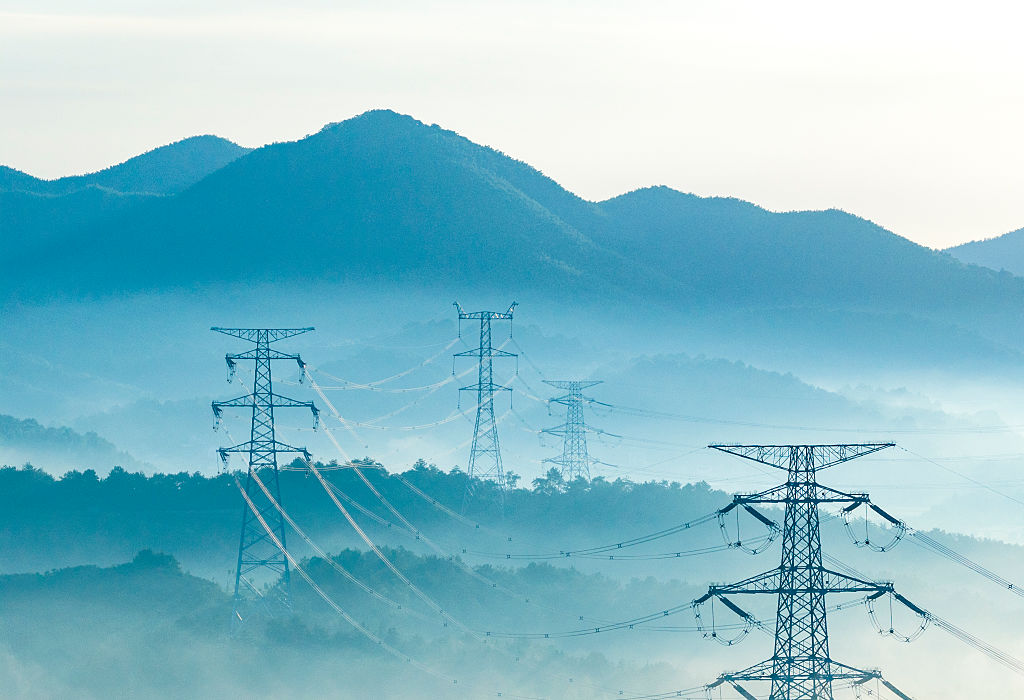
When shipping through the Strait of Hormuz ground to a halt in March, energy importers relearned an old lesson: a country that buys its energy as fuel, cargo by cargo, also imports every price shock. The consequences of how governments respond to this truth will soon reverberate beyond energy markets.
Decisions made today to secure more reliable energy may help determine where factories are built, which countries manufacture the technologies powering the global economy, and how vulnerable nations remain to the next disruption in oil and gas supplies. These decisions will define which countries emerge as electrostates, with the power to shape and control future economies.
New analysis by We Mean Business Coalition published today looking at electrification across 16 countries reveals how unevenly this transformation is progressing. The United States is doubling down on domestic oil and gas production, while China is rapidly electrifying its economy and consolidating its lead in electric technology manufacturing. Others are now moving in China's direction. France plans to lift electricity's share of final energy from 27% to 38% by 2035, Canada to double its electricity supply by 2050, and Europe wants to become the world's first “electro-continent.”
Rather than simply ranking countries, the Electrification Competitiveness Index maps two dimensions: the deployment and market uptake of electric technologies, and the policies and conditions supporting further progress.
Across the 16 economies, the median score for enabling conditions is 67%, compared with 45% for deployment and market conditions. In other words, in most countries, policy is running ahead of the market. Part of that gap is a time lag, but it also shows the distance between preparing for electrification and achieving it at scale. Successful electrification requires not simply more policies, but better-aligned policies that reinforce one another and give businesses the confidence to invest.
China scores highest on deployment, with extensive electric vehicle adoption and an industrial base producing much of the equipment the world needs to electrify. It already manufactures more than 80% of global battery cells. But its transition extends well beyond transport: electricity's share of China’s final energy consumption has doubled since 2005, with electrification spreading across industry, buildings, and transport. Although much of its electricity (54%) is still generated from coal, the plan is to replace that with clean power. What’s more, given China’s manufacturing dominance, as other countries electrify, they must make a choice: where to compete in electric technology manufacturing and where they might gain more from cheaper imported equipment.
Europe is one region trying to revive industrial competitiveness while reducing its exposure to imported fossil fuels, a vulnerability the Hormuz crisis has brought sharply back into focus. Electrification is central to both ambitions. Brussels wants to double electricity's share of final energy to 46% by 2040, yet that share has been stuck at around 23% for a decade, and the economics of switching remain difficult for many businesses. In Britain, industrial electricity costs over five times as much as gas per unit of energy, while factories in Germany and the U.K. face significant grid-connection constraints. France and Spain are better positioned in several respects, with more favourable electricity prices and stronger deployment, but across Europe the challenge is increasingly one of turning established policy frameworks into commercially viable investment.
Businesses deciding where to build factories, expand production, or replace equipment must also weigh electricity costs and grid access alongside skills, suppliers, and markets. If electrification remains difficult or expensive, businesses may postpone modernisation, continue investing in fossil-fuel equipment or direct new investment towards locations offering better conditions. Over time, this could reshape Europe's industrial geography, influencing where manufacturing capacity, jobs, and technological expertise develop.
In the U.S., existing deployment provides a foundation for further electrification, but policy reversals and infrastructure constraints raise questions about momentum. More than two terawatts of generation and storage are waiting in interconnection queues. Washington's focus on expanding fossil-fuel production risks leaving American manufacturers competing in a global market whose growth is increasingly driven by demand elsewhere.
For developing economies, electrification offers a different prospect: the opportunity to build modern energy and transport systems without first replicating the fossil-fuel infrastructure that wealthier countries are now spending heavily to replace. Ethiopia is already showing what is possible, with rapid electric vehicle adoption despite electricity reaching only around 60% of its population. Indonesia, the Philippines, and South Africa face greater barriers, including limited grid investment and electricity systems still dominated by fossil fuels.
Seizing those opportunities will depend on access to finance, reliable grids, and policies suited to each country's circumstances. Without them, emerging economies risk investing scarce capital in infrastructure that may become increasingly expensive to operate or eventually replace.
As this global shift evolves, economies powered increasingly by domestically generated electricity become less exposed to global fuel markets, but more dependent on access to batteries, electrical equipment, minerals, and the technologies needed to build and maintain their infrastructure. The concentration of manufacturing capacity in a handful of countries creates vulnerabilities of its own. Yet a dependency on equipment you buy once is very different from a dependency on fuel you buy every month. When a shipping lane closes, a fuel-importing economy feels it within days. If solar panel exports stopped tomorrow, the panels already installed would keep generating for decades.
Electrified economies also need far less energy in the first place. Burning fuel in engines, boilers, and power stations wastes around two-thirds of the energy that goes in, mostly as heat. Electric motors and heat pumps do the same work with a fraction of the input. So electrification does not simply swap one import for another; it can shrink the energy bill. The European Commission estimates that meeting its 2040 target could cut E.U. spending on fossil fuels by up to €260 billion a year.
This presents governments with a different industrial and energy-security challenge: not simply how quickly they can replace fossil fuels, but whether they can build the electricity systems, industrial capabilities, and trading relationships that make the transition economically resilient. Climate policy and industrial strategy are becoming impossible to separate, as the technologies needed to cut emissions also become central to economic competitiveness.
When governments meet in Antalya, Turkey, for COP31 in November, the U.N. climate conference president will push for a global goal to raise electricity's share of final energy from around 20% today to 35% by 2035. That shift deserves greater attention than it is getting. The transition from fossil fuels to electricity will not end competition over energy resources and technologies. It will change what countries compete for, what they need to import, and where economic power is concentrated. The electrostates of 2035 are being built now.
Hence then, the article about the rise of electrostates could redraw the global economy was published today ( ) and is available on Time ( Middle East ) The editorial team at PressBee has edited and verified it, and it may have been modified, fully republished, or quoted. You can read and follow the updates of this news or article from its original source.
Read More Details
Finally We wish PressBee provided you with enough information of ( The Rise of Electrostates Could Redraw The Global Economy )


Also on site :
- Record-Setting Falcon 9 Launch from Vandenberg SFB Scheduled for Late Monday into Early Tuesday
- Ballon d’Or 2026 award ceremony LIVE: Winners, reactions and latest news
- Kathy Ireland Just Launched a New 20-Piece Christmas Collection at Kirkland’s—and Prices Start at Just $5.99