
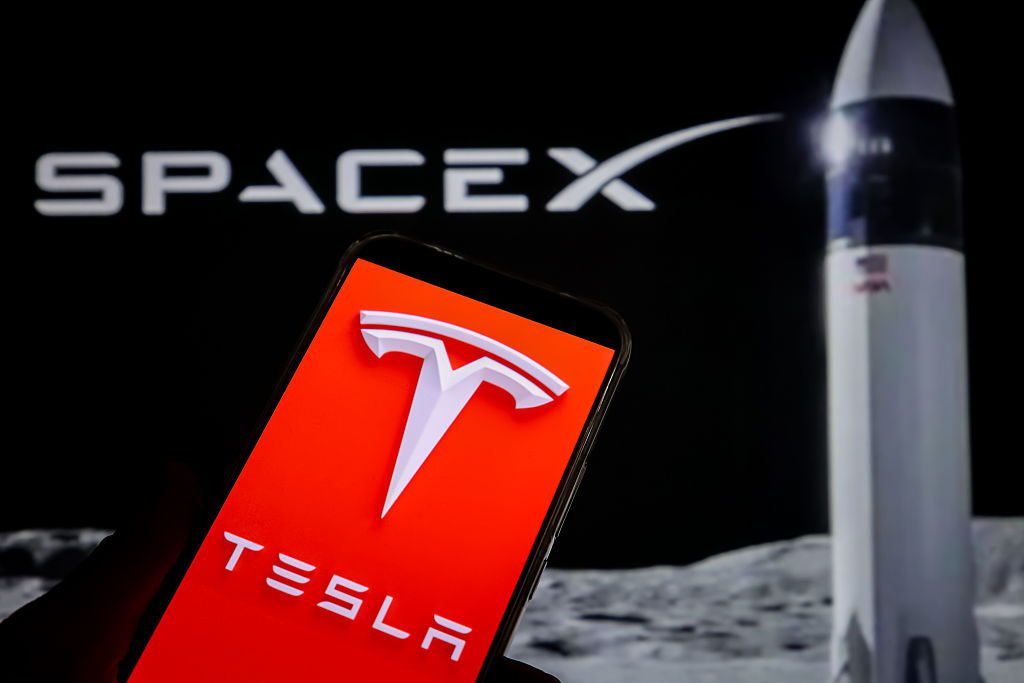
The world’s richest man has publicly backed a potential combination of SpaceX and Tesla in what could be the biggest merger in history.
On Tuesday, Elon Musk, the CEO and largest shareholder of both companies, said the electric vehicle maker and the rocket company had formed special committees at the request of shareholders to discuss the idea.
“I do think there’s a lot of merit to combining the companies as we are pretty much in the superintelligence singularity, and there’s a lot to be gained from cooperating,” Musk told SpaceX investors on a conference call.
“I think it would be a good idea, but it’s really up to the special committees of both companies,” he added.
The committees, which are made up of independent directors, would need to agree on the transaction terms of any deal before putting it to shareholders for a vote. Musk said his conflict of interest prevents him from participating in their discussions.
Musk has previously teased a Tesla-SpaceX merger. On a July 22 earnings call, Musk said there was “more and more overlap” between Tesla and SpaceX as the companies expand into artificial intelligence and robotics. Last week, Barclays analysts suggested that a merger could be announced before Tesla’s annual shareholder meeting in December.
Tuesday’s call was the first confirmation that the companies were formally exploring a combination.
A merger could create a company worth around $3.5 trillion, putting it among the world’s most valuable companies. It could also become the biggest merger ever by deal value, potentially surpassing SpaceX’s record-setting $250 billion acquisition of Musk-owned AI company xAI in February. SpaceX is currently valued at about $2 trillion, and Tesla at $1.5 trillion. A deal could also help propel Musk back into trillionaire ranks, depending on its terms and how investors value the combined company. Musk owns around 48% of SpaceX and 20% of Tesla.
The shares of both companies rose in after-hours trading on Tuesday. SpaceX, which went public in June, reported a quarterly net profit of $4.4 billion. Musk told investors he expects annual recurring revenue of between $500 billion and $1 trillion by the end of 2027.
Some analysts, however, have warned of regulatory and geopolitical hurdles, particularly in terms of Tesla’s Chinese operations and SpaceX’s U.S. defence work. Morningstar analysts said a merger could raise U.S. national security concerns involving the combined company’s supply chain. JPMorgan analysts also flagged regulatory approval in China as a potential stumbling block.
Any deal could also face congressional scrutiny, which could intensify if Democrats win control of either chamber in the coming midterm elections. Democratic lawmakers have previously questioned Musk over conflicts of interest and raised national security concerns about reported Chinese investments in SpaceX. Democrats have also challenged major acquisitions in the past on consumer protection grounds. In June, Sen. Elizabeth Warren (D, Mass.) criticized SpaceX’s IPO, citing Musk’s concentrated voting power and weak investor protections—concerns that could resurface in a Tesla-SpaceX merger.
Why a merger matters
A merger could bring two of Musk’s biggest businesses under one corporate umbrella, making it easier for the companies to move investments and resources between projects. “This would allow him to run all their operations under one roof without tripping on as many governance issues,” wrote Morningstar analysts Seth Goldstein and Nicolas Owens in June. “For example, Musk could move Tesla software developers or engineers to work on SpaceX AI projects, and vice versa, or have Tesla and SpaceX supply one another without the need for related party transaction disclosures or risking shareholder lawsuits claiming the resources of one firm are being diverted for the benefit of the other.”
Analysts noted that Tesla’s robotaxis could benefit from Starlink connectivity, while its autonomous vehicles and Optimus humanoid robots could more closely integrate SpaceX’s AI technology. SpaceX’s planned orbital data centers, meanwhile, could potentially benefit from access to Tesla’s battery and energy storage products.
A combined company could also mean greater control of several stages of the AI value chain, from chip design and planned manufacturing to computing infrastructure, AI software, and its deployment in vehicles and robots.
The companies already collaborate. In March, they announced Terafab, a joint semiconductor manufacturing project intended to produce chips for Tesla’s vehicles and humanoid robots and SpaceX’s planned AI satellites. SpaceX technologies have also been used in some Tesla products, including the new Roadster prototype, which uses SpaceX-developed thrusters.
David Nicholson, chief technology advisor at market research firm The Futurum Group, told the BBC that a merger also appears to align with Musk’s long-held ambition of colonizing Mars. Musk previously outlined plans to send Tesla’s Optimus robots to the planet aboard SpaceX’s Starship spacecraft.
A merger could also strengthen Musk’s influence over Tesla’s direction. Barclays estimated that a SpaceX acquisition of Tesla could give Musk around 37% of the combined company while controlling around 56% of its voting power. He currently controls around 82% of voting power at SpaceX and 20% at Tesla. That could represent either a benefit or a risk for shareholders, as decision-making would become faster but have fewer checks.
“One thing I don’t think people talk enough about with SpaceX and Tesla as well: You do still have a huge amount of key-man risk here,” wrote Morningstar analyst David Sekera earlier this month. “God forbid anything were to happen to Elon Musk.”
Hence then, the article about why elon musk wants to merge spacex and tesla was published today ( ) and is available on Time ( Middle East ) The editorial team at PressBee has edited and verified it, and it may have been modified, fully republished, or quoted. You can read and follow the updates of this news or article from its original source.
Read More Details
Finally We wish PressBee provided you with enough information of ( Why Elon Musk Wants to Merge SpaceX and Tesla )


Also on site :
- Kroger and LG Sued for Allegedly Using Dog-Themed ‘Cheese Tax’ TikTok Song Without Licenses
- Trump commits more than $400m ahead of high-stakes midterm elections
- Italy approves sweeping security measures in response to protests