
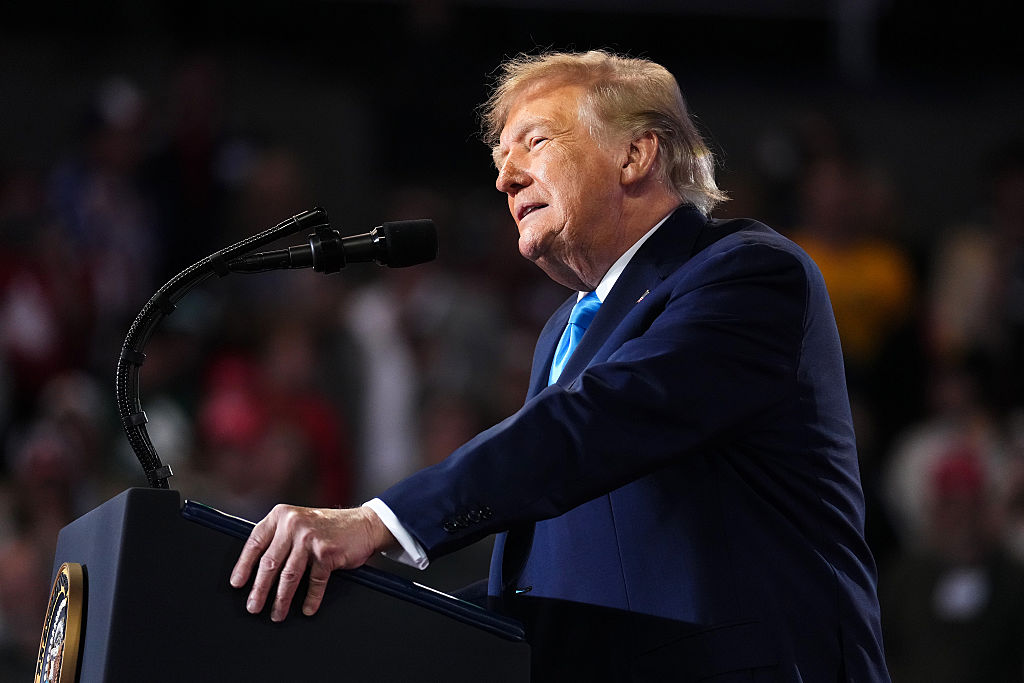
President Donald Trump signed an executive order Friday that waives many of the sanctions in the Lindsey O. Graham Sanctioning Russia and Iran Act, which Congress passed in the late senator’s name last month. The waiver, coming a week after Trump announced a diesel deal with Russia, also underscores fraying relations between the U.S. and Ukraine.
The law, which was set to take effect Oct. 18, called for sanctions targeting Russian officials, financial institutions, and other entities, alongside tariffs of up to 100% on goods imported into the U.S. from major buyers of Russian crude oil or natural gas. Those measures were intended to restrict the financial resources supporting Russia’s war against Ukraine.
Read More: Lawmakers Argue Trump's Russia Diesel Deal 'Violates' the Law. Here's What Legal Experts Say
The U.K.’s Foreign, Commonwealth & Development Office estimated in June 2025 that international sanctions had deprived the Russian state of at least $450 billion in war funds since February 2022, including through lost oil tax revenues and immobilized central-bank reserves.
While Trump’s waiver leaves existing sanctions in place, it blocks the additional pressure the new measures were intended to exert.
Trump has also pushed Ukraine to scale back its own campaign against Russia’s energy sector, repeatedly urging Kyiv to halt strikes on Russian fuel infrastructure and suggesting that those attacks are driving up U.S. fuel prices. But Ukrainian strikes are only one factor affecting fuel prices; disruptions linked to the war with Iran are largely responsible for constraining global supplies, while reduced Russian refinery activity has added pressure to diesel markets.
On Oct. 11, Trump claimed that Russia and Ukraine had agreed to an “energy ceasefire.” But Ukrainian officials reported Russian strikes on energy infrastructure hours after his announcement, and Zelensky said the purported agreement was news to him.
That same day, Trump called for Ukraine to replace President Volodymyr Zelensky. Withdrawing sanctions within a week of those statements, and thereby improving Russia’s financial position, points to an increasingly uneven display of support from the U.S.
Jeff Colgan, a professor of political science at Brown University, tells TIME that the decision is basically “is like trading [Ukrainian] democracy for diesel.”
A diesel deal with Russia, announced Oct. 9, is one of the many recent actions Trump has taken in an effort to reduce fuel prices for Americans ahead of midterm elections on Nov. 3. The deal came with an easing of sanctions as the Treasury Department issued a temporary license authorizing transactions involving Russian diesel, including imports into the U.S., through April 7, 2027.
In his announcement of the deal on Truth Social, Trump said that Russia had agreed to supply global markets with more than 4.8 million tons of diesel, claiming that it would bring diesel prices down “IN RECORD NUMBERS.”
But experts question whether the deal would actually have any material impact on the price of fuel for American consumers.
“There could be a modest short-term effect on wholesale prices, but only a small and delayed benefit, if any, would reach consumers at the pump,” says Tatiana Mitrova, a fellow at Columbia University's Center on Global Energy Policy.
The waiver signed Friday, in comparison, could potentially prevent additional disruption to the global energy market. It allows Russian oil to continue flowing to importers like China and India, preventing further market volatility.
“The broader sanctions waiver may prevent additional market disruptions, but it does not itself create new supply,” Mitrova says. “The potential economic benefit to American consumers looks rather modest compared with the geopolitical cost of weakening sanctions pressure.”
Reducing that pressure—which has widely been interpreted as a component of the diesel deal, though it has not been explicitly identified as such—likely benefits Russia more than the monetary value of the diesel deal itself, Mitrova points out.
“The much bigger financial benefit for Moscow is avoiding additional sanctions that could have undermined its much larger crude oil export revenues,” she says.
And while Trump has touted the benefits of the deal, Colgan questions whether they will be tangible to any country other than Russia itself.
“Easing the sanctions probably won't move global prices very much (big market), but could mean substantial extra revenue for Russia,” he says.
But the potential consequences extend beyond Russia’s balance sheet. The waiver also raises questions about Washington’s commitment to Ukraine as relations between the two countries deteriorate.
Beyond its impact on global diesel prices, Trump’s sanctions waiver could deepen a growing rift between the U.S. and Ukraine—raising further questions about Washington’s support for Kyiv.
Konstantin Sonin, a Russian economist and a professor at the University of Chicago Harris School of Public Policy, reads the move as a symbolic gesture of support for Russian President Vladimir Putin. He suggests that it could send a message to U.S. allies that extends beyond economic considerations.
“I think this will be read by Ukraine and Ukraine leadership—and European leadership—as another step in the United States withdrawing from being an active European player,” he tells TIME.
In addition to bolstering Russia’s finances and giving it latitude in its invasion of Ukraine, Sonin says that the waiver of additional sanctions could also “boost morale” for Putin.
“It’s another bit of signaling that the United States is not as supportive of Ukraine as they were historically,” he adds. “You still cannot say that the United States is on Putin's side, but it is another bit of diminishing support for Ukraine.”
Mitrova agrees that the biggest benefit to Russia might be more strategic than financial.
“For Putin, the most valuable outcome may not be additional diesel revenues but the perception that Washington is increasingly prioritizing domestic energy prices over sustained pressure on Russia,” she says. “That could reinforce the Kremlin’s belief that it can outlast Western support rather than make meaningful concessions.”
Zelensky criticized the decision to block the new sanctions.
“The decision to undo all of this, to block all of it, seems wrong to me,” the Ukrainian President wrote on X on Saturday. “And it definitely helps only the Russians. It only fuels their satisfaction and their desire to keep killing people. This certainly does not stop the war.”
Mitrova argues that in easing sanctions, the U.S. also compromises its position with European leadership that has continued to align closely with Zelensky and Ukraine.
“Europe is still tightening sanctions against Russia, while Washington is now moving in the opposite direction,” she says. “By suspending sanctions that were designed to discourage major countries from buying Russian energy, Washington risks undermining a central pillar of the Western strategy toward Russia.”
Why Republicans and Democrats are criticizing the waiver
Trump’s waiver earned a flood of criticism from both sides of the aisle, particularly since it undermined a widely supported act of Congress. The Sanctioning Russia Act of 2026 cleared Congress on Sept. 16 with overwhelming bipartisan support: a vote of 86-11 in the Senate and a vote of 262-159 in the House.
North Carolina Republican Sen. Thom Tillis, who is leaving office in January, called the decision “beyond irresponsible” on Saturday.
Suggesting that the Trump Administration is overtly snubbing the will of the legislative branch, Tillis wrote on X: “It’s unconscionable that this administration is capitulating to a Russian dictator who illegally invaded Ukraine.”
Texas Republican Sen. John Cornyn reacted by saying “Lindsey would be appalled,” referencing the late Republican Sen. Lindsey Graham—a staunch Ukraine supporter after whom the sanctions act was named. Graham had spent over a year petitioning for the move before his death on July 11.
Massachusetts Sen. Elizabeth Warren, a Democrat, said in a statement that Trump was “enabling Vladimir Putin to continue his war of aggression.”
Senate Democratic Leader Chuck Schumer released a statement Saturday saying that “by giving the Russian economy life support, Trump’s deal with the devil keeps getting dirtier.”
Trump was able to waive the sanctions through a safety valve provision embedded in the legislation. The law allowed Trump to waive its sanctions and tariffs after submitting a written certification to Congress that doing so was in the national interest, along with a report explaining that determination. In Friday’s order, Trump said he had submitted both.
“I am hereby waiving the application of such sanctions, restrictions, and duties provided for in the Graham Act,” Trump wrote in the order. “I have submitted to the Congress a certification that the issuance of such a waiver at this time is in the national interests of the United States.”
Trump has not yet publicly disclosed how the move served national interests, and the White House did not reply to TIME’s request for comment.
Darline Graham, the late senator’s sister who was appointed to fill his seat in South Carolina and is running for election this November to keep it, said at a campaign stop on Saturday that the decision was Trump’s to make; however, she voiced disapproval, saying that she would prefer to “keep the pressure on Russia.”
“I don’t trust Putin and I don’t trust Russia,” she said.
Hence then, the article about what trump s waiver of new russia sanctions means for ukraine was published today ( ) and is available on Time ( Middle East ) The editorial team at PressBee has edited and verified it, and it may have been modified, fully republished, or quoted. You can read and follow the updates of this news or article from its original source.
Read More Details
Finally We wish PressBee provided you with enough information of ( What Trump’s Waiver of New Russia Sanctions Means for Ukraine )


Also on site :
- Aldi’s Super Cute $5 Bear-Shaped Holiday Sippers Are Heading Back to Shelves—And They’re Guaranteed to Sell Out Fast
- ‘The Angry Birds Movie 3’ Unpacked by VFX Supervisor, Including Red’s Redesign and Character-Effects Automation: ’He’s Similar by Choice’
- Fleetwood Mac Crowned ‘As Talented as Any Band’ After Beating Led Zeppelin on Best Bands of All Time List