
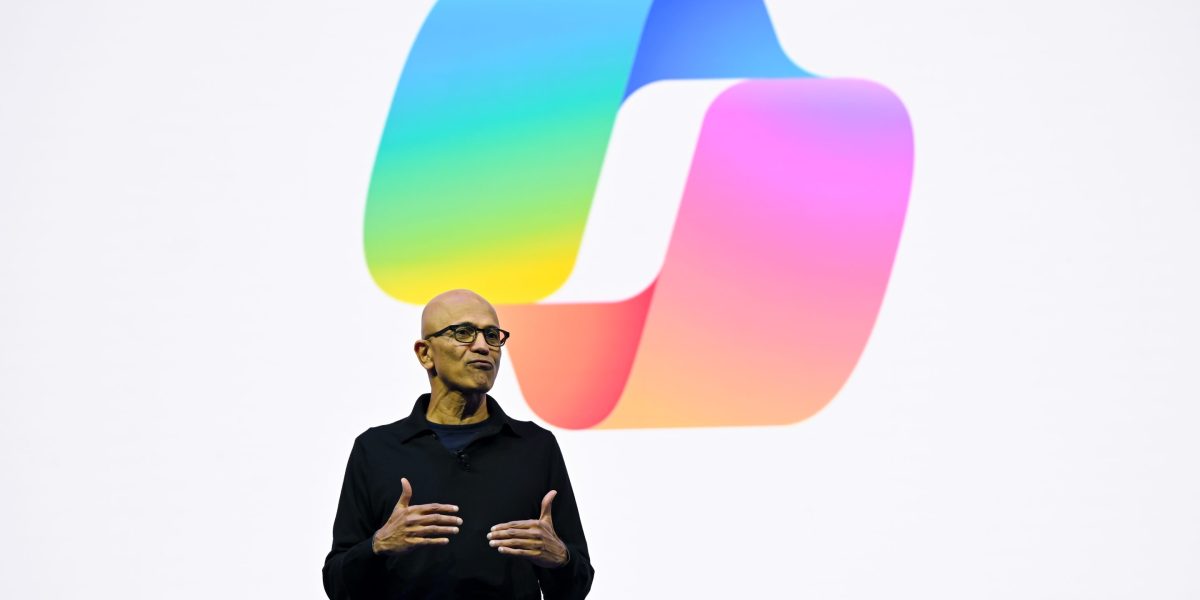
After the AI boom took off about four years ago, Microsoft poured resources into winning both the consumer and enterprise sides of AI. With the unveiling of its Copilot AI “super app” Friday, the software giant has returned to basics, aiming its most capable technology at business customers.
Microsoft is launching its super app as a central interface through which customers can chat with AI bots, tap AI tools to help accomplish tasks, write code, and access a new “Autopilot” feature that brings agentic capabilities — AI that can act on tasks on its own — to the company’s flagship AI app. The super app is a major redesign of Microsoft’s existing Copilot app, bringing together a variety of features and capabilities intended to create a Swiss Army knife for AI productivity. The launch follows a push by Microsoft to merge what had become a sprawling collection of Copilot products that critics said left customers confused.
For Chief Executive Satya Nadella, the new Copilot is a way to win subscriptions in a business that’s become increasingly important to the software maker, while also ensuring that Microsoft’s lucrative productivity offerings don’t get sidelined by a new generation of AI rivals.
The super app, first reported by Fortune in May, also plugs into Microsoft’s Office tools, letting users ask a bot to handle a task on an Excel spreadsheet or change a layout in a Word document. Though there is a free version of the super app, customers will need their Microsoft subscriptions or workplace licenses to unlock its full range of offerings. Both enterprise customers and individual users will have to pay extra based on usage of its most autonomous capabilities.
“We do want this to become an all-in-one productivity suite,” Annie Pearl, corporate vice president of Copilot, told Fortune. That includes being a platform “where you can ask questions, you could delegate complex multi-step work, you can build software for internal and external use cases, and you can automate tasks through your kind of digital worker or personal agent.”
The Autopilot feature lets users name their agent, assign it a role and a goal, then set it loose on tasks such as project updates, tracking work decisions and deadlines, reminding colleagues when commitments are due, gathering prep materials, and reaching out to partners.
The coding feature targets non-software engineers who want to build apps, a dashboard, or other tools and platforms, Pearl said, though she added that it will grow more powerful over time.
Most of the app’s new features are rolling out through an early-test program, and Microsoft has not set a timeline for general availability. The coding tool, which shares its underlying tech stack with Microsoft’s GitHub Copilot, will reach Microsoft 365 Premium and Pro subscribers through the test program later this year. Autopilot will undergo a more restricted phase of user testing, and broad rollout will hinge on how testers rate the new tools.
Microsoft Chief Executive Satya Nadella, middle, presents the Copilot “super app” alongside Copilot Executive Vice President Jacob Andreou, left, and Charles Lamanna, executive vice president of Copilot, agents, and platform, at the company’s Redmond, Wash. headquarters, on Sept. 23, 2026.Courtesy of MicrosoftCompetitive pressure
Microsoft is betting the super app will supercharge its Copilot brand by using AI directly connected to the business tools that already make it money. As OpenAI and Anthropic push into enterprise offerings, Microsoft is racing to protect its turf and keep pace with customer expectations. It’s also launching the app just as agentic capabilities break into the mainstream. OpenAI unveiled its own super app in July. Meta Platforms has already seen early success with its new Muse app, which targets general consumers, letting them create a personal agent to handle food orders, bank statements, and other tasks.
Microsoft’s super app reveal also follows a stretch of growing pains for Copilot. Nadella has shaken up executive ranks to position the company competitively against the top AI labs and enterprise rivals, forging a unified Copilot team earlier this year that merged the consumer and enterprise sides under Jacob Andreou, the fast-rising executive now in charge of Copilot.
Copilot stumbled early, plagued by branding issues, limited capabilities, and Microsoft’s decision to launch several versions of the AI that confused customers. Its consumer Copilot failed to reach mainstream success. More recently, as Microsoft has refocused on enterprise and streamlined its operations, it’s found some traction. In July, the company said its Microsoft 365 Copilot had surpassed 30 million paid seats, with net seats added doubling quarter over quarter. Its shares have rebounded over the past six months on the strength of its cloud computing business, fueled by AI demand and Copilot growth.
A screenshot depicts the Autopilot function in Microsoft’s revamped Copilot app.Courtesy of MicrosoftSecurity concerns
Copilot relies mostly on models from Anthropic and OpenAI, though it also accesses xAI’s Grok models, Pearl said. Security has also been a top concern, especially as models from OpenAI and Anthropic have been used to hack into other companies in recent months, stoking worldwide unease about AI capabilities. On Wednesday, Australian Prime Minister Anthony Albanese said an OpenAI agent infiltrated an Australian government website in June, marking the latest such incident.
Microsoft said it has built several safety guards into its app. Those include rules requiring its Autopilot agents to carry explicit permissions, full audit logs, and tracking. Humans decide how much autonomy an agent receives, the company said. When non-developers build apps using the Code tool, the software runs tasks in isolated local or cloud-hosted environments, with controls intended to protect customer data and systems.
“Everything that you observe should be governable by policy,” Nadella told customers this week at a presentation at Microsoft’s Redmond, Wash. headquarters. “That’s the classic thing we have done for decades when it comes to IT management, and now I need to do that with every agent out there.
“The way we have conceptualized Copilot is to think of this not as just any one product or one form factor, but as a system that brings form and function together.”
Microsoft also plans to monetize the new features by charging extra for its best capabilities. Seats paid for by enterprise customers or individual users cover “everyday AI” such as Chat, Office integration, and standard routing, while usage-based billing can apply to Code, Autopilot, and access to the newest, most capable AI models.
Microsoft also plans future add-ons that would tie in even more of its ecosystem. That includes a function called “Today,” which Microsoft says will integrate emails, calendar, Teams, and tasks to organize and prioritize workloads. It will actively complete tasks, such as generating drafts, proposing schedule updates, and setting up follow-ups for quick user action, the company said.
This story was originally featured on Fortune.com
Hence then, the article about microsoft unveils copilot super app targeting business users with ai agents was published today ( ) and is available on Fortune ( Middle East ) The editorial team at PressBee has edited and verified it, and it may have been modified, fully republished, or quoted. You can read and follow the updates of this news or article from its original source.
Read More Details
Finally We wish PressBee provided you with enough information of ( Microsoft unveils Copilot super app, targeting business users with AI agents )


Also on site :
- ’60s Folk Singer Was Discovered by David Bowie at 15 and Produced by Jimmy Page at 16—Where Is She Now?
- Aamir Khan to Receive Screen Icon Award as Singapore Film Festival Opens With Hur Jin-ho’s ‘The Assassin(s)’
- Mid-Autumn Festival: Exploring Ancient Rituals at the Temple of the Moon, Expressing Good Wishes Beneath the Full Moon