
Attorneys are racing against the clock to speed the processing of certain green card applications, months after President Donald Trump’s shutdown of a long-running visa program.
The Diversity Visa (DV) program, also known as the Green Card Lottery, was halted in December when federal officials ordered a comprehensive “hold and review” of the program’s screening and vetting procedures.
The processing of lottery applicants reopened this week following an intense legal fight – one that is set to extend to San Diego. Doubts remain, however, as to whether there’s enough time – or willingness from the government – to handle thousands of remaining applications before Sept. 30.
Because of federal law, State Department embassies have to stop processing this year’s applicants by the end of September, the conclusion of the federal fiscal year. Many cases are on hold because of slower processing times and the ordered shutdown of the DV program.
The program makes immigrant visas available to natives of countries with low immigration rates.
Class action
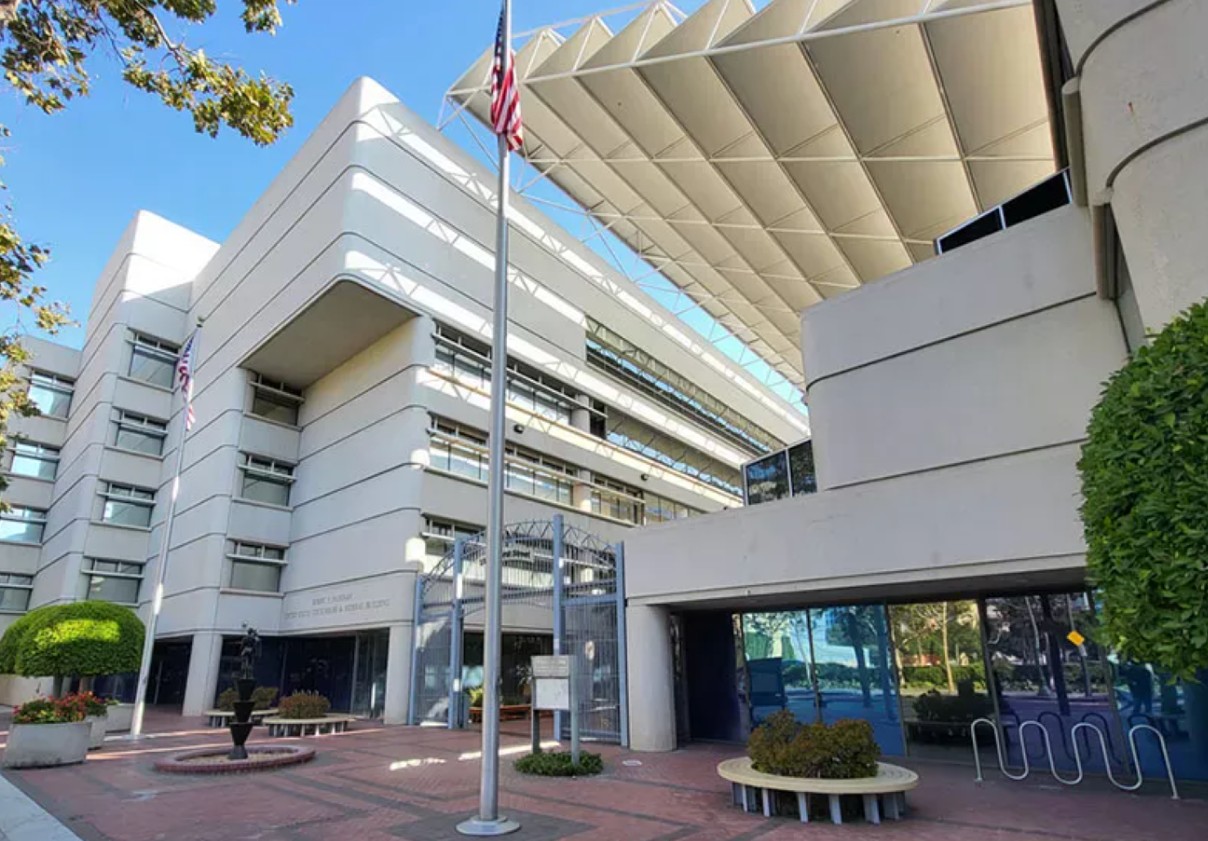
Curtis Morrison, a San Diego County attorney, along with his co-counsel in San Francisco, Jessica Arena, and five other lawyers from across the country, are engaged in the ongoing effort to press the administration to comply with court orders to process and issue the diversity visas.
That effort includes a class action suit Morrison and his fellow attorneys filed in June over the program’s shutdown. The case names Trump, White House Deputy Chief of Staff Stephen Miller, Secretary of State Marco Rubio, U.S. Attorney General Todd Blanche, U.S. Citizenship and Immigration Services Director Joseph Edlow and Homeland Security Secretary Markwayne Mullin as defendants.
Late last month, the attorneys argued in a federal courtroom in San Jose that the administration’s freeze of the DV program was illegal. The judge agreed, calling the halt “arbitrary and capricious,” while ordering the State Department to immediately resume processing of applications and issuing the diversity visas.
Morrison, however, alleges that since the court’s ruling, the State Department had not abided by the judge’s order. In a Sept. 11 hearing, Morrison accused the government of failing to act in good faith. The administration’s attorney, Nag Young Chu, countered that a great deal of work needs to be done to restart the program, explaining it takes time to sort everything out.
The judge hearing the case, Senior District Judge Edward Davila, a Barack Obama appointee, challenged him, asking why the executive branch has no problems “using electronic communications, databases and those types of things to make the process efficient, quick” when it comes to removing people from the country.
If federal officials can do that, Davila said, he is “curious why that technology is not available” for the purpose of resuming the DV program.
The judge also told Chu the administration needs to immediately provide updates on the number of applicants being processed, beginning this week.
On Monday, the government told the court that all affected embassies across the globe were sent cables and instructed to obey the Sept. 11 court order. In addition, the embassies had “reviewed all locally managed content on their websites” to comply with the order.
A new challenge
That hearing, however, followed a weekend motion, filed by Morrison’s co-counsel, Arena, accusing the government of calling on consular officials to hinder the progress of DV applicants.
Clients abroad, in Turkey, Rwanda and France, Morrison said, told him that the State Department sent cables to diplomatic missions on “how to deflect and turn away plaintiffs and class members.” Those clients, from Ankara, Kigali and Paris, he said, were denied interviews.
The plaintiffs, with the motion for discovery, are seeking the “the three cables that we know that went out to embassies.
“The State Department has withheld them and not shared them with us,” Morrison continued. “We think those cables give a clue to why the State Department’s not complying fully with the orders.”
Chu, though, told the court that the cancellation of interviews had to do with an effort to provide adequate training and was not related to the court’s orders.
The legal action will shift on Thursday to San Diego, where Morrison and the plaintiffs team will ask another court to compel the government to begin work for the 2027 DV program, which also was shut down.
Crackdown hits San Diego
The fight over the program comes at a time when San Diego County is experiencing a marked drop in arrivals from out of the country due to the administration’s immigration crackdown.
The latest U.S. Census figures show that the county saw a 65% drop in foreign arrivals last year, the largest in 15 years.
Approximately 50,000 DV immigrants now live in the San Diego area, according to Morrison’s calculations.
The falloff in DV holders also has an impact on the county’s workforce.
“For a long time, San Diego’s economic growth has been dependent on a steady influx of hardworking immigrants who often take jobs others don’t want,” said Daniel Enemark, chief economist of the San Diego Regional Policy and Innovation Center.
Information on the number of San Diego-bound applicants who obtained visas in the 2026 program is not available. Nor are the numbers for potential San Diego residents stuck in limbo.
The government, however, by complying with the court’s call for numbers of recently processed DV applications, offered some insight into how substantially the program has slowed.
According to court documents, the State Department earlier this week told the court that “1 (one) Diversity Visa application has been approved for issuance.” Late Wednesday, in another status report, the administration said “approximately 6 new interviews and 85 reinterviews have taken place.”
Morrison estimates that in recent years, the government at times processed between 230 and 400 applications a day.
According to State Department data, between 1,000 and 1,500 Diversity Visas were processed per week globally before Trump ordered the program shut down.
Millions compete for few slots
After its inception during the George H.W. Bush administration, the DV lottery came to attract about 20 million entrants each year. That pool is narrowed down by lottery to 120,000 individuals, from which a final group of up to 55,000 immigrants are chosen.
Conservatives have long disliked the program. In 2017, in the first year of his first presidency, Trump tried to convince Congress to terminate it but failed. He resurrected the effort during his current term, this time bypassing Congress.
Hence then, the article about plaintiffs won a court battle over the green card lottery shut down by trump but with a key deadline looming time is not on their side was published today ( ) and is available on Times of San Diego ( Middle East ) The editorial team at PressBee has edited and verified it, and it may have been modified, fully republished, or quoted. You can read and follow the updates of this news or article from its original source.
Read More Details
Finally We wish PressBee provided you with enough information of ( Plaintiffs won a court battle over the Green Card Lottery shut down by Trump. But with a key deadline looming, time is not on their side )


Also on site :
- Iconic Revenge Song, Ranked Among ‘Best Breakup Songs of All Time,’ Was Originally Written for Gretchen Wilson
- Quote Of The Day By Tom Hardy: 'There's Nothing Worse Than Anticipation. It's Always The Killer Of Everything. The Actuality Of...'
- Tom Cruise Says Taylor Swift Was ‘Schooling Me on Football’ at Chiefs Game, Calls Her a ‘Brilliant Musician and Director’