
By Claire Curran, MSN, RN and SORS Basic Life Support and Stop the Bleed Instructor
We’ve written about how bystanders like you can make a vital difference when you know how to give CPR or respond when someone’s overdosing. The same goes for when someone’s bleeding. Learning how to stop the bleed can keep the person from going into shock, which can cause tissue damage or worse. Rapid and uncontrolled blood loss is the leading cause of death from potentially survivable injuries.
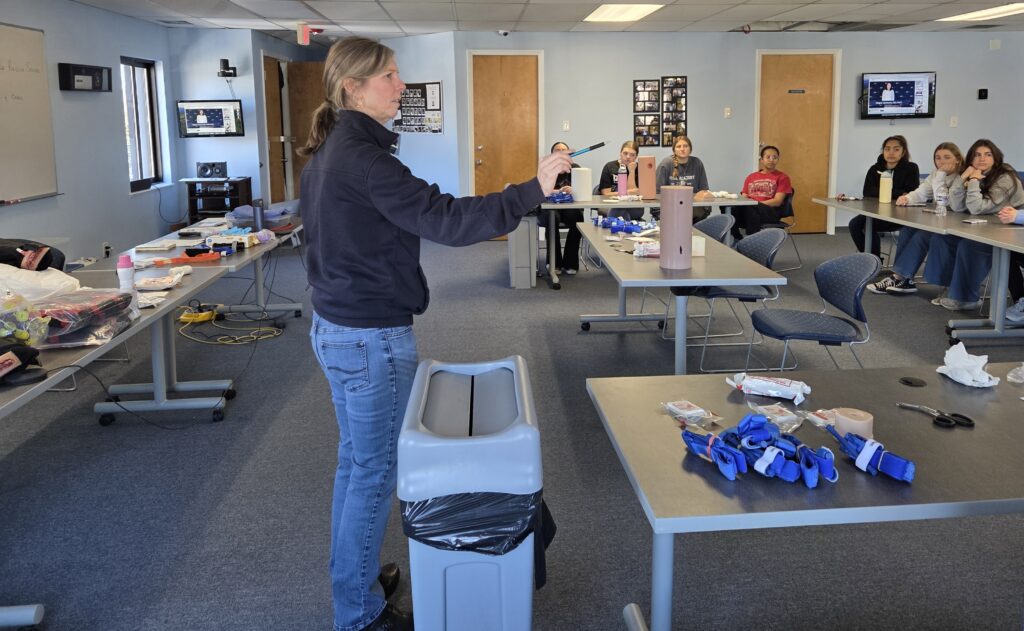
Nurse volunteer Claire Curran leads a Stop the Bleed class at SORS headquarters in Carrboro.
But I know that for a lot of folks, helping someone with a bloody injury might feel scary and messy. It’s OK! When you call 9-1-1, you are helping! Providing information to the dispatcher about the location, patient’s status, and scene safety saves valuable time. You can also try to make sure there’s good access to the person and that someone can meet and direct EMS.
But if you want to be able to do more, there are simple techniques for recognizing the severity of the issue, calling 9-1-1 and addressing the bleeding until professional help arrives. We cover the proper techniques in our free CPR trainings and go even more in-depth in our new Stop The Bleed© workshops.*
Learn more about these programs.
Participants in Stop the Bleed courses practice with specialized training tools.
Why we need to stop the bleed
Bleeding injuries can occur anywhere and any time, like when you’re hanging out at home, working on the farm or jobsite, or participating in sports, recreational activities or hobbies. They also happen as a result of vehicle crashes and acts of violence.
Time is of the essence when severe bleeding or hemorrhage occurs. First responders do our best to get to emergencies as soon as we can — the national average response time is 7 to 10 minutes. But uncontrolled bleeding can be fatal within 3 to 5 minutes. That’s why being a trained bystander is so important.
Stop the Bleed training provides information and hands-on practice.
How to help someone who’s bleeding
Follow these steps to assist a bleeding person until EMS arrives:
Make sure the site is safe. You can’t help if you get hurt, too. Call 9-1-1, put your phone on speaker and answer the dispatcher’s questions. They send EMS as soon as they have your address so continuing to talk to them doesn’t delay help. Get or send someone to get the first aid or Stop the Bleed kit. Put on clean gloves if you have them. Use a gauze pad or clean article of clothing to cover the wound. Apply direct pressure. If the person is able, they can hold the gauze in place; otherwise, you or someone else can hold it or wrap the site to keep the pressure on. Keep the person as calm as possible with reassuring words. Put another gauze on top of the first one if it bleeds through. Do not take off the first bandage or you may make the bleeding worse! As soon as you can, wash your hands with warm, soapy water for at least 20 seconds. Use hand sanitizer until you have access to soap and water.Watch the official Stop the Bleed video for more instruction.
Stop the Bleed classes include updated instruction on safely using tourniquets.
In our classes, we also teach how to pack the wound and apply a tourniquet. If you covered these techniques in scouting or first aid classes in the past, it’s time for an update because approaches have changed!
Staying calm is crucial
Knowing how to respond is the best way for you to stay calm and focused. It’s just as important to keep the bleeding person calm, too. Coach them with words of encouragement (or, if you’ve seen Project Hail Mary, “words of great encouragement”) and updates, like:
I’ve called the ambulance and they’re on the way. We’re calling your family for you. I know this hurts, but the bleeding has slowed down some.Whether you actively engage in stopping the bleed or focus more on communicating with emergency services and the person bleeding, you’re making a difference!
* SORS offers Stop The Bleed© training developed by the American College of Surgeons and U.S. Department of Defense. The class lasts about an hour with plenty of time to practice techniques on a variety of simulated wounds. So far this year, SORS has taught approximately 20 ROTC students. We’re currently training a core group of instructors so we can teach more classes this summer or fall. Support our work at sors.us/donate!
All photos courtesy South Orange Rescue Squad.
The South Orange Dispatch is a monthly column on Chapelboro by the South Orange Rescue Squad: an all volunteer, 501c3 non-profit providing EMS and technical rescue services in the Carrboro-Chapel Hill area of Orange County since 1971.
Chapelboro.com does not charge subscription fees, and you can directly support our efforts in local journalism here. Want more of what you see on Chapelboro? Let us bring free local news and community information to you by signing up for our biweekly newsletter.
The South Orange Dispatch: Learn How To Stop the Bleed Chapelboro.com.
Hence then, the article about the south orange dispatch learn how to stop the bleed was published today ( ) and is available on chapelboro ( Middle East ) The editorial team at PressBee has edited and verified it, and it may have been modified, fully republished, or quoted. You can read and follow the updates of this news or article from its original source.
Read More Details
Finally We wish PressBee provided you with enough information of ( The South Orange Dispatch: Learn How To Stop the Bleed )


Also on site :
- Lupus Research Alliance and Genentech Fund Researchers Translating CAR T Success into Durable Lupus Treatments
- Bodies with names: Inside Gaza’s cemetery of the missing
- ’70s Rock Icon Declines 2026 Performance Amid Health Issues