
You go on three great dates. The conversation is easy. They text constantly for a week. Then they disappear for two days. When they return, they act as if nothing happened. You go along. You want to ask why they didn't respond, but you refrain. It might make you seem too needy. Best to just play it cool.
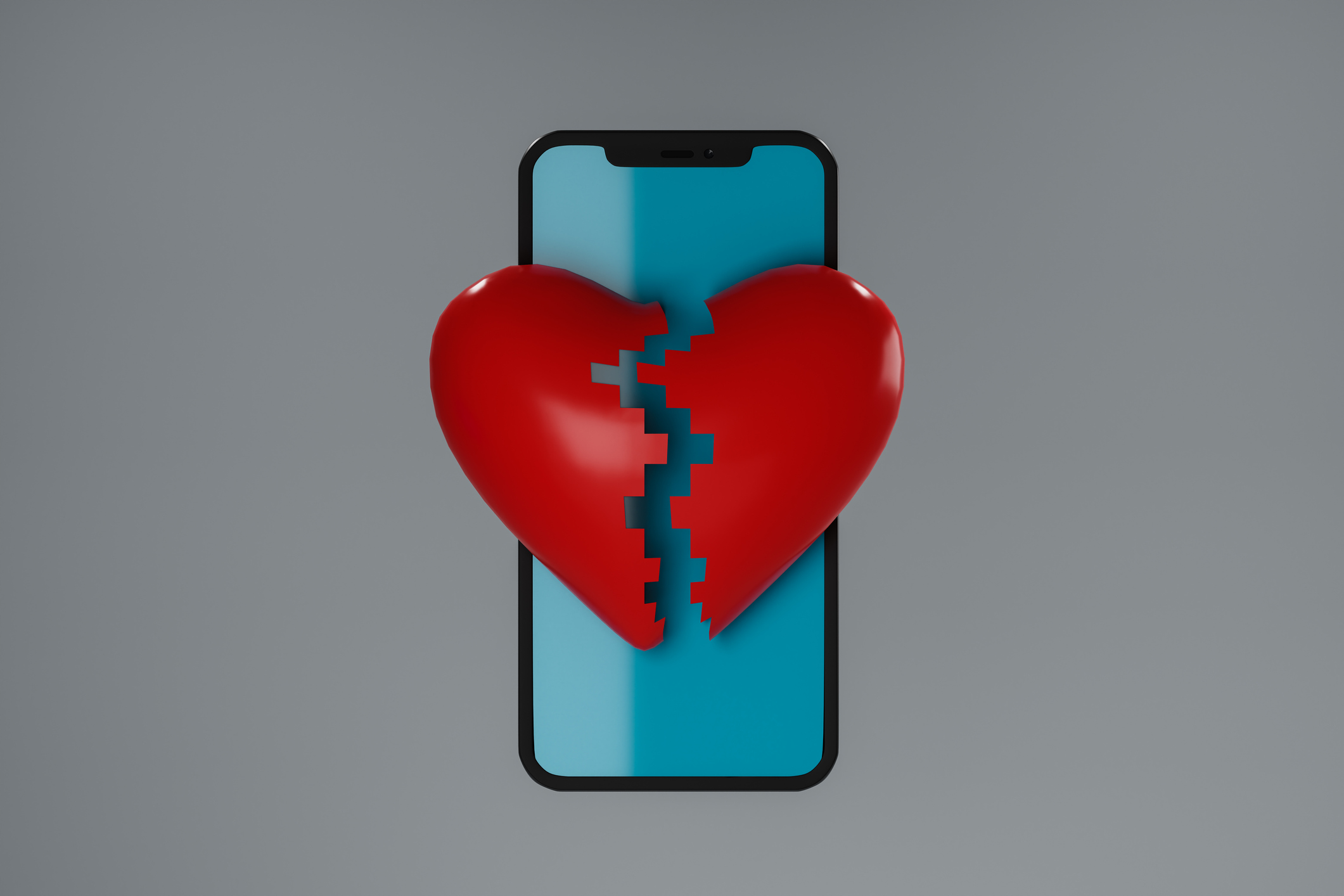
Scenarios like this aren't only confusing. They're exhausting. But the real villain isn’t men, women, or some culture war issue—it’s dating apps.
Through dating apps as a technology and as a business model, insecurity has been structurally built into modern dating.
More than 350 million people worldwide now use dating apps, generating over $6 billion annually. Yet users are faring worse by almost every psychological measure. A 2025 U.K. cohort study found that dating app use was associated with greater loneliness, while general social media showed no such effect. Many studies have linked dating app use to higher rates of depression, anxiety, and psychological distress.
People are not just frustrated with these apps. They are leaving, or giving up on dating altogether. The Los Angeles Times reports that since 2022, Tinder’s U.S. monthly active users have dropped from roughly 18 million to 11 million. What many of these daters don’t realize: the bad workman really does have bad tools.
As a clinical psychiatrist, I have personally determined that dating apps can create an environment that accentuates insecurity and may stifle secure relationship building.
One of the most consistent findings in neuroscience is that the brain treats relational uncertainty as a threat. When someone goes quiet, pulls back, or keeps things deliberately vague, the attachment system activates. It is the same neurocircuitry that evolved to alert our ancestors to the danger of being separated from their group. It does not distinguish between a predator and an unanswered text. It simply registers: something is wrong, and connection must be restored.
The issue is that people often get their signals crossed. Hot-and-cold behavior can activate our attachment systems, creating longing and urgency. This is typically misread as passion. The frequent checking of notifications, replaying every interaction, and searching social media for clues. None of that is love. That is a nervous system trying to resolve a perceived threat. Many daters interpret this intense experience as passion.
In this way, dating apps have industrialized uncertainty. A 2024 study found that 78% of app users felt emotionally exhausted by the experience. Endless options mean never having to fully commit. Conversations start and stop without explanation. Ghosting is frictionless. A 2023 survey found that 84% of users had been ghosted and that 66% had admitted to ghosting others.
These interactions take a psychological toll. Research shows that when we feel ignored or excluded, it affects us at our core. We experience lower self-esteem, feel less in control of our lives, and perceive life as less meaningful. The day-to-day reality of app-based dating, engaged one day and silent the next, quietly reshapes our most fundamental sense of ourselves and the world around us.
This environment also pulls different attachment styles into destabilizing loops. Anxiously attached individuals, who are highly sensitive to rejection, experience heightened preoccupation and emotional swings. Avoidantly attached individuals, who fear closeness, retreat into ambiguity, which allows a semblance of connection while avoiding commitment. Both get stuck in cycles reinforced by technology designed to keep users engaged.
Our culture reinforces the problem. Dating advice promotes “playing it cool” and strategic ambiguity, behaviors that run counter to what actually builds secure relationships. The available, direct person who gets written off as “not exciting” is often the best possible partner. Rejected for exactly the qualities that make them so.
The part of this conversation that often gets left out is that attachment security is not fixed. The brain is plastic. What shapes it is the environment we immerse ourselves in, including the one we create in dating.
Adjusting to the dating app era
In my clinical work, I’ve developed an approach based on neuroscience and attachment that focuses less on analyzing the past and more on building security in real time. Central to this is learning what I call the five pillars of secure mode: consistency, availability, responsiveness, reliability, and predictability.
A patient of mine met her now-husband on what was supposed to be a one-night stand. They had a lot of fun, and that one night turned into two. But in between, he wasn’t very responsive over text. The second morning he left, she told him: “Listen, I like you, but I need people in my life to be consistent and responsive. If not, it doesn’t work for me.” He told her he was notoriously unresponsive. But he promised to try.
Ten years, two kids, and a marriage later, he has.
What she did was make a small, clear request that established the conditions for a secure connection. It didn’t require a dramatic declaration. It required the willingness to say what she needed before ambiguity filled the space. Not feeling judged made it easier for her now-husband to respond in kind.
To be clear, I am not arguing that dating apps have ruined love. Many people meet on apps like Hinge and build something wonderful. But for the large number of people who are dating and feeling worse, the problem is not a personal failing. It is an environment built to maximize scrolling, not security.
Unavailability is not mysterious. The nervous system activation that gets marketed as chemistry is sometimes just stress. The person who shows up consistently, responds when you reach out, and says what they mean is often dismissed as available and therefore “boring.” But that’s exactly the kind of partner the research keeps pointing toward.
Secure dating is built in small, consistent moments from day one, preventing ambiguity from becoming the norm. The shift is not to abandon dating, but to approach it from a secure stance: prioritize clarity over uncertainty. Let intensity grow from meaningful connection, rather than from the ups and downs of insecure relating.
We can create our own secure dating culture and, by doing so, increase the chances of long-term relationship satisfaction. For the hopeless romantic that I am, dating this way isn’t just about making it more tolerable in the present. It’s about choosing someone who shows up consistently. That’s the kind of connection most likely to last.
Hence then, the article about modern dating is making us less secure was published today ( ) and is available on Time ( Middle East ) The editorial team at PressBee has edited and verified it, and it may have been modified, fully republished, or quoted. You can read and follow the updates of this news or article from its original source.
Read More Details
Finally We wish PressBee provided you with enough information of ( Modern Dating Is Making Us Less Secure )


Also on site :
- Joanna Gaines’ Message for Parents Facing College Goodbyes Has Fans Saying ‘No One Warns Us About This’
- ‘Dancing with the Stars’ Pro Witney Carson Reveals Shocking Cancer Battle She Kept Secret From Producers (Exclusive)
- Anne Hathaway Tears Up as She’s Named a Disney Legend (and Her 2026 Box Office Crosses $2 Billion): ‘I’m One of the Most Insanely Lucky People in the World’