
Consumers are being bombarded with ads for products loaded with extra protein, but just how much do they need to be eating?
From cereal to yogurt, coffee and even bread, more brands are promoting their products as protein dense.
But how much is too much?
New guidelines from the USDA have nearly doubled recommended protein servings to 1.2-1.6 grams per kilogram of body weight, or roughly 0.4 to 0.9 grams per pound.
In such an advertising-rich environment, it can be difficult to separate healthy products from excessive marketing, and licensed dietician Jeremy O’Neal says most Americans already get enough protein.
“If a person does go past that 0.9 grams per pound, usually what we worry about is not only dehydration, but chronic kidney disease,” said O’Neal, who works in the bariatric surgery program at UI Health. “When the body is breaking down more protein, it’s utilizing the water intake.”
Some people do need more protein, including those who are aging, pregnant or losing weight with GLP-1 medications.
“The main focus for those people is making sure with those smaller meals that you do increase the protein intake,” said O’Neal. “The main concern is hair loss, the protein, the muscle mass wasting, and so when someone doesn’t necessarily eat the same amount of food, the priority has to be more protein.”
However, it can be difficult to navigate grocery store aisles packed with products promising added protein. O’Neal says it’s important to read the nutrition label.
“You want that protein percentage to be anywhere from 10% or higher for it to be actually significant. I always recommend with those processed foods to check the sodium. That number you want to aim for is about 140 milligrams or less,” said O’Neal. “I definitely would recommend to check how many ingredients there are, because ideally, fewer is better.”
Sugar matters too. O’Neal says to look for monk fruit, Stevia, and Allulose when choosing a protein shake.
“I wouldn’t replace any meal with a protein shake, or do it with the meal on top of that. I would separate them out,” he said.
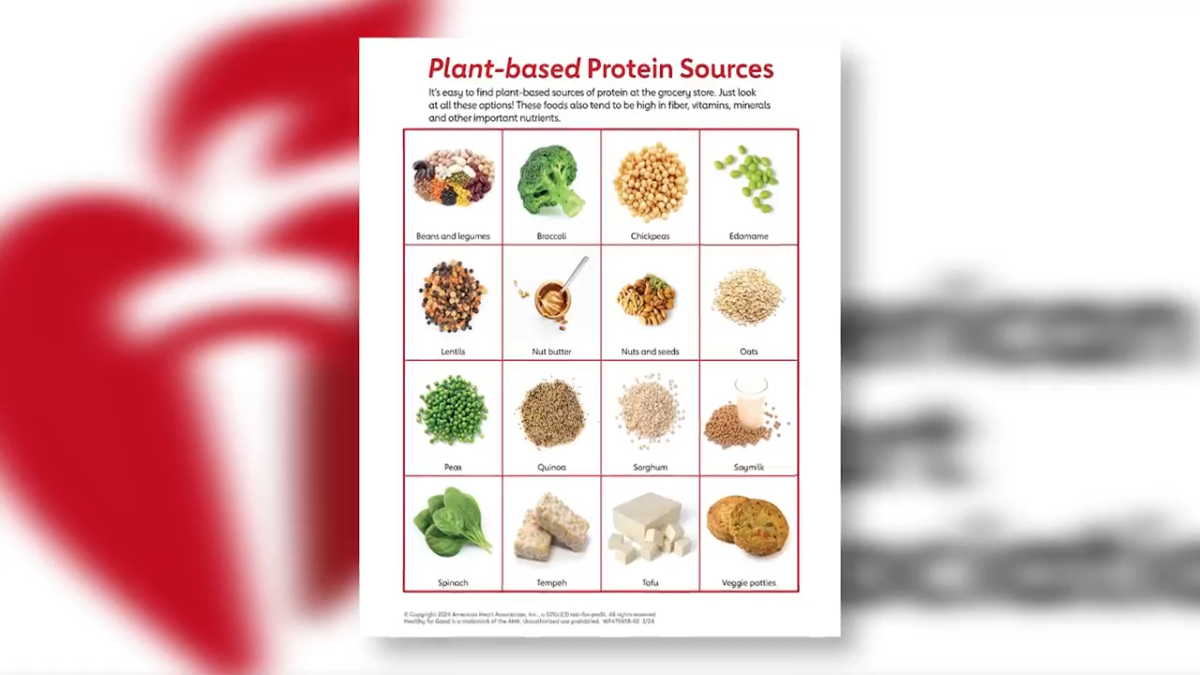
In late March, the American Heart Association issued new guidance prioritizing plant-based protein over meat. The American College of Cardiology, the American Diabetes Association and the Academy of Nutrition and Dietetics each recommend more plant-forward eating and limited meat intake.
“Usually, we like to say the palm size of your hand, or about three-to-six ounces per meal, but with red meat especially, the concern is the saturated fat,” said O’Neal.
Nutritionists recommend nuts, legumes, whole grains and fish because they are not only protein-rich, but also packed with fiber.
When it comes to adding protein to your coffee, O’Neal is a fan, in moderation.
“If it’s once in a while, if you’re doing it on a Sunday just to enjoy the weekend, I’m a big fan of doing those beverages, and adding in some protein. It does at least help the glycemic index. So, in terms of blood sugar response, it does help to lower that,” he said. “However, here’s the caveat: a lot of those products are also lactose heavy with regular milk. I would say is there’s no harm to it, and if you going to get a sugary drink, you might as well have some type of benefit from it.”
O’Neal expects the protein “craze” will come to an end soon, with another nutrient perhaps moving to the forefront. However, he says protein, like in the past, will again take center stage.
“The reason why is because protein does generally help with weight management, and the reason behind that is it increases satiety, so you feel fuller longer with more protein,” he said. “Balance is key. So, I wouldn’t necessarily demonize any certain food groups, but I just also wouldn’t recommend exclusively eating that food group, because the more variety in the diet, the more nutrients you’re getting as well from the diet.”
Hence then, the article about protein is having its moment but how much do you actually need was published today ( ) and is available on NBC Chicago ( Middle East ) The editorial team at PressBee has edited and verified it, and it may have been modified, fully republished, or quoted. You can read and follow the updates of this news or article from its original source.
Read More Details
Finally We wish PressBee provided you with enough information of ( Protein is having its moment, but how much do you actually need? )


Also on site :
- Sean Hogan’s ‘The Dark Gets In’ Boarded for Worldwide Sales by Blue Finch Films Ahead of Beyond Fest Bow (EXCLUSIVE)
- Inter Miami vs San Diego: When and Where to Watch Messi in MLS 2026
- Converse pulls ad over KKK imagery claims