
By Mostafa Salem, Oren Liebermann, Nick Paton Walsh, CNN
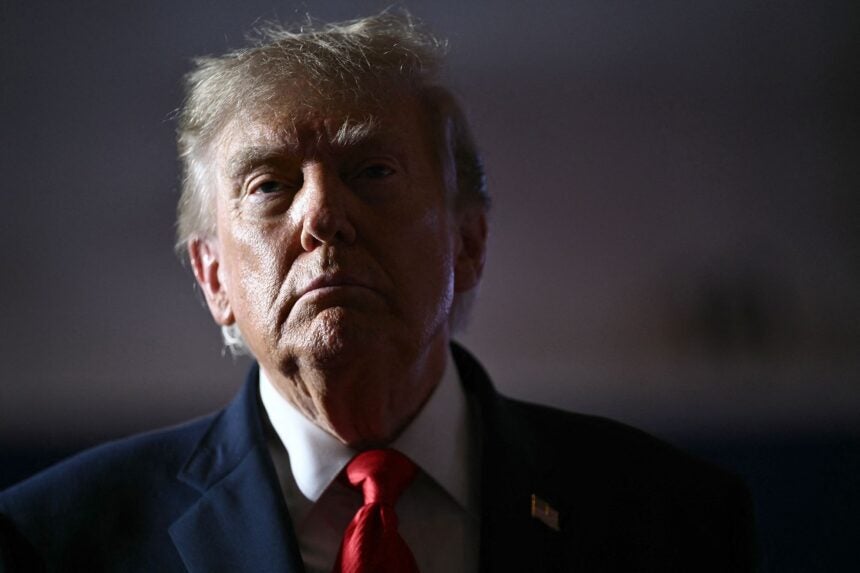
(CNN) — The US midterm elections could have consequences far beyond the country’s borders. President Donald Trump has spent nearly two years overturning decades of American foreign policy, unsettling allies and adversaries alike. Now, both are watching to see how an electoral setback at home will shape his actions abroad.
For Iran, Israel and Ukraine, the stakes go well beyond who controls Congress. The result could influence whether Trump pursues a deal with Tehran or more war, how much Washington’s longstanding support for Israel erodes, and how hard he pushes Kyiv to accept terms to end Russia’s war.
Democrats will have new tools to challenge Trump. But he still has considerable freedom to act abroad, leaving world leaders with a question: Will defeat make him more willing to compromise, or more determined to get his way?
Here’s how the vote could impact Washington’s most pressing foreign policy concerns:
Iran gloats, but gets no guarantee of peace
Iran is celebrating Trump’s midterm setback, but it is bracing for what comes next: a possible new US strike or a fresh push for a deal.
After eight months of striking the region’s economic lifelines to turn American voters against the war, Tehran has hailed the Republican loss as a public verdict on it. Trump acknowledged that war-driven price hikes played a role.
“If the US government betrays their public will to serve international paymasters and blackmailers, it will learn our NO comes with a Nightmare,” parliamentary speaker Mohammad Bagher Ghalibaf, who has led negotiations with the US, wrote on X.
Tehran is not betting on a change of course in Washington. Supreme Leader Mojtaba Khamenei said anyone who believes the results will shift US policy is “deeply mistaken,” and officials say Iran’s strategy doesn’t hinge on American elections as they prepare for more war while intensifying diplomacy.
The risk of escalation is real. Reports that Trump might order new, more intense strikes are fueling anxiety across the region, and Tehran has warned that its retaliation would be much wider in scope than in earlier rounds. This week, Trump told some journalists he is considering striking Iran hard, and others that he has no immediate plans to escalate.
“The Iran war has become a political albatross around his neck, leaving (Trump) with a stark choice: cut a face-saving deal and declare victory, or double down militarily to reclaim the initiative,” Ali Vaez of International Crisis Group told CNN. “The danger is that a president weakened at the ballot box may seek redemption on the battlefield.”
Diplomacy offers another path. Talks that stagnated over the summer have picked up in the past week, with Tehran sending officials to Qatari mediators who are circulating proposals with Washington. Before the vote, Iran offered to open the Strait of Hormuz within two days if Trump agreed to its seven conditions.
Sanam Vakil of Chatham House said Iran’s leadership “might feel vindicated,” but that “does not necessarily solve their problems.” Trump needs a diplomatic victory yet may be reluctant to appear weak, she said, while Tehran could read his setback as a chance to demand greater concessions. She expects intensified diplomacy alongside military threats, with an interim Strait of Hormuz deal “more realistic” than a comprehensive one.
‘End of an era’ for US-Israel relations
In Israel, the election day announcement that Trump would abruptly cut off US military aid to the country was the first surprise. The results, with Democrats sweeping both chambers of Congress in what has been called a “blue tsunami,” are a five-alarm fire in Israel.
Bipartisan support for Israel in the US had already been eroding, with Democrats outraged at Israel over the death toll in the Gaza war and a growing number of Republicans believing the US has given it too much support.
“The only bipartisan issue right now is criticism of Israel,” said Michael Oren, a former Israeli ambassador to the US. “It’s an organizing principle for the Democratic Party,” he told CNN. “And it’s becoming an organizing principle for much of the Republican Party.”
Oren said the end of US aid is just the beginning of a process that has only started to play out. He said it’s conceivable that the US could end intelligence sharing with Israel and the joint development of critical military systems, such as the vaunted Iron Dome aerial defense system. He also pointed to the United Nations Security Council, where Republican and Democratic presidents have protected Israel with the US veto.
“We are at the end of an era,” he said.
Yaakov Katz, a former editor-in-chief of the Jerusalem Post, warned there is more to come. “What Trump announced about the military aid yesterday is just the tip of the iceberg of what can change – arms sales could be blocked, sanctions will be proposed and joint economic programs defunded,” he said on X.
The anti-Israel sentiment only hardened during the Iran war, with segments of the US electorate viewing the joint US-Israel strikes as a war that Netanyahu sold to Trump. Even now, Netanyahu has been pushing to resume strikes on Iran, which would reignite a war that drove gas prices and the cost of living higher and contributed to Republicans’ devastating midterm performance.
Netanyahu also faces turmoil at home. In elections a week before the midterms, he lost his majority in parliament, but his main rival, former military chief of staff Gadi Eisenkot, does not have an outright majority and would likely need to cooperate with Arab parties, who saw record turnout.
Yair Golan, leader of the left-wing Democrats party, warned that Israel “does not have time to waste” in replacing Netanyahu and leading the country away from sanctions and isolation.
Ukraine waits for a post-Trump world
For Kyiv, the reaction came before the election. And on Wednesday there was relative silence.
For weeks, President Volodymyr Zelensky’s relationship with Trump has been in freefall. Trump has demanded Zelensky be replaced; courted energy deals to benefit Russia; and watched as Ukraine’s tech and intel dependencies on the US were inexplicably thwarted. And so Kyiv was forced to take a position early: wait, with urgency, for a post-Trump world.
And when it began to dawn on Wednesday, there was little official comment from Kyiv, Zelensky perhaps happy for the memes of him, sat with a beer and popcorn in front of the mid-term TV coverage, to do the job for him.
A deputy in his office, Sergiy Kyslytsia, pledged on Ukrainian TV that the country would continue to “develop genuine, normal and stable relations” with whoever is in office, seek Patriot interceptors, and navigate both a new Congress and the likely flurry of executive orders that may try to obviate it.
But there can be no disguising that a crestfallen Trump, and the slow clock now loudly ticking on his worldview and presidency, is in Kyiv’s favour. He had claimed a peace was easy to fashion, yet proceeded to punish Ukraine for not agreeing to the demands of its invader. He humiliated, scolded, and then occasionally made up with, Zelensky, while massaged by European allies, aghast at the breakdown in decades of security alliances.
There is still a lot that Ukraine needs Trump and the United States to do. Provide arms, money, and a wider assurance it is on their side. But Kyiv has calculated it cannot depend on Washington, after months of hostility.
There is one downside of the ticking clock however: that Russian President Vladimir Putin determines he has likely a year to pursue, at any cost, the best outcome possible in his war of choice, before the 2028 fight drags Republican policy back to the pro-Ukrainian mainstream. Putin has so far failed to use his apparent great ally, Trump, to secure a battlefield win of note. He may seek to change that while the embers of Trump’s authority burn.
The-CNN-Wire™ & © 2026 Cable News Network, Inc., a Warner Bros. Discovery Company. All rights reserved.
What Trump’s midterms setback could mean for Iran, Israel and Ukraine News Channel 3-12.
Hence then, the article about what trump s midterms setback could mean for iran israel and ukraine was published today ( ) and is available on News channel ( Middle East ) The editorial team at PressBee has edited and verified it, and it may have been modified, fully republished, or quoted. You can read and follow the updates of this news or article from its original source.
Read More Details
Finally We wish PressBee provided you with enough information of ( What Trump’s midterms setback could mean for Iran, Israel and Ukraine )


Also on site :
- AEK Athens vs Real Madrid: Referee, Venue, Kick-Off Time and TV Coverage
- ‘Sister Brother Manhole Cover’ Wins Grand Prix At Tokyo International Film Festival
- Who won Illinois? Live election results and winners from the 2026 midterm election