
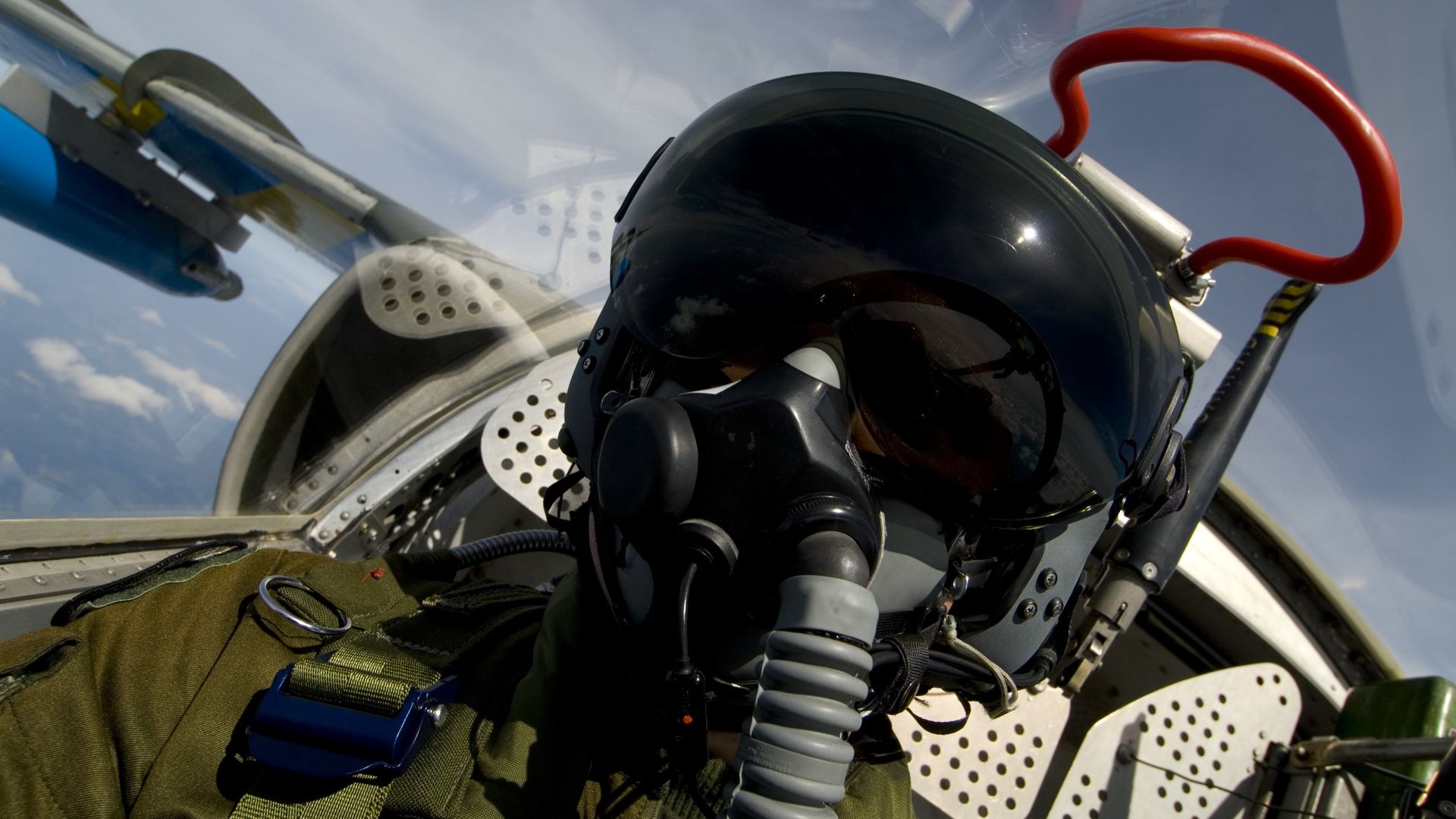
The patient: A 29-year-old man in India
The symptoms: The man, a fighter pilot in the Indian Air Force, went to a civilian neurologist after having persistent headaches for 18 months. The headaches would occur approximately two to three times per month, starting in the late afternoon and lasting up to three days. Sleep did not improve his symptoms.
The pain was typically greater on the right side of his head, but he would often feel pain on the left side as well. The pilot also reported that just before a headache, he would experience a "sense of lousiness," his doctors wrote in a report of the case.
Sometimes, the pain was so intense that the man was unable to take part in scheduled flights. If he flew anyway during an episode, his headache would be even worse the next day.
What happened next: According to the man, his finances and personal relationships were not a source of stress. (Stress, in general, is a very common headache trigger.)
When asked about his medical history, the pilot recalled no recent ailments or conditions that could cause recurring headaches, such as inflammation and congestion of the sinuses (sinusitis). He had no family history of chronic headaches or migraine, a neurological disease that frequently causes moderate to severe headache, among other symptoms. Nor did he experience nausea, vomiting or visual anomalies called "auras," which often accompany or precede migraines.
Nevertheless, the civilian doctor determined that migraines were the culprit. He prescribed divalproex — an oral medication used for migraine prevention — and told the patient that he would likely need this medication for years. Concerned about taking the drug over a long period, the pilot decided to consult an authorized specialist at a military medical facility for further evaluation.
The diagnosis: The military doctors reviewed the pilot's case and examined him. All of his test results were in the normal range, and a CT scan showed no brain abnormalities. They ordered a nasal endoscopy — an exam that uses a camera to examine the nasal cavity and sinuses — and found that the patient had a deviated septum. However, the deviation was so minor that they ruled it out as a possible cause of his pain.
Finally, the doctors agreed with the initial diagnosis: The pilot was experiencing migraines. The causes of migraine are not fully understood, although genetics and environmental factors may contribute to both the duration and intensity of migraine pain in a given individual.
Indian Air Force (IAF) fighter jets photographed in 2019. The patient's headaches were sometimes so bad that they stopped him from conducting scheduled flights. (Image credit: Abhishek Singh via Getty Images)The treatment: The pilot was given the migraine medicine sumatriptan, to be taken at the first sign of pain, and aspirin, to be taken during headaches. He was allowed to continue flying under restricted conditions, and he had to report to a military neurologist for monthly reviews over the next three months.
Four months later, he was headache-free and had stopped taking medication, according to the report. However, his superior officers needed a detailed medical review before they could restore his unrestricted flight status, as severe migraines can disqualify pilots from flying.
Over three days, doctors conducted in-depth interviews with the pilot, focusing on the first appearance of his symptoms and the circumstances leading up to his headaches. They were puzzled by certain details: His lack of nausea, vomiting and auras, and the fact that he got no relief through sleep. These facts raised questions about the migraine diagnosis.
During the interviews, the pilot recalled that his headaches began around the time that he started using a new type of helmet with a tighter fit. The headaches corresponded with days in which he flew multiple flights and became worse the longer he wore the helmet. Then, around the time he started taking the prescribed medication, he coincidentally received a new allotment of personal flying clothing — including a helmet that was the correct size — for a new plane assignment. His headaches suddenly stopped.
"At that point the officer did not connect the cessation of headaches with the use of the new helmet," the doctors reported. "Reviewing the case in its entirety, the diagnosis of migraine or vascular headache was found to be incorrect; instead the individual was suffering from external compression headache due to an ill fitting helmet."
Compression headaches are caused by tight external pressure on the scalp and forehead, and they typically resolve when the pressure eases.
Other dilemmasTeenager's rare autoimmune disorder caused her to hallucinate a flying green dinosaurWoman 'saw dead people' and fired a gun at them after taking too many aspirinWoman's 5-year struggle with balance and walking was caused by a 'one-in-a-million' disorder
Doctors instructed the pilot to keep a headache diary and scheduled follow-up visits to confirm their findings. Five months later, his headaches had not returned, as he'd continued using the better-fitting helmet.
What makes the case unique: When the military doctors scoured peer-reviewed studies, they found no reports of similar instances of compression headache "in any of the Air Forces of the world," they wrote in the report.
This case, they added, emphasizes the medical significance of making sure that pilots' flight uniforms — especially their helmets — fit properly.
For more intriguing medical cases, check out our Diagnostic Dilemma archives.
This article is for informational purposes only and is not meant to offer medical advice.
Can you guess the diagnosis in these strange medical cases? Find out with our diagnostic dilemma quiz!
Hence then, the article about a fighter pilot had unexplained headaches for over a year the cause was hiding in plain sight was published today ( ) and is available on Live Science ( Middle East ) The editorial team at PressBee has edited and verified it, and it may have been modified, fully republished, or quoted. You can read and follow the updates of this news or article from its original source.
Read More Details
Finally We wish PressBee provided you with enough information of ( A fighter pilot had unexplained headaches for over a year. The cause was hiding in plain sight. )


Also on site :
- Italy approves sweeping security measures in response to protests
- Today’s NYT ‘Strands’ Hints, Spangram and Answers for Wednesday, October 21, 2026
- Xinhua Silk Road: Finanzforum in Beijing stellt Offenheit, Zusammenarbeit und Inklusivität in den Mittelpunkt