
My final dispatch from Busan features what might be the most eclectic titles at the festival. They all hail from the Vision section. The first is in the Asia vertical while the final two are in the Korean. They also feature characters trying to make the best of a craven economic system that’s pushed them to the margins, causing them to search for a way back toward a comfortable center. All of these movies are female led, and they’re built on a precise visual language that’s perfectly matched with their serious-minded subject matter.
Set at the outset of the COVID-19 pandemic in Mongolia, “Zogsool,” which means “The Station,” is a dark, thorny politically fraught romantic comedy that finds truth in its broad visual approach.
Written and directed by Byamba Sakhya, the film follows Khanda (Bulgan Chuluunbat), a flinty single mother who manages a far-flung petrol station as she raises her teenage daughter. In this small provincial village, Khanda almost welcomes conflict. For one, everyone is in debt to her because they’ve borrowed gas on credit. One shaggy scoundrel even tries to pay her with a sheep, an offer she bitterly refuses. Khanda also ridicules an experienced coach who wants to enlist her daughter in a martial arts competition happening in the city and understandably openly recoils at her boss (Tumurbaatar Tsegmid), who coaxes her to sexually please him.
Consequently, when the prospect of the pandemic arrives in her village in the form of Sumber (Tsolmon Damdindorj), a free-spirited petrol tanker driver, she appears relatively unfazed. Life can’t get much worse for her, right? In fact, Sumber’s arrival begins to make life much better for Khanda when he’s forced by authorities to quarantine at her gas station due to a contact tracing alert involving him. They tape off the station, cutting off fuel supplies and Khanda’s lone piece of income. The situation brings her in direct contact with Sumber, who immediately falls for her, and, after a time, her for him.
The film, which won four awards in Busan, including the top prize in the Vision section, takes cynical aim at what the pandemic wrought, critiquing how corrupt officials wielded fear to reach for further power. A pulsating score sonically articulates the quickly spreading panic enveloping the village while gorgeous, wide panoramic frames, which capture the secluded rolling hills that surround this town, also symbolize the lack of community present during this emergency. Sakhya, a cinematographer by trade, also subverts his most majestic images to deliver some bruising comedy that pokes fun at the haplessness of these officials in the face of the virus.
There’s only one piece of hope amid this empty landscape: Khanda and Sumber’s growing relationship, which begins with texts and a song dedication and transforms into something more existential and meaningful. Chuluunbat is particularly captivating, always brandishing a coy smirk that, like “Zogsool,” allows her to stroll through this unfeeling world with her character still intact.
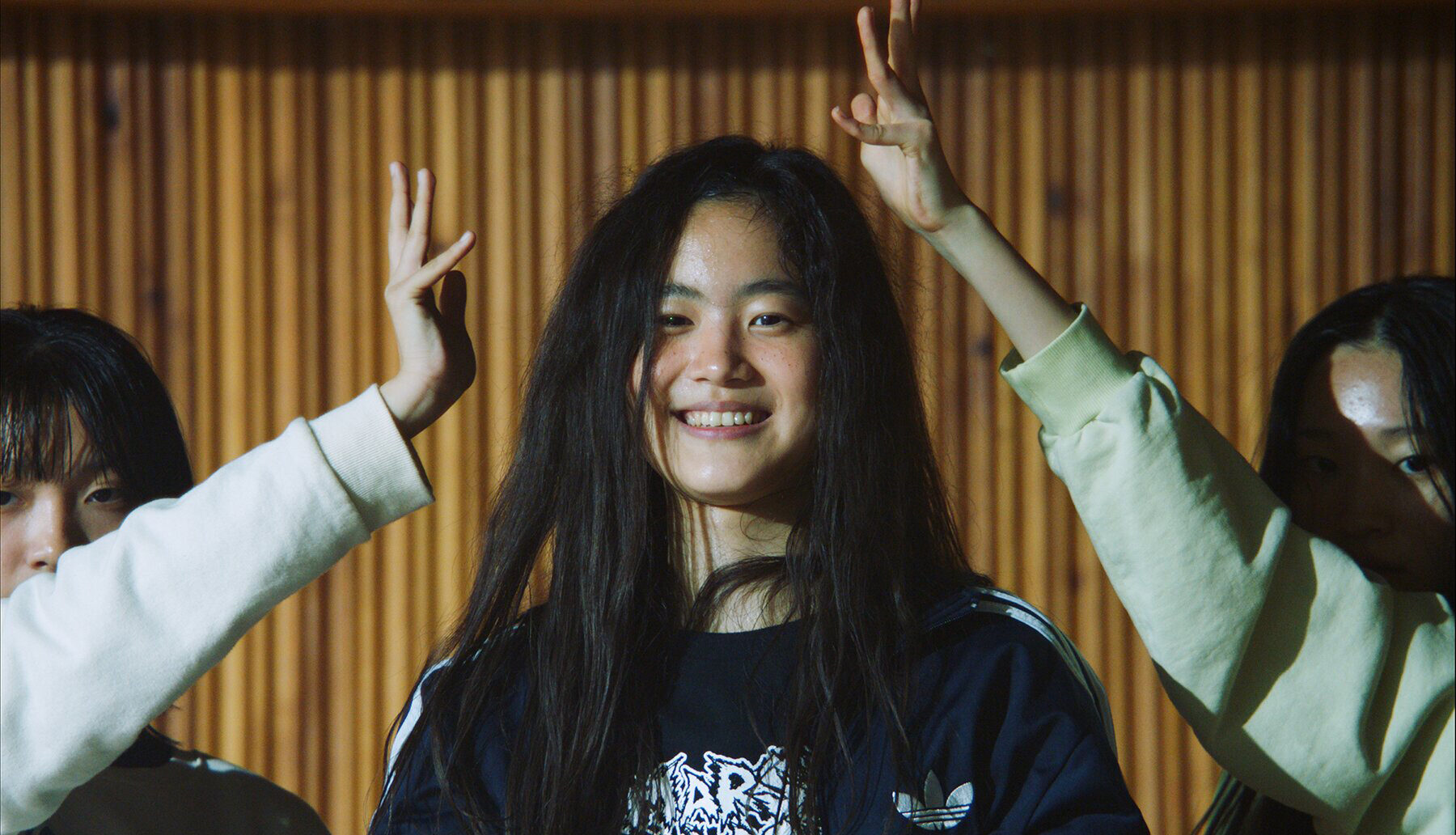
In the opening scene of Jeong Ji-hye’s “Full Moon,” a 16-year-old Hye-mi (Jung Min-joo) practices dance moves and lip-syncing with her four friends for the upcoming Great Full Moon festival. Hye-mi is literally out of place among them; she’s too tall in one spot and too distracting in another. She’s also off-beat. Nevertheless, she desperately wants to be centerstage. But her rage puts her at odds with her group, including her best friend, causing a wardrobe malfunction to take place after one performance, which climaxes into a flurry of tears and screams.
Hye-mi shoulders far too much responsibility for any teenager, serving as head of the household to her Down Syndrome father (Kang Min-hwi) and a mother (Kim Geum-soon) with her own intellectual disability. The teen is often embarrassed by them—she hides them from her friends, in fact—but she doesn’t love them any less. She’s actually incredibly protective of them, to the point that when their new YouTube influencer neighbor ropes in Hye-mi’s mother to appear on her channel, Hye-mi reacts with derision. When should Hye-mi accept that her parents possess some autonomy? Who is she to shield them from an activity they might love doing?
Jeong smartly doesn’t immediately answer those questions in this somewhat convoluted coming-of-age story. Instead, she uses Hye-mi’s newfound friendship with her neighbor’s devoted daughter (Kim Tae-yeon), which involves them hanging out in a stargazing club, to explore the difficult personal growth Hye-mi must embrace if she’s to find acceptance. The film also locates additional resonance by filling out Hye-mi’s school life, which involves a crush on a guitarists and performances from his talented band.
Jung’s exacting performance gives Hye-mi a kind of emotional specificity, which acknowledges the complexity of an adult-minded girl who would much prefer to be a regular teenager. Even when the film sprawls far too broadly for its own good—it never quite coheres the many character-based orbits it bounces between—Jung’s presence keeps “Full Moon” feeling balanced and sincere.
Park Songyeol’s honest social realist drama “Beyond Love’s Horizon” tells an all-too familiar modern story of the way many people live on the precipice of economic disaster. In it, are Taeyoung (Park Songyeol) and Jumi (Won Hyangra), an anxious couple contending with the recent failure of their business. Defeat quickly transitions into elation when the husband and wife learn they’re expecting a child. We zoom forward through Jumi’s pregnancy to the birth of their son via time-lapse, a life-altering event that requires Taeyoung to become a food courier.
The job is a precarious one. Taeyoung drives a secondhand moped that often breaks down. He also comes close to several traffic accidents, which can sometimes be seen on his immersive helmet cam. On his first delivery he must drive back to a client who received the wrong order from him. But his gravest mistake happens when, in a bid to complete a daily challenge, he hastily leaves the kickstand to his moped up. The vehicle tumbles, crashing into the rear-end of a man’s car. The owner wants Taeyoung to pay him 1 million won for damages, money that Taeyoung is afraid he doesn’t have.
Songyeol’s film thoughtfully explicates the many ways this economic weight drives a wedge between a once tightly united husband and wife. Taeyoung comes home later and later, leaving Jumi to handle their howling son for longer spans of time. Songyeol makes their interpersonal difficulties more apparent by using grey-scale photography for nighttime scenes. Both Taeyoung and Jumi also experience nightmares, particularly Taeyoung, who dreams about the car owner coming over and demanding money.
Taeyoung and Jumi in their own way look to earn more money. For Jumi that pursuit happens by her starting a mommy vlog, an activity that gives her reclusive days some spontaneity. Tellingly, we rarely see her outside of their apartment. Taeyoung, on the other hand, resorts to using similar tactics employed against him by the car owner toward another courier. It’s a painful moment that symbolizes the vicious exploitative cycle even the kindest people can be forced into when they feel desperate.
The lo-fi aesthetic of Songyeol’s film, which often relies on natural lighting, gives this marriage a raw quality. While Songyeol crafts a productive understated performance, Hyangra, who won the festival’s top acting prize, engineers a harrowing almost fugue state turn as this weary mother. She crafts a rich-inner life for a woman who, in a lesser movie, wouldn’t be featured at all. She gives “Beyond Love’s Horizon” a sharpened feeling to point toward, rendering this excellent humanistic gem a modicum of well-earned hope.
Hence then, the article about busan 2026 zogsool full moon beyond love s horizon was published today ( ) and is available on Roger Ebert ( Middle East ) The editorial team at PressBee has edited and verified it, and it may have been modified, fully republished, or quoted. You can read and follow the updates of this news or article from its original source.
Read More Details
Finally We wish PressBee provided you with enough information of ( Busan 2026: Zogsool, Full Moon, Beyond Love’s Horizon )


Also on site :
- Iran offers US deal to reopen Hormuz within a week
- ‘Whisper Fringe’ Is About To Be Fall’s Biggest Hair Trend—a Celebrity Stylist Explains Who It Flatters Most
- Carrot Top Breaks Silence After Suicide Attempt and Hospitalization as Comedian Preps Return to Stage