
Good morning. The biggest impact of AI on travel may happen before the traveler ever checks into a hotel or boards a plane.
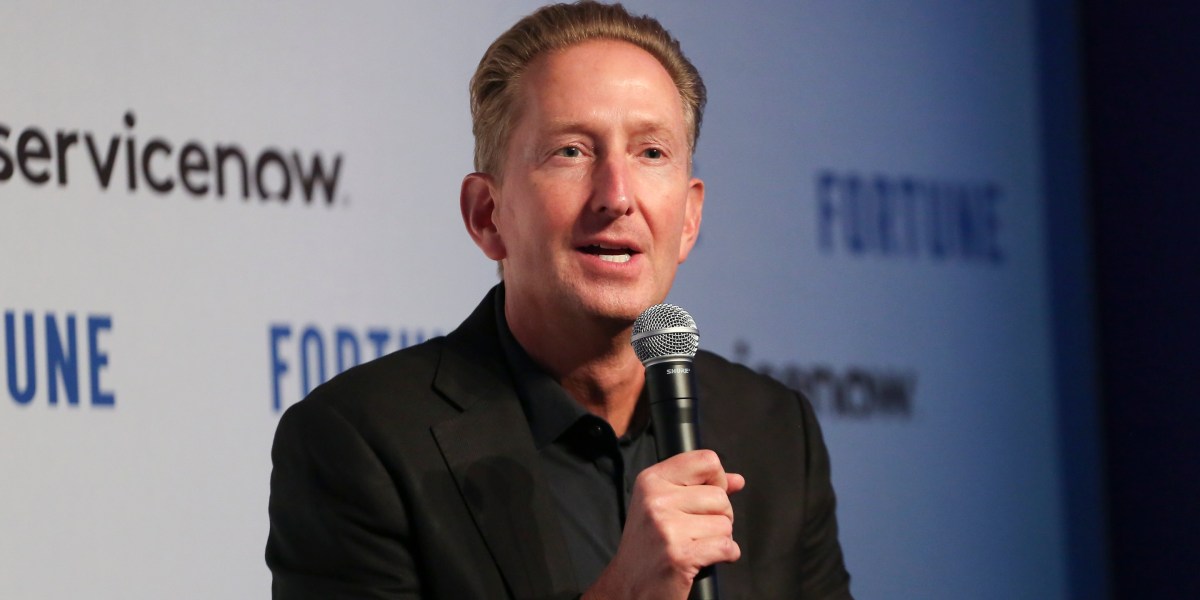
At the Fortune AIQ Summit on Oct. 1, I interviewed Ewout Steenbergen, EVP and CFO of Booking Holdings (No. 169 on the Fortune 500), which owns and operates several major online travel brands, including Booking.com, Priceline, Agoda, KAYAK, OpenTable, and Rentalcars.com.
Steenbergen described a future in which AI makes travel planning more seamless, personalized, and proactive. That could mean suggesting an indoor visit to the Louvre when rain threatens a Paris itinerary, automatically moving a restaurant reservation after a delayed flight, or recommending an activity based on a traveler’s preferences and open time.
The prize is not simply a better chatbot. It is what Booking calls a “connected trip”: an integrated experience that ties together flights, hotels, restaurants, rental cars, and activities. And, in doing so, potentially creates more loyalty, trust, and frequency of engagement.
From AI pilots to unit economics
For finance leaders, Steenbergen’s comments offered a practical framework for judging AI investments. His message: Move past isolated pilots, but keep a close eye on unit economics.
Booking spends roughly $8 billion to $9 billion annually on paid customer-acquisition channels, including search, social, and metasearch platforms, Steenbergen said. About one-third of its consumer traffic comes through paid channels, while the other two-thirds comes directly to its platforms. As consumers turn to more AI tools and agents for discovery, he sees greater channel diversification as potentially positive for Booking’s unit economics.
Early signals are encouraging. Customers using Booking’s AI tools are booking somewhat faster, converting at somewhat higher rates, and canceling less often, Steenbergen said, while cautioning that the data remains early stage.
I asked him how he’s measuring the financial return on investment when it comes to AI. “I think in this area there isn’t a perfect answer,” he said. He continued, “I even think that the hyperscalers that spend hundreds of billions on the development of their large language models, they don’t really know what is going to be the ROI,” Steenbergen said. “They have maybe some assumptions and some hypotheses, but the whole point is, you don’t want to fall behind.”
He argued that the biggest returns come not from layering AI onto existing processes, but from rebuilding processes end to end. In customer service, Booking has seen booking units grow at a high single-digit rate while total customer-service costs declined slightly, he said. Customer satisfaction increased at the same time, driving down average servicing cost per booking.
In engineering, the company’s roughly 9,000 technologists have used AI tools to increase the number of merge requests put into production by about 30%, Steenbergen said. Crucially, that figure reflects code that has been tested and cleared quality controls—not merely generated.
The CFO’s job, then, is to measure both sides of the ledger. Steenbergen said Booking monitors token and licensing costs and uses “effective model-cost routing,” reserving lower-cost or open-source models for simpler tasks and more expensive models for complex ones. One engineering metric combines human and AI costs: total IT cost per merge request.
That is the more mature AI-finance question. Not whether a model costs more in isolation, but whether it lowers the all-in cost of producing a valuable outcome.
Steenbergen is applying the technology personally, too. He has an “AI coach” and uses two AI agents: a “strategic thought partner” for board materials and strategic analysis, and a “critical equity research agent” to pressure-test earnings-call preparation.
Watch the full video of my interview with Steenbergen at the Fortune AIQ Summit here.
Sheryl [email protected]
This story was originally featured on Fortune.com
Hence then, the article about booking holdings spends nearly 9 billion a year to reach travelers its cfo explains how ai is changing trip planning was published today ( ) and is available on Fortune ( Middle East ) The editorial team at PressBee has edited and verified it, and it may have been modified, fully republished, or quoted. You can read and follow the updates of this news or article from its original source.
Read More Details
Finally We wish PressBee provided you with enough information of ( Booking Holdings spends nearly $9 billion a year to reach travelers. Its CFO explains how AI is changing trip planning )


Also on site :
- In 1974, three artists buried 10 Cadillacs nose-first in an Amarillo, Texas wheat field; the row was moved 2 miles west in 1997 as the city grew
- Ryde Group Ltd. Sued for Securities Law Violations - Contact the DJS Law Group to Discuss Your Rights - RYDE
- In 1987, Jim Reinders built a 96-foot circle of 39 cars in a Nebraska field as a memorial to his father; an estimated 4,000 people later watched an eclipse from it