
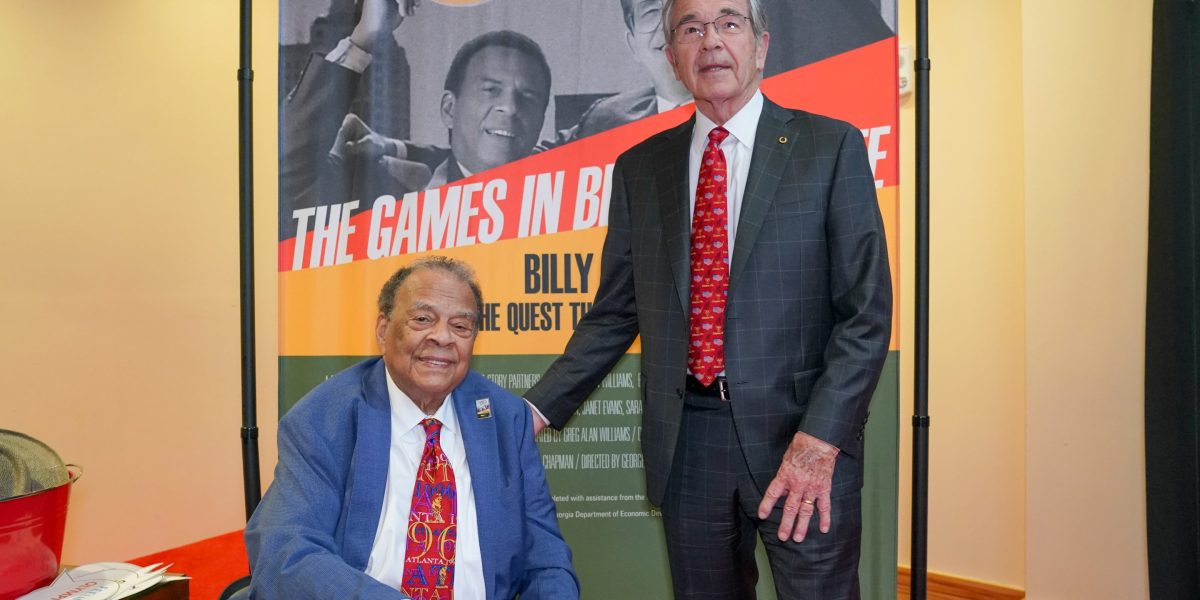
Thirty years ago, a Fortune cover story chronicled the improbable campaign that brought the Centennial Olympic Games to Atlanta. The force behind the global campaign for “this Sun Belt hustler” to host the 1996 Olympics was an extraordinary pairing, wrote John Huey, himself an Atlantan.
Billy Payne, a white real estate lawyer and former University of Georgia football player, supplied the conviction that such a Quixotic campaign could succeed. Andrew Young—the civil-rights leader, former congressman, U.N. ambassador, and Atlanta mayor—brought a global network and a political understanding of what Atlanta could represent.
When Payne and Young set out upon their mission, Huey wrote, Atlanta was “67% black and one of the poorest, most crime-ridden, least educated, worst-housed municipalities in the U.S.” But it was, Huey writes, the Civil Rights movement that “transformed it from bush league to big league.” The Voting Rights Act of 1965 helped Black Atlantans to consolidate political power, and Huey wrote, “At City Hall, a black oligarchy rules in an unspoken strategic alliance with a select group of white businessmen attuned to the rules of the Atlanta Way. Simply put, this is code for folks who understand and accept why and how the spoils of any venture must be divided between blacks and whites.”
Young’s strategic pitch to the African National Olympic Committees at a meeting in Mauritius made the case that Atlanta’s Black majority should win it the support of African nations: “It’s not our fault that somebody took us from Africa hundreds of years ago,” he told the committees. “We are the only city of majority African descent that has a chance to host the Olympics. And we need your support just as though we were on the African continent.”
Young’s pitch won the votes globally; Atlanta’s business community helped turn the plan into a viable event. Payne’s Atlanta Committee for the Olympic Games sold the Olympics as an “unparalleled marketing opportunity,” and Huey reported that Coca-Cola—a brand created in an Atlanta pharmacy, and still headquartered there—“went all out,” building a $20 million, eight-acre Olympic city. By the summer of 1996, corporate sponsorships, broadcast rights, ticket sales, and merchandise licensing had raised more than $1.5 billion—a record for an Olympics at the time.
The story is an inspiring account of how cities manufacture possibility—through civic mythology, political pragmatism, and unlikely alliances.
This story was originally featured on Fortune.com
Hence then, the article about how atlanta sold itself as an olympics worthy city was published today ( ) and is available on Fortune ( Middle East ) The editorial team at PressBee has edited and verified it, and it may have been modified, fully republished, or quoted. You can read and follow the updates of this news or article from its original source.
Read More Details
Finally We wish PressBee provided you with enough information of ( How Atlanta sold itself as an Olympics-worthy city )


Also on site :
- Get Old Hollywood Charm for Less With Heirloom-Inspired Garnet and White Topaz Earrings, Now Over 40% Off
- Walmart’s $42 10-Drawer Rolling Cart Is a Versatile Storage Option for Papers, Tools, and Crafting Supplies
- ‘All That She Wants’ Review: Annie Murphy Is All That in a Fizzy Rom-Com That Works Best When It Isn’t Trying Too Hard