
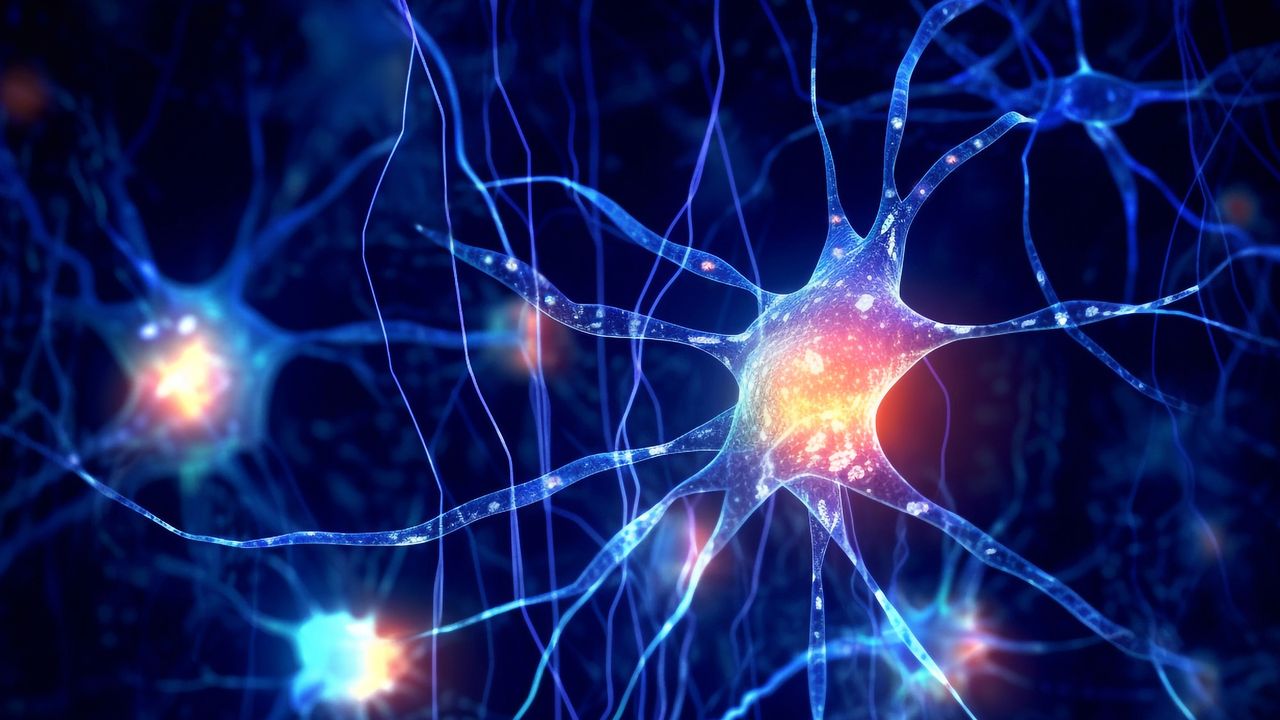
Scientists may have found a way to regenerate the neurons that are lost due to conditions like Alzheimer's disease, a new laboratory study hints.
The research, published Aug. 26 in the journal Cell Biomaterials, suggests that reducing levels of a key protein in another type of cell in the brain, called astrocytes, may convert those cells into neurons. The adult brain has a limited capacity to produce new neurons, at baseline, and an even more limited ability to replace neurons lost to disease.
If successfully developed into a treatment for humans, this new approach could replenish lost neurons and thus restore brain function, the study authors say.
Astrocytes are abundant, star-shaped cells in the brain that protect and support the functions of neurons. A crucial protein for astrocyte development is called PTBP1, and previously, scientists suggested that eliminating this protein in astrocytes may convert them into neurons. In that study, researchers reported converting astrocytes in the mouse brain into neurons by eliminating the gene that coded for PTBP1.
However, later experiments contradicted these results, suggesting that newly formed neurons could not be traced back to the astrocytes. So Peisheng Xu, a co-author of the new study and a pharmaceutical scientist at the University of South Carolina, set out to investigate that contradiction.
"We felt it's strange [that] two groups of people got different conclusions," he told Live Science.
He used a technique called Nano-Eraser, developed earlier in his lab, to delete PTBP1 from astrocytes without editing any of their genes. The team accomplished this by packaging an antibody that targets PTBP1 into a polymer gel. That gel helped sneak the antibody across the blood-brain barrier, a gatekeeper that prevents certain substances in the bloodstream from entering the brain.
Once it reaches astrocytes in the brain, the antibody binds to PTBP1 and drives the cell's internal machinery to destroy the protein.
"I think it's quite interesting, intriguing and an innovative approach," said Dr. Christiane Wrann, a neuroscientist at Harvard Medical School, who was not involved in the study. "They show that [the gel] can cross the blood-brain barrier," which is important for developing therapies for the brain, she told Live Science.
The team applied a tool called Nano-Eraser to inhibit the protein PTBP1 in astrocytes. This changed them into neurons, they report. (Image credit: Created with BioRender.com)The team first tested the gel in human astrocytes grown in lab dishes. Over the course of days, astrocytes exposed to the gel lost their characteristic star shape and started to form axons — the wires from which neurons send messages. Proteins typically found in neurons also became more abundant in the astrocytes.
The cells later showed electrical activity that further confirmed that they were functioning similarly to neurons and could fire synchronously. The gel also showed similar results in miniature models of the brain, called organoids, which had been grown from human stem cells.
The researchers then tested the gel in mouse models of Alzheimer's disease. These lab mice had lost neurons and had developed some characteristic features of Alzheimer's disease, such as inflammation, loss of cognitive function, and sticky clumps of a protein in the brain.
The team gave these mice two intravenous doses of the gel, eight days apart. Over the next four weeks, behavioral tests suggested that the treated mice's memories improved and they were able to build better nests than untreated mice; that's an indication of improved behavioral function. Later, the researchers examined the brains of the treated mice, finding that the density of their neurons had increased while their levels of inflammatory molecules decreased.
However, while the lab-dish experiments indicated that astrocytes converted into neurons, that finding has not been confirmed in live mice, Xu said.
"We observed that neuron density increased in treated mice compared to untreated ones," he said, "but we cannot yet eliminate the possibility that some other neural stem cells might have also converted into neurons."
Related storiesAlzheimer's comes in at least 5 distinct forms, study revealsTiny 'brains' grown in the lab could become conscious and feel pain — and we're not readyScientists just discovered a big limitation in lab-grown minibrains — they have a skewed 'sense of time'
Wrann agrees that additional experiments would have been required to see whether a particular astrocyte in the mouse brain changed into a neuron. While the results are "intriguing," a lot more research is needed to see the long-term effects of such a treatment on different types of brain cells, she said.
Xu and his team now plan to probe further into astrocyte conversion in live mice. Before they can move to clinical trials with people, he said, the safety and effectiveness of the treatment would need to be tested in nonhuman primates.
Notably, astrocytes themselves serve important functions in the brain. So there's a question about what having "chronically reduced PTBP1 could do to the brain," Wrann noted. She agreed that careful studies would be needed for this to translate to humans.
"That's something that needs to be tested step by step," she said.
See how much you know about the most complex organ in the human body with our brain quiz!
Hence then, the article about scientists invent a gel that creates neurons from other cells which could help treat alzheimer s was published today ( ) and is available on Live Science ( Middle East ) The editorial team at PressBee has edited and verified it, and it may have been modified, fully republished, or quoted. You can read and follow the updates of this news or article from its original source.
Read More Details
Finally We wish PressBee provided you with enough information of ( Scientists invent a gel that creates neurons from other cells, which could help treat Alzheimer's )


Also on site :
- Italy approves sweeping security measures in response to protests
- Today’s NYT ‘Strands’ Hints, Spangram and Answers for Wednesday, October 21, 2026
- Xinhua Silk Road: Finanzforum in Beijing stellt Offenheit, Zusammenarbeit und Inklusivität in den Mittelpunkt