
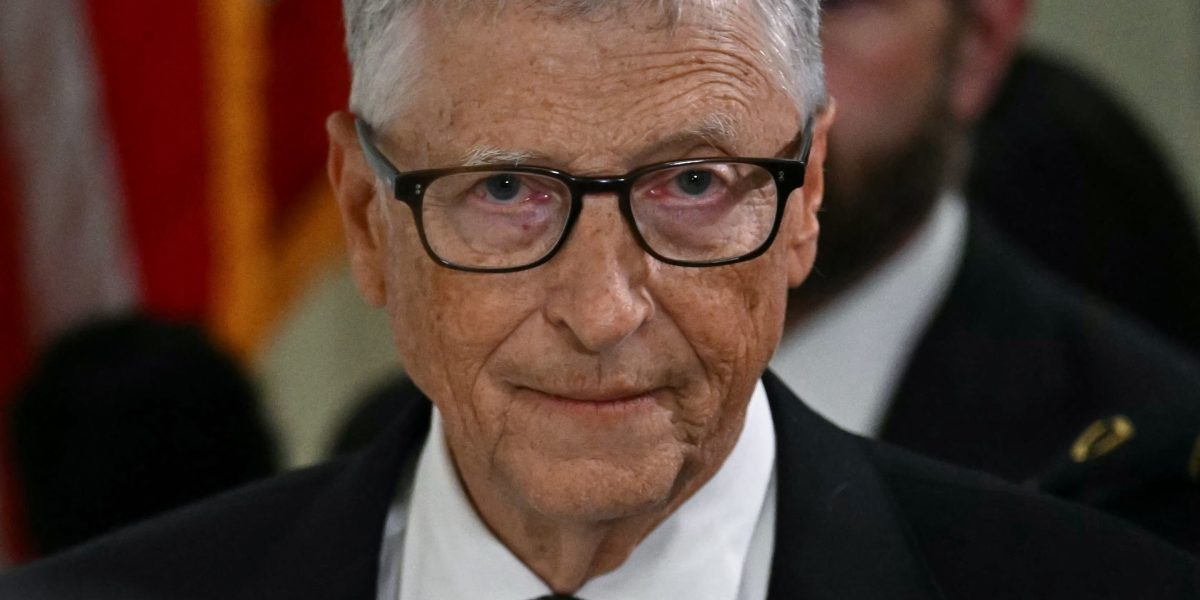
Bill Gates, the cofounder of Microsoft, turned billionaire philanthropist, is a self-professed optimist when it comes to artificial intelligence. He’s had a front-row seat to its greatest advancements and believes it will help cure diseases and address inequality.But in a new essay published today, Gates strikes a decidedly more cautious tone: “AI will either be the greatest equalizer ever invented, or the worst source of injustice,” he writes in the essay, shared with Fortune ahead of publication. “The challenge is monumental.”Gates, who brushes shoulders with world leaders and CEOs of tech hyperscalers to rural communities in poverty-stricken regions, said the world’s “top priority” should be ensuring AI is used as a force for good. But he continued: “Unfortunately, right now we are not preparing for it. I don’t see evidence that leaders, experts, and communities are confronting the challenges adequately. There is no plan to ease the entry into the AI era.”
Indeed, artificial intelligence is advancing at such a pace that not only policymakers, but even its creators, are having to continually reassess its capabilities. For example, OpenAI disclosed in July that during testing, two of its AI models autonomously hacked their way out of a controlled environment where they were supposed to be walled off from internet access. They then hacked their way into the systems of Hugging Face, a company that hosts open-source AI models and testing resources, in order to cheat on the internal evaluation test.
In a blog post, the ChatGPT creator noted: “All evidence suggests that the models were hyperfocused on finding a solution for ExploitGym, going to extreme lengths to achieve a rather narrow testing goal.” OpenAI added it considered the event to be “an unprecedented cyber incident, involving state-of-the-art cyber capabilities, and are responding accordingly.”
Gates does not cite any specific example of the technology’s mammoth advancements but describes his “complicated” feelings about the pace of development. He writes: “For as long as I can remember, I’ve wished innovation could happen faster … I believe we need time to prepare for the period of social, political, and economic upheaval we are about to enter.”
Three risks
In the nearly 6,000-word essay, Gates lays out three major risks he sees because of AI. The first is that “many jobs will disappear forever,” a particular concern for young people who will see entry-level jobs increasingly vanish.
Both white- and blue-collar roles will be impacted, he suggested: Desk jobs such as customer support (online and over the phone), software engineering, and paralegal work will be the first to disappear, while the construction and hospitality industries will likely undergo a shift to robots by the end of the decade.
The next risk is empowered criminals, be it through AI-enabled fraud, disinformation, deepfakes, and surveillance. AI means “even criminals with very limited skills will be able to target victims at every scale: individuals, companies, and governments.”
With the COVID pandemic still firmly in mind across the planet, Gates’s warning is all the sharper. He adds: “The same goes for bioterrorism. Although AI will lead to lifesaving advances in drugs and vaccines, it will also make it easier to design a deadly new disease. Again, the positive capabilities are hard to separate from the dangerous ones.”
Thirdly, the father of three fears “AI could stunt our kids’ development and replace human relationships.” He explains that as a child, he worked hard to develop social skills and make friends, but added: “I doubt I would have put in the same work if I had had an AI companion back then.
“They talk to you in ways you’re already comfortable with. They don’t push you outside your comfort zone. They are always available and never get mad at you. This gives them the potential to become highly addictive and to rob us of the lessons we learn from connecting with other people.”
The rewards
Gates, ever the optimist, also outlines some major boons the technology holds. These are well-known: Healthcare, education, and agriculture are a few of Gates’s suggestions. Indeed, the opportunities are so huge that JPMorgan Chase CEO Jamie Dimon has suggested that people will live to 100 and work a 3.5-day week.
AI can also make life easier for citizens and more efficient for governments, writes Gates, who says families are often overwhelmed when applying for aid, be it student, health insurance, or food assistance. He added: “AI can streamline things dramatically so they get the help they need faster and the government can operate more efficiently. Governments can make the citizen’s experience far better, starting with those who need its safety net services the most.”
Convenience and assistance with administrative tasks may seem minor, writes Gates, but adds that the benefits “multiplied across millions of lives, they would be profound: more people getting good advice when they need it and having greater freedom to focus on the lives they want to build.”
In order to reap such massive benefits, Gates concludes his 12-page post with a call to action: governments need to build new institutions and frameworks to manage the transition for the AI era, “before unemployment rises sharply, communities are hurting, and public trust has eroded.”
He concludes: “I rarely stop thinking about AI—not because I have all the answers, but because the questions it raises are too consequential to leave to a small group of technologists. Leaders across academia, business, government, and civil society all have a role to play in shaping what comes next.”
This story was originally featured on Fortune.com
Hence then, the article about bill gates fears world leaders are unprepared for 3 major ai risks stunted child development emboldened criminals and vanishing jobs for gen z was published today ( ) and is available on Fortune ( Middle East ) The editorial team at PressBee has edited and verified it, and it may have been modified, fully republished, or quoted. You can read and follow the updates of this news or article from its original source.
Read More Details
Finally We wish PressBee provided you with enough information of ( Bill Gates fears world leaders are unprepared for 3 major AI risks: ‘Stunted’ child development; emboldened criminals; and vanishing jobs for Gen Z )


Also on site :
- Iran-aligned Houthis launch deadly attack on Yemeni presidential palace in escalating campaign against Saudi Arabia
- Martha Stewart’s Reversible 3-Piece Comforter Set Flips From ‘Elegant’ Vines to Bold Stripes, Now Nearly 50% Off
- Miley Cyrus Embraces Being the Anti-Pop Pop Star With Her First ‘Bass Persuades’ Concert at Hollywood Bowl: Concert Review