
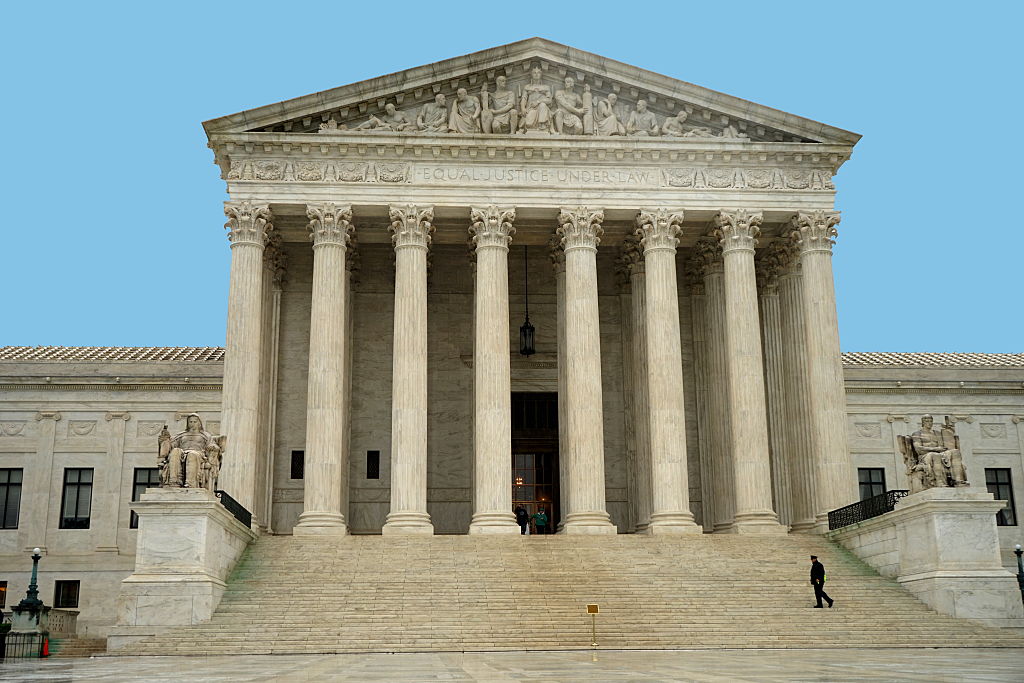
In the past, Americans with disabilities were sent off to large, isolating, state-run institutions as a matter of course. In overcrowded, understaffed facilities, residents were too often neglected and stripped of privacy, autonomy, or any meaningful connection to their communities. When these conditions were brought to light, they sparked national outrage. That reckoning helped galvanize the deinstitutionalization movement, a decades-long push to create services that support people with disabilities in their homes and communities.
Decades of advocacy to “deinstitutionalize” have fortunately transformed quality of life for people with disabilities, but it wasn’t until just 27 years ago that the Supreme Court's 1999 decision in Olmstead v. Lois Curtis made it so disabled Americans could rest easy knowing forced segregation wasn’t inevitable.
For much of our history, few options existed between mass institutionalization in expensive and confining facilities on one end of the spectrum, and fully independent living absent any supports on the other end of the spectrum. The legal precedent rooted in Olmstead, plus the proliferation of once-nonexistent community-based services, changed that.
Now, however, the foundation that underpins our nation’s wide spectrum of community-based services is crumbling.
Olmstead affirmed that the Americans with Disabilities Act (ADA) grants people with disabilities the right to live, work, and participate in their communities with the supports they need. That’s why we found it especially egregious that the U.S. Department of Justice (DOJ) released a legal memo last month coinciding with the decision’s anniversary, calling into question the established right of people with disabilities to receive services in the most integrated setting possible. The memo doesn’t change the law, but it seeks to erode decades of settled civil rights protections.
The DOJ memo follows a range of other actions by the Trump Administration, including significant cuts to federal Medicaid spending set to go into effect next year and the withholding of hundreds of millions of dollars of funding for community-based services in the name of protecting program integrity. In July 2026, the administration paused more than one billion dollars in Medicaid payments to California and Minnesota, citing fraud but offering little specificity to support their claim. Taken together, these moves seem to falsely imply that home- and community-based services (HCBS) are wasteful, rather than essential.
The Trump Administration has repeatedly questioned the value of HCBS by suggesting that Medicaid is paying professionals to carry out responsibilities families should simply provide themselves. Health and Human Services Secretary Robert F. Kennedy told lawmakers that the waivers pay family members “for picking up the groceries, for driving somebody to a doctor’s appointment,” insisting that these family members are “getting paid to do things that they used to do [...] for free.” Centers for Medicare and Medicaid Services Administrator Mehmet Oz has echoed that message, describing personal care services as helping “Medicaid patients do something that our families would normally do for us, like carrying groceries.”
Statements such as these have real-world implications and could serve to justify gutting these HCBS services—potentially forcing people with disabilities back into large public institutions, while pushing family caregivers and direct support professionals out of their respective workforces and into poverty.
The debate over how we invest in Medicaid cannot be separated from the debate over civil rights for people with disabilities. Olmstead’s promise of community living is only meaningful if people have access to the services that make community living viable. For millions, Medicaid is a lifeline. It funds the direct support professional who helps someone get dressed each morning. It funds the job coach who helps build skills needed to succeed in the workforce. It funds transportation to medical appointments, support to navigate public transportation, and countless other activities that enable people to participate fully in community life.
These activities are neither optional nor negotiable—they’re the foundation of the inclusion that this country promised through the ADA.
The notion that families should provide care without additional support is unrealistic and shortsighted, especially for families of people with highly complex medical or behavioral needs. Direct support professionals are trained to implement individualized care plans with a person-centered approach, respond to behavioral crises, administer medications, and more.
Moreover, this thinking also ignores reality. For instance, many disabled adults’ parents are elderly or deceased. Many of their spouses work full time, sometimes in multiple jobs to meet their families’ financial needs. Many of their siblings are in the same boat but may live hundreds of miles away. Some have no family to fall back on at all.
Suggesting that people don’t have the right to community-based support while insisting families provide needed care for free risks undoing more than a quarter-century of civil rights progress made possible by Olmstead. Furthermore, dismantling the spectrum of community-based services is expected to have negative down-the-line ramifications. We anticipate that more families will languish on states’ waiting lists for longer, more providers will reduce services or go out of business altogether, more professionals will leave the workforce to fill caregiving gaps, and more people with disabilities will be left with no other choice but expensive, isolating institutions.
All of this threatens to devastate families and local economies. If protecting taxpayers is truly the goal, community-based services shouldn’t be slashed—they should be upheld as the gold standard, especially given the dramatic cost savings they make possible. Supporting someone with an intellectual or developmental disability through home- and community-based services costs about $70,500 per year, versus more than $395,000 annually in a public institution.
While the DOJ’s memo and the administration’s other actions don’t overturn Olmstead, they do place another crack in the fragile foundation on which community living for millions of Americans is built. As we wrote last summer on the 35th anniversary of the ADA, we must reaffirm, not reinterpret or undo, the rights Olmstead upheld.
Hence then, the article about the promise we made to americans with disabilities is under attack was published today ( ) and is available on Time ( Middle East ) The editorial team at PressBee has edited and verified it, and it may have been modified, fully republished, or quoted. You can read and follow the updates of this news or article from its original source.
Read More Details
Finally We wish PressBee provided you with enough information of ( The Promise We Made to Americans with Disabilities Is Under Attack )


Also on site :
- In 1983, Congress set aside $42 million to move a Pennsylvania town off a burning coal seam; Centralia went from 1,017 residents to five by 2020
- Romania’s political crisis intensifies as Parliament rejects pro-EU PM
- 1960 Stone Age Cartoon, Once Taped at the Bedside of Bugs Bunny’s Voice Actor, Premiered 66 Years Ago Today