
The FIA has strongly rejected accusations that it failed to foresee the problems created by Formula 1’s new 2026 regulations, insisting it identified the risks well in advance but was blocked from making changes by the sport’s governance system and a lack of support from manufacturers.
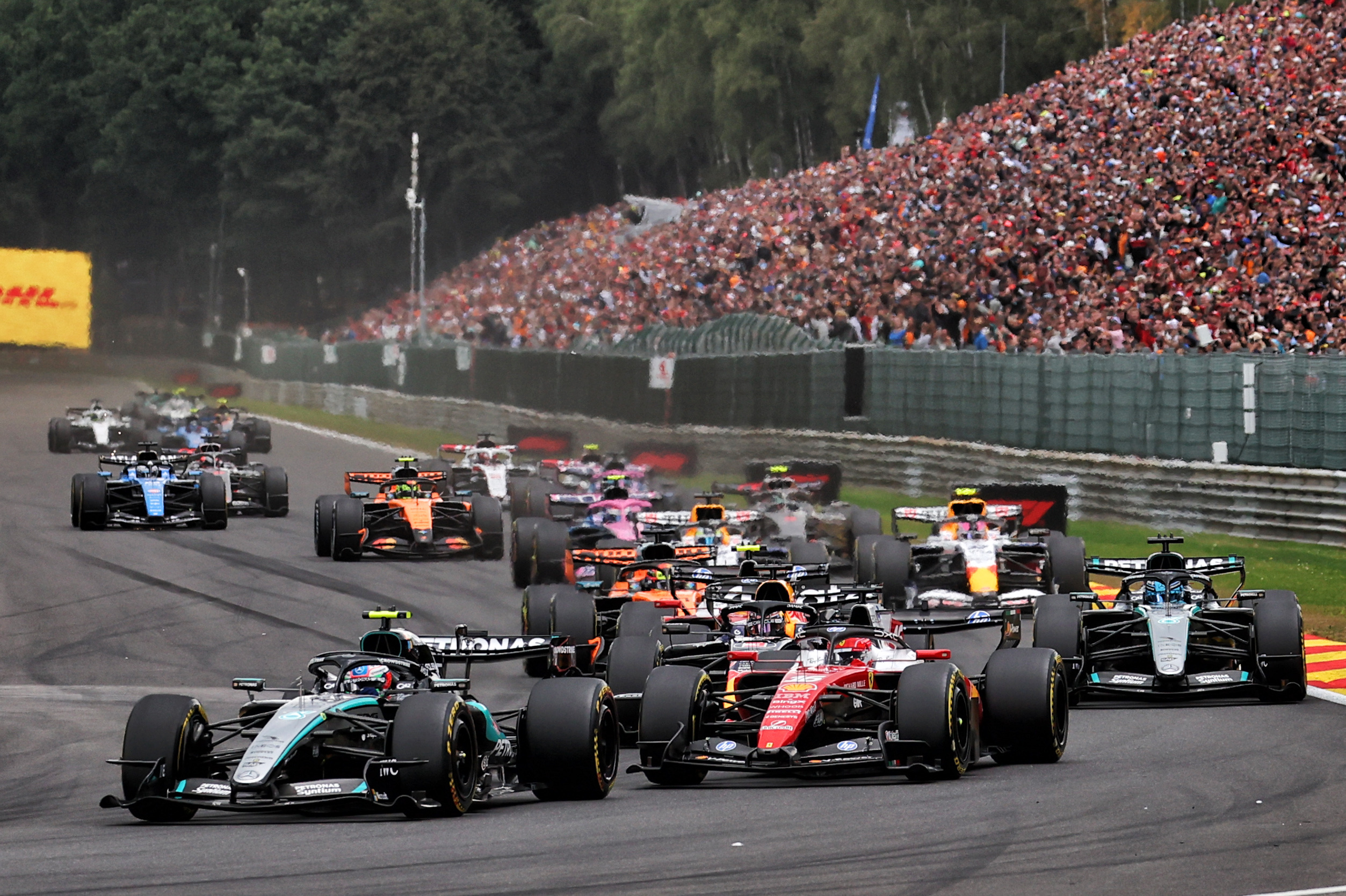
Criticism intensified after the Belgian Grand Prix, where drivers complained that the new energy-sensitive cars had diminished the character of Spa-Francorchamps.
Williams charger Carlos Sainz questioned how the rules were ever approved, while Ferrari’s Lewis Hamilton suggested those responsible should be held accountable.
FIA single-seater director Nikolas Tombazis addressed the drivers’ criticism and insisted the governing body had been aware of the concerns well before the season began.
“I think drivers are, by definition, quite demanding clients. So I don’t think we expect them to have a sugar coat or to not speak their mind,” Tombazis said.
“We did anticipate a lot of these things they have complained about in the two years before the launch of the season, and we did try to make some adjustments.”
“But we failed with the governance that was in place. So I think it was realistically only to be expected.”
The FIA had explored changes, including a proposal to reduce maximum race energy deployment, but that effort was rejected before the season started.
Manufacturers had to approve major changes
Tombazis explained that a Power Unit Advisory Committee was created to protect both existing engine suppliers and new entrants ahead of the 2026 rules.
Under that arrangement, significant regulation changes required support from the FIA, Formula One Management and four of the five manufacturers involved at the time. But the required backing failed to materialize.
FIA Single Seater Director, Nikolas Tombazis.
“If a PU manufacturer who was not participating in F1, let’s say Audi for example, they still had to be bound by regulations,” Tombazis said.
“They could not come to us and say, ‘well, you know we’re not participating, hence we can spend five times the money, for example’. That would have been unfair.
“So that’s why there was a governance agreement that, on the one hand, forced them to be bound by the regulations, including the financial and operational, and all of that.
Read also:
Domenicali: Drivers may complain, but F1 must 'follow the fans'
“But on the other hand, it puts limitations as to how much we can change things unilaterally as the FIA.
“Therefore any change had to be approved by a significant number of the PU manufacturers, and so for the sort of changes we did, we needed at least four of them to agree.
“Quite simply, four of them did not agree during the years when we discussed adjustments.”
Emergency measures to improve energy management were eventually introduced from the Miami Grand Prix, and Formula 1 has since agreed a longer-term plan to move from a nominal 50/50 engine-battery power split toward 60/40 by 2028.
Tombazis admitted frustration that those decisions were not taken earlier.
“I think it’s a bit of a shame that we had to wait until then. We discussed things in May to get the package for ’27 and for ’28.”
“I think we could have ideally done that a couple of years before, and then there wouldn’t have been all of this discussion.”
The impact on the spectacle on the track
Despite the controversy, Tombazis believes the racing itself has remained entertaining.
“Most races have been pretty exciting, I would say,” he said. “There’s been quite a lot of fighting.
“While we do have a clear advantage for one manufacturer, in the past when we’ve had this at an early start of regulations it has been very processional.
“And now I think, despite the fact Mercedes has been doing most of the winning, the races have nonetheless been quite exciting, with quite a lot of [position] changes and so on.
He added: “So we need to look at the balance of things. Clearly, drivers are important stakeholders in the sport. So, therefore, I think we’ve done the right thing by listening to them a lot and taking actions.
“But I think we also need to think about the spectators as well, and that they want to see changes and exciting races and so on.”
For the FIA, the message is clear: the warning signs were seen, but the rules could not be changed without the backing of the manufacturers who helped shape them. Sadly, the latter declined to act.
Keep up to date with all the F1 news via X and Facebook
FIA blames F1 manufacturers for failure to fix 2026 regs sooner F1i.com.
Hence then, the article about fia blames f1 manufacturers for failure to fix 2026 regs sooner was published today ( ) and is available on F1 News ( Middle East ) The editorial team at PressBee has edited and verified it, and it may have been modified, fully republished, or quoted. You can read and follow the updates of this news or article from its original source.
Read More Details
Finally We wish PressBee provided you with enough information of ( FIA blames F1 manufacturers for failure to fix 2026 regs sooner )


Also on site :
- Portugal vs Wales Match Date in the 2026 UEFA Nations League and Broadcasting Channels
- The Vision Completely Botches Je’Von Evans Spot As Nobody Catches High-Flying Move On WWE RAW
- LNN: Marvin Bagley III most underrated free agency addition?