
It’s one of the Supreme Court’s most palpable fears: Somewhere, somehow, a government official might one day be held personally accountable in some way for their official conduct—or, more accurately, their misconduct. A new case at the court will likely be the latest demonstration of the court’s pro-impunity mindset.
The justices agreed on Monday to hear Nielsen v. Watanabe in the upcoming term, which starts next October. The case will give the court an opportunity to further narrow what are known as Bivens claims, which allow for people to sue federal officials for damages under increasingly narrow circumstances.
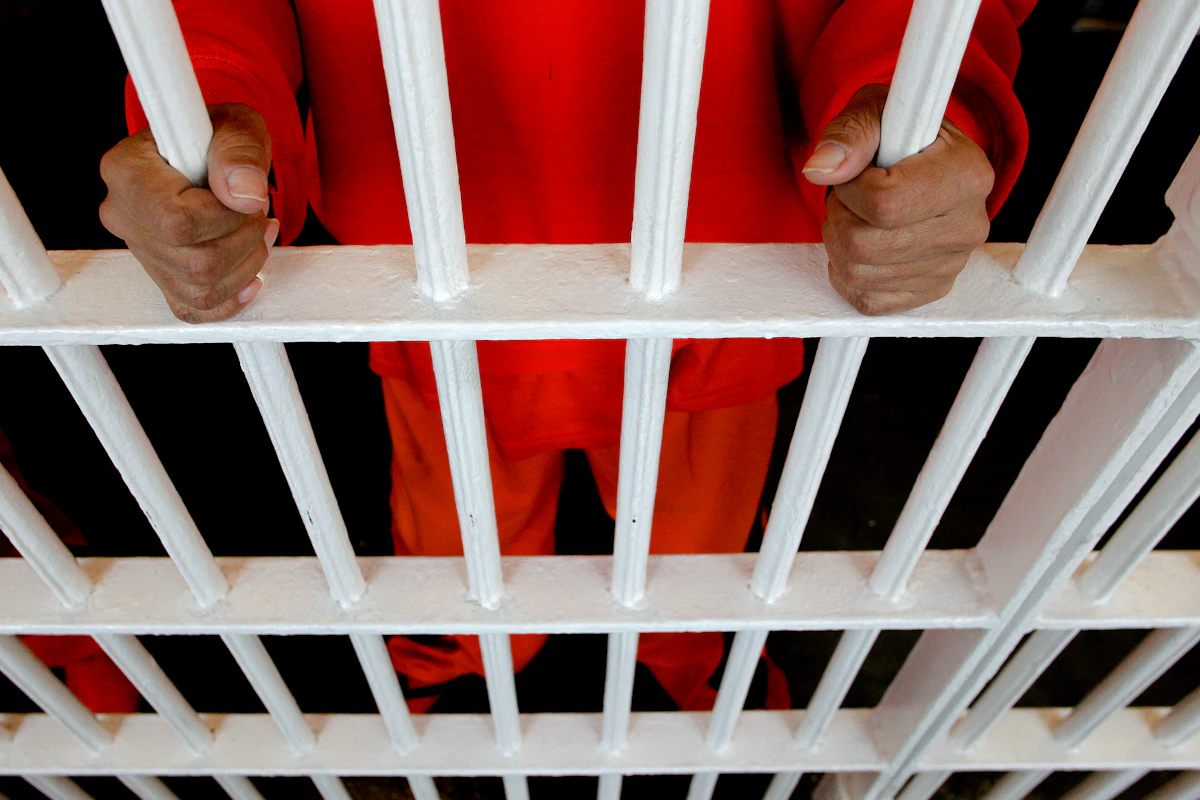
The plaintiff in the case, Ketei Watanabe, was a prisoner at a federal prison in Honolulu in 2021. During that time, he was “brutally assaulted” in a “gang-related fight,” according to his brief for the justices. After the fight, he told multiple prison officials, including nurse Francis Nielsen, that he had suffered significant injuries and was in a great deal of pain.
Nielsen and other officials declined to obtain specialist treatment for Watanabe or to transport him to a local hospital for treatment. Instead, his filings said, Nielsen gave him over-the-counter pain medication. “Several months after the attack, Watanabe finally received an x-ray: It showed that he had a fractured coccyx and that bone chips had migrated to surrounding soft tissue areas,” his brief explained to the court.
Even after this diagnosis, Watanabe alleged, Nielsen and other officials refused to provide him with outside medical treatment and he did not obtain proper medical care until his release from prison three years after the initial fight. The Supreme Court has previously held that prisons have a duty to provide medical care for prisoners under the Eighth Amendment. Accordingly, Watanabe sued the officials in federal court for their alleged mistreatment.
What happens when a government official violates your constitutional rights in some way? If they are a state or local official, like a police officer in a major city, you might file a Section 1983 lawsuit in federal court for damages. That Reconstruction-era law allows people to sue state and local officials in federal court in their personal capacity for violating a federal constitutional right. (More on this later.)
If a federal official violates your constitutional rights, on the other hand, there are very few ways to hold that official personally accountable. Congress has not enacted a Section 1983-style law for suing federal officials, though there have occasionally been proposals to do so. Nor do other congressionally enacted remedies, like the Federal Tort Claims Act, allow people to pursue damages against specific officials who violate their constitutional rights.
Watanabe instead relied upon an implied cause of action rather than an explicitly created one. This approach became more common after the 1971 case Bivens v. Six Unknown Named Agents of the Federal Bureau of Narcotics. Most people just call the case Bivens for short. In Bivens, federal agents searched the home of a New York man without a warrant and arrested him on drug-related charges. Bivens sued the agents in question in federal court for violating his Fourth Amendment right to be free from unconstitutional searches and seizures.
The narcotics agents argued that they could not be sued in their personal capacity because Congress had not created a cause of action to do so. The Supreme Court, led by Justice William Brennan, sided with Bivens. While Brennan acknowledged that the Fourth Amendment “does not in so many words provide for its enforcement by an award of money damages for the consequences of its violation,” he concluded that Bivens could rely upon an implied cause of action instead to vindicate his violated rights.
Between 1971 and 1980, the Supreme Court applied that reasoning to two other contexts: gender-discrimination lawsuits by congressional staff under the Fifth Amendment and, as relevant for Watanabe’s case, prisoner lawsuits over improper medical care by prison officials under the Eighth Amendment. The latter is grounded in the 1980 case Carlson v. Green. In Carlson, prison officials effectively killed an asthmatic prisoner by holding him in conditions over doctors’ protests, denying him treatment for an asthma attack for roughly eight hours, and then giving him substandard care until he died.
Since Carlson, the Supreme Court’s increasingly conservative majority has gone out of its way to clip the wings of Bivens claims. Justices ranging from Warren Burger to Neil Gorsuch have argued that, under the Constitution’s separation of powers, it is Congress’s responsibility to create causes of actions to vindicate constitutional rights, not the judiciary’s. To that end, they have effectively refused to extend Bivens to new contexts while also—for reasons known only to the justices—declining to overturn Bivens altogether.
In the 2017 case Ziglar v. Abbasi, for example, the justices imposed a new test on Bivens claims that required lower courts to consider whether they arose in a “new Bivens context,” which is highly disfavored, or if any “special factors” should deter courts from extending Bivens to that new context. In practice, this gives lower courts a variety of tools to block new Bivens claims and narrow the handful of existing grounds for them.
In Watanabe’s case, Nielsen and his co-defendants argued that the Bivens claim against them should be rejected under the Supreme Court’s recent tests. Watanabe’s experience is a far cry from the sustained and deliberate misconduct that led to Carlson’s death in the 1980 case that expanded Bivens to the Eighth Amendment context, they claimed. They claimed that Carlson was merely a “wrongful-death case” rather than an overarching cause of action for insufficient medical care. Alternative dispute-resolution mechanisms, the defendants argued, should also count as a “special factor” against expanding Bivens to this supposedly new circumstance.
The Ninth Circuit Court of Appeals saw things differently. “Watanabe alleged official action to the same degree of specificity as that alleged in Carlson—‘acts and omissions’ that were deliberately indifferent to Watanabe’s serious medical condition,” a three-judge panel concluded. “Such alleged official actions include the refusal to transport Watanabe to an outside hospital and the failure to provide him competent medical attention.” Accordingly, they sided with Watanabe.
Nielsen and the other prison officials have good reason to think that the justices will now side with them. If there is one word that sums up the Roberts Court’s approach to power, it is “impunity.” Over the last few decades, the justices have used qualified immunity to greatly weaken Section 1983, the statutory analogue to Bivens for claims against state and local officials in federal court, despite an avalanche of criticism for the judge-made doctrine by academics, lower-court judges, and even a few members of the high court itself.
Taken together, the justices’ position is that Bivens is unacceptable because it is Congress’s responsibility, not the courts’, to create federal causes of action. When Congress does create those claims, however, the justices’ position is that the courts must sharply narrow them through judicially-created doctrines like qualified immunity. Judicial power can only make it harder, not easier, for people to hold accountable those officials who violate their constitutional rights.
Even beyond that specific context, the justices have consistently made it harder to hold government officials accountable over the last 20 years. They have repeatedly struck down criminal convictions of state and local officials under federal anti-bribery laws. They have closed the doors of the federal courts to those disempowered by racial and partisan gerrymandering. They even ruled two years ago that presidents can commit crimes without fear of prosecution, in part because the Supreme Court had previously held that presidents cannot face civil lawsuits either.
The overall effect of the Supreme Court’s rulings is a government where officials can often inflict incredible harms on people without any meaningful recourse—in the courts, at the ballot box, or through later prosecutions. Nielsen’s argument, stripped down to its barest essentials, is that prisoners under his care should only be able to invoke the Eighth Amendment against him if they die. I am skeptical that the Bill of Rights’s drafters went to the trouble of ratifying ten amendments for such paltry protections.
In Bivens, Justice Brennan quoted Chief Justice John Marshall in Marbury v. Madison to explain the fundamental reasoning of his decision. “The very essence of civil liberty,” he had written, “certainly consists in the right of every individual to claim the protection of the laws, whenever he receives an injury.” The court may ultimately side with Watanabe. After all, they have maintained recently that Bivens and Carlson are still good law. But it is hard to not doubt that they will move further away from Marshall’s simple wisdom—and from the basic protections of the Constitution itself.
Hence then, the article about the supreme court looks to expand its empire of impunity was published today ( ) and is available on The New Republic ( Middle East ) The editorial team at PressBee has edited and verified it, and it may have been modified, fully republished, or quoted. You can read and follow the updates of this news or article from its original source.
Read More Details
Finally We wish PressBee provided you with enough information of ( The Supreme Court Looks to Expand Its Empire of Impunity )


Also on site :
- In 1924, Caesar Cardini ran out of kitchen supplies in a Fourth of July rush at his Tijuana restaurant; he tossed romaine with what was left, and the salad carries his name
- Viola Davis, 61, Opens Up About ‘Extremely Painful’ Health Condition for the First Time: ‘It Terrified Me’ (Exclusive)
- Rosalía Shuts Down Kenan Thompson’s Idea for a Pop-Classical Album in Hilarious ‘SNL’ Promo: ‘That’s LUX’