
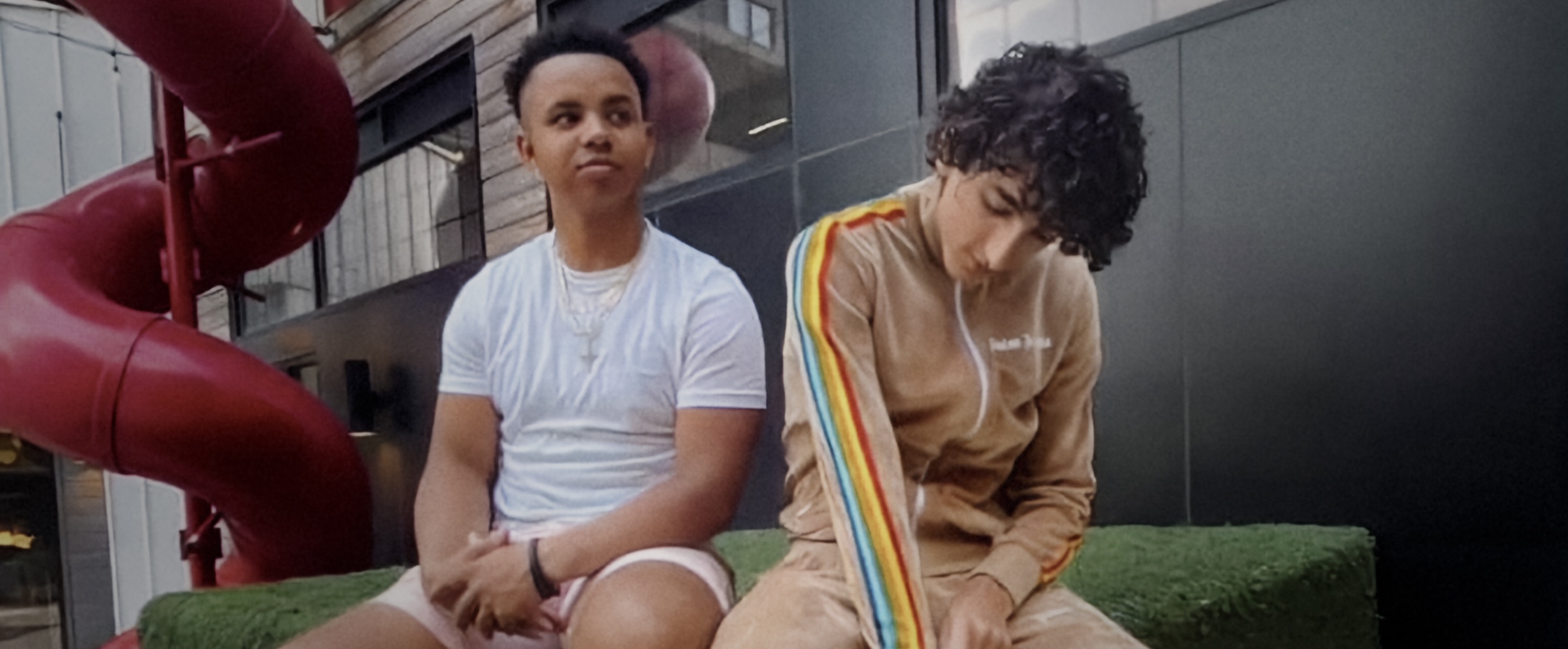
In the early morning of July 31, 2022, 17-year-old Mackenzie Shirilla drove her boyfriend, 20-year-old Dominic Russo, and his friend, 19-year-old Davion Flanagan, home from a high school graduation party. Then the unthinkable happened: after turning down a long stretch of a quiet residential road in Strongsville, Ohio, Shirilla accelerated her Toyota Camry to 100 miles per hour before slamming the vehicle head-on into a brick building, killing both passengers and critically injuring herself.
The terrifying wreck sent shockwaves throughout a tight-knit community. When emergency responders arrived, they found a mangled mess of metal—with all three people unconscious and two dead on arrival. Shirilla was airlifted to a local hospital, where she underwent multiple surgeries. But as detectives looked further into the case and discovered she had no memory of the tragedy, a new, more haunting question emerged.
After sorting through the evidence, prosecutors eventually charged Shirilla with murder, claiming she intentionally caused the crash after her relationship with Russo had unraveled. As part of her defense, Shirilla’s lawyer argued that Mackenzie, who declined to testify, had suffered from a blood pressure disorder called POTS, which causes momentary blackouts. But in a 2023 bench trial, a Cuyahoga County judge found her guilty on multiple counts, labeling her actions as “controlled, methodical, deliberate, intentional and purposeful,” before sentencing her to life in prison with the opportunity for parole after 15 years.
The Crash, a new documentary from Gareth Johnson, further unpacks the harrowing case, which garnered national attention and has remained a polarizing topic within the Strongsville community. Out May 15 on Netflix, it mixes in archival body-cam footage, new surveillance video, social media clips, and interviews with friends, family members, and investigators—and an exclusive interview with Mackenzie Shirilla, speaking for the first time about the incident.
As it progresses, the 90-minute documentary can sometimes feel like a horror story, uncovering uncomfortable layers around parenting, teenage social dynamics, and online personas. These nuances turned what might have otherwise been a straightforward story into a complex portrait of life in a digital world.
“I think it's sort of the worst thing that could happen to you as a parent,” Johnson says. “There's lots of warnings in this film about when things go wrong, and how badly things go wrong.”
The deadly crash and Shirilla’s case gained national attention throughout August 2022, but Johnson felt drawn to the case for “very personal reasons.” When he was a teenager, the director was also involved in a car crash that left one person dead—and left him severely injured. “While I was in the hospital recovering, I could sort of see this shockwave coming out from this incident, affecting all those people around me, all the people I love—my family, my friends, the families of the other people in the car,” he says.
As soon as he heard about Shirilla’s story, Johnson says, he “wanted to flip my experience on its head and understand the tragic event from the perspective of the family and friends around it.”
To flesh out that vision and capture the chronology and ripple effects, Johnson and executive producer Angharad Scott cultivated trust with the family and friends of Mackenzie, Dom, and Davion after months of open and honest conversations. But Scott notes that getting their sign-on proved to be easier than expected. “All the families, regardless of what their position was, felt that in some way their voices haven't been heard so far—or that they still had more to say,” she says.
Through these interviews, Johnson provides a foundation for Shirilla and Russo’s four-year relationship. As students at Strongsville High School, the pair had “planned to get married,” according to Shirilla’s father, and remained mostly inseparable, spending most of their time cooking, purchasing clothing, and spending time outside their houses. Shirilla established herself as a TikTok influencer (and a bit of a “mean girl,” as Dom’s friends in the documentary share) who sampled clothing products for her large following.
Included in their friend group was Davion Flanagan, a promising football player who was adopted with his two younger sisters when he was eight-years-old. Near the end of high school, his college and NFL aspirations ended after tearing his ACL and UCL, which led to him experimenting with drugs and falling into the pair’s group—a decision that would ultimately have the worst of consequences. This initial background—with added context from Mackenzie’s friend Rosie and Bubba, along with Davion’s sister—paints a mostly normal teenage experience. But The Crash gets more complicated once Johnson begins to interview county prosecutor Tim Troup, who unpacks the context and specifics around Shirilla’s behavior, the vehicle’s condition, and how the night actually unfolded.
The night of the crash
On the night of the crash, Shirilla, Russo, and Flanagan hung out together at a graduation party. At 5:30 a.m., the trio got into Shirilla’s car to presumably head back home. With Dom in the passenger seat and Davion in the back, Mackenzie started driving, turning from Pearl Road into Progress Drive in a controlled and deliberate manner before accelerating to 100 miles per hour.
That’s when Johnson leans on Troup to play narrator and lay out the details of the investigation. According to the prosecutor, no alcohol, THC, or psilocybin was found in Shirilla’s system. After examining the car, a forensic auto examiner also found that the brake and accelerator had all functioned properly—despite belief that a pedal may have been jammed or stuck. And in the car’s black box information, the gas pedal had been pressed for an elongated period at 100 percent, with the steering wheel turned slightly left, then right, before finally straightening out over the final stretch of road.
Throughout the narrative, Johnson never flinches in his portrayal of the wreck, unleashing footage of investigators approaching the car and the victims’ families. Later, he replays multiple surveillance shots of Shirilla’s speeding Camry that capture the reverberating shotgun sound it makes when slamming into bricks. The point, he says, was to create discomfort—to put you into the same shoes as his interview subjects when they first saw and heard the footage during her trial.
“It is dark and it's a difficult story. And a lot of that footage is hard to watch,” Johnson says. “I sort of felt the best approach was to be honest and direct about that. We wanted the film to be a raw and straightforward forward account of what happened, and not to diminish or gloss over any of the tragedy involved. And I think the families of the victims were on board with that.”
Shirilla’s motive was trickier to parse.
In his research, Troup found a variety of disturbing behavior, starting with witness statements around Shirilla and Russo’s romantic relationship. About six months before the crash, Dom’s mother, Christine, remembered the pair having tension in the relationship, which led to Mackenzie allegedly physically abusing Dom. But a key inflection point came in July, when Dom called Christine, asking her to send a family friend to pick him up. At the time, he said he felt trapped by Mackenzie, who was driving recklessly with him in the passenger seat of her car. On the phone, the friend heard Mackenzie screaming that she would “crash this car.”
That information proved valuable in the trial, as did a variety of social media videos that depict Shirilla showing little remorse before and after the tragedy—including a record of her boasting about a clothing brand deal in the wake of her friends’ funerals. In defense, the Shirilla family’s lawyer opted for a bench trial instead of a jury trial, and prevented Mackenzie from taking the stand, hoping her blackout condition—and the sheer fact of unknowability in the final moments—would be enough to prove her innocence. Ultimately, that proved costly.
"There is no doubt that this happened because of the relationship with Dominic and the defendant’s intent was clearly to end that, and she took everybody that was in the car with her," Troup said during the trial. The Cuyahoga County Common Pleas Judge would eventually agree: “This was not reckless driving. This was murder," she told the court room before announcing her verdict on Aug. 14, 2023. Shirilla, about to turn 18, was charged with four counts of murder and felonious assault, and two counts of aggravated vehicular homicide.
"To the families of Dom and Davion, I am so deeply sorry," she read in a statement after the sentencing. "I hope one day you can see how I'd never let this happen or do it on purpose. I wish I could remember what happened.”
Mackenzie Shirilla —Courtesy of NetflixMackenzie Shirilla's interview
As they filmed and put the documentary together, Johnson and Scott were always hopeful that Shirilla would grant them an interview and share her side of things. “When we were speaking to people and conducting these interviews, the question was, ‘What would Kenzie say?’” Scott says. “Like, what are her thoughts? How does she account for this?”
It turns out, she can’t. When she eventually agrees to go on camera with a lawyer present, Shirilla offers little new information, reiterating her loss of memory around that night—and specifically that crucial pocket of time in the car itself. “We still had the opportunity to ask her some hard questions around that,” Johnson says. “There's obviously a lack of memory of the event itself that’s a frustration, and it leaves the black hole still in place. We don't really know.”
The Shirilla family still argues that Christine’s account didn’t have veracity, but their appeal for a new trial was denied in 2024. A second appeal was also denied two weeks ago on the grounds that it was filed late. “We are pleased with the Ohio Supreme Court’s decision to decline jurisdiction to hear Mackenzie Shirilla’s appeal” the Cuyahoga County prosecutor’s office said in a statement.
Even with the evidence and implications, what remains is that black hole. But Johnson hopes the documentary can bring to light the challenges associated with parenting teenagers and the way that social media can be twisted and distorted in police investigations and turn the public’s perception. “We felt, after talking to everybody, that there's actually something more layered and more nuanced, but more gripping than has been portrayed before,” Johnson says.
In thinking back on her time in Strongsville, Scott’s biggest takeaway from this case might just be how much of the community remains affected by such a senseless decision. “You just realize that the legacy of these events continues,” she says, “and it will stay with them—all of these people—for the rest of their lives.”
Hence then, the article about the harrowing true story behind the crash was published today ( ) and is available on Time ( Middle East ) The editorial team at PressBee has edited and verified it, and it may have been modified, fully republished, or quoted. You can read and follow the updates of this news or article from its original source.
Read More Details
Finally We wish PressBee provided you with enough information of ( The Harrowing True Story Behind The Crash )


Also on site :
- US wants Iran to pledge to stop shooting at ships in Strait of Hormuz
- Hitchcock on stage, Comi-Con history and the International Organ Festival: 8 great ways to spend July
- Oregon AG Drops Demand For Records & Motion To Delay Paramount-Warner Bros. Discovery Merger, Company Says