
The war in Iran, a devastating drought, and President Donald Trump’s sweeping tariff regime have combined to send the prices of basic goods and staples soaring for Americans, according to new figures from the Labor Department.
Inflation surged to a three-year high of 3.8% by the end of April, according to the Consumer Price Index on Tuesday, rising faster than wages, which grew by 3.6%.
The primary cause of the rise has been the ripple effect from skyrocketing fuel prices resulting from the war in Iran, which has sent the world into global energy rationing and caused increases throughout the U.S. domestic supply chain.
Read more: The Global Affordability Crisis Isn’t Going Away
Responding to a question about rising inflation on Tuesday, President Donald Trump told reporters that the “only thing” that matters when discussing Iran is its potential for a nuclear weapon.
“I don’t think about Americans’ financial situation. I don’t think about anybody,” he said. “I think about one thing: We cannot let Iran have a nuclear weapon. That’s all.”
“As soon as this war is over, you’re going to see inflation go down probably to one and a half percent,” he added.
Yet the war has undoubtedly impacted prices not just for fuel but for household items across the board.
The Producer Price Index report, also released by the Bureau of Labor Statistics (BLS) on Tuesday, shows that tariffs and the war with Iran have raised costs for U.S. businesses, increasing the likelihood that these companies will raise prices for consumers to offset those costs.
Even if the United States ended its conflict with Iran today, the vulnerability in the U.S. supply chain has been exposed and experts say it will likely take months for oil shipments to reach the United States.
Here are the places where prices have risen the most for Americans.
Unsurprisingly, the report shows that energy prices had the largest inflation jump in April, with the energy index increasing 3.8 percent in April and 17.9 percent in the last 12 months. The gasoline index, in particular, increased by 28.4 percent year over year in April.
The closure of the Strait of Hormuz by Iran has disrupted oil and gas supply chains around the world since the war began in Feb., and gasoline now averages over $4.50 a gallon nationwide, according to AAA, the highest price in four years.
That price is likely to stay elevated even if the Strait reopens tomorrow. Some experts predict that if shipping lanes continue to operate at limited capacity, crude prices could reach $150 a barrel, up almost $50 from current levels, which could lead to gas prices of $5 or $6.
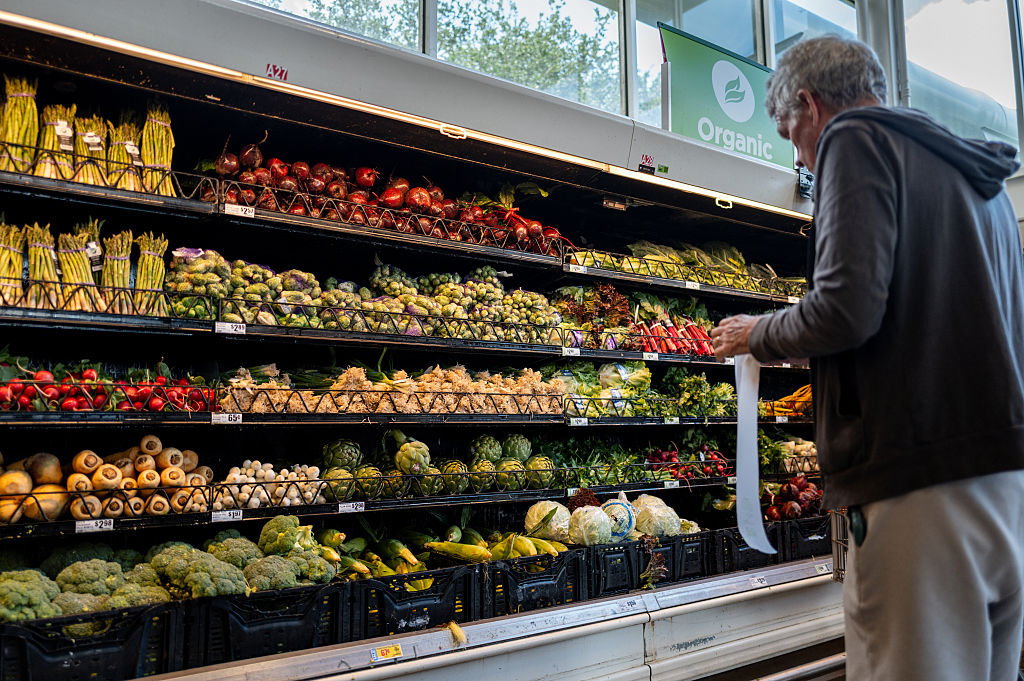
The price of food, especially fruits and vegetables, has risen dramatically
Grocery store bills rose 0.7% in April—the biggest one-month jump in grocery prices in nearly four years, according to the BLS—and 2.9% over the past year.
Fresh fruits and vegetables drove the largest increase among food products, soaring 6.1 percent in April from a year earlier.
This increase can be traced, in part, to the Trump Administration’s massive tariff regime affecting every country in the world— especially Mexico, where much of the fresh produce imported by the U.S. is grown.
The Trump Administration levied tariffs of about 17% on fresh tomatoes, for example, from Mexico starting in July 2025, and 90% of all imported tomatoes come from the U.S.’ southern neighbor.
The April report shows that tomato prices have risen 40% year over year.
Other products like coffee— which jumped 18.5% from last year and rose 2% from the previous month—and beef have risen sharply in the last year, but these products have increased for reasons beyond the Iran War.
A report published last year in the journal Environmental Research Letters found that extreme weather events are correlated with specific food price spikes in the immediate aftermath—and that droughts in Brazil raised coffee prices 55% globally from 2022 to mid-2025.
The price of clothes rises for a fifth straight month
Clothing prices rose 4.2% in the 12 months leading up to April—the fifth straight month of increases for consumers and the biggest rise in three years.
As freight carriers add fuel surcharges and shipping routes grow longer and more expensive, clothing supply chains have been affected by the Iran War, further destabilizing an already struggling industry already dealing with tariffs that have impacted textile supply chains.
It has also drastically raised costs of chemicals and dyes used by fast-fashion brands such as H&M, Zara-owner Inditex, and Target..
Some brands, like Levi's, resisted price increases in the aftermath of Trump’s so-called “Liberation Day” tariffs in April last year, shielding consumers from price hikes by stockpiling goods before the tariffs took effect.
But many of these companies have recently increased prices to offset the blow to their profits, especially as the surge in fossil fuel prices has increased shipping costs for materials like polyester and nylon.
Hence then, the article about this is where inflation is biting the hardest for americans was published today ( ) and is available on Time ( Middle East ) The editorial team at PressBee has edited and verified it, and it may have been modified, fully republished, or quoted. You can read and follow the updates of this news or article from its original source.
Read More Details
Finally We wish PressBee provided you with enough information of ( This Is Where Inflation Is Biting the Hardest for Americans )


Also on site :
- APOD: 2026 October 14 – Mars and the Beehive Under an Aurora
- Walmart’s Dainty Birthstone Leaf Necklace ‘Looks Super Expensive’ and Makes a ‘Gorgeous’ Gift, Now 88% Off
- 1951 Folk Hit, Ranked Among ‘Greatest Country Songs of All Time,’ Launched a ‘Full-On Americana Revival’ 49 Years Later