
3 min read
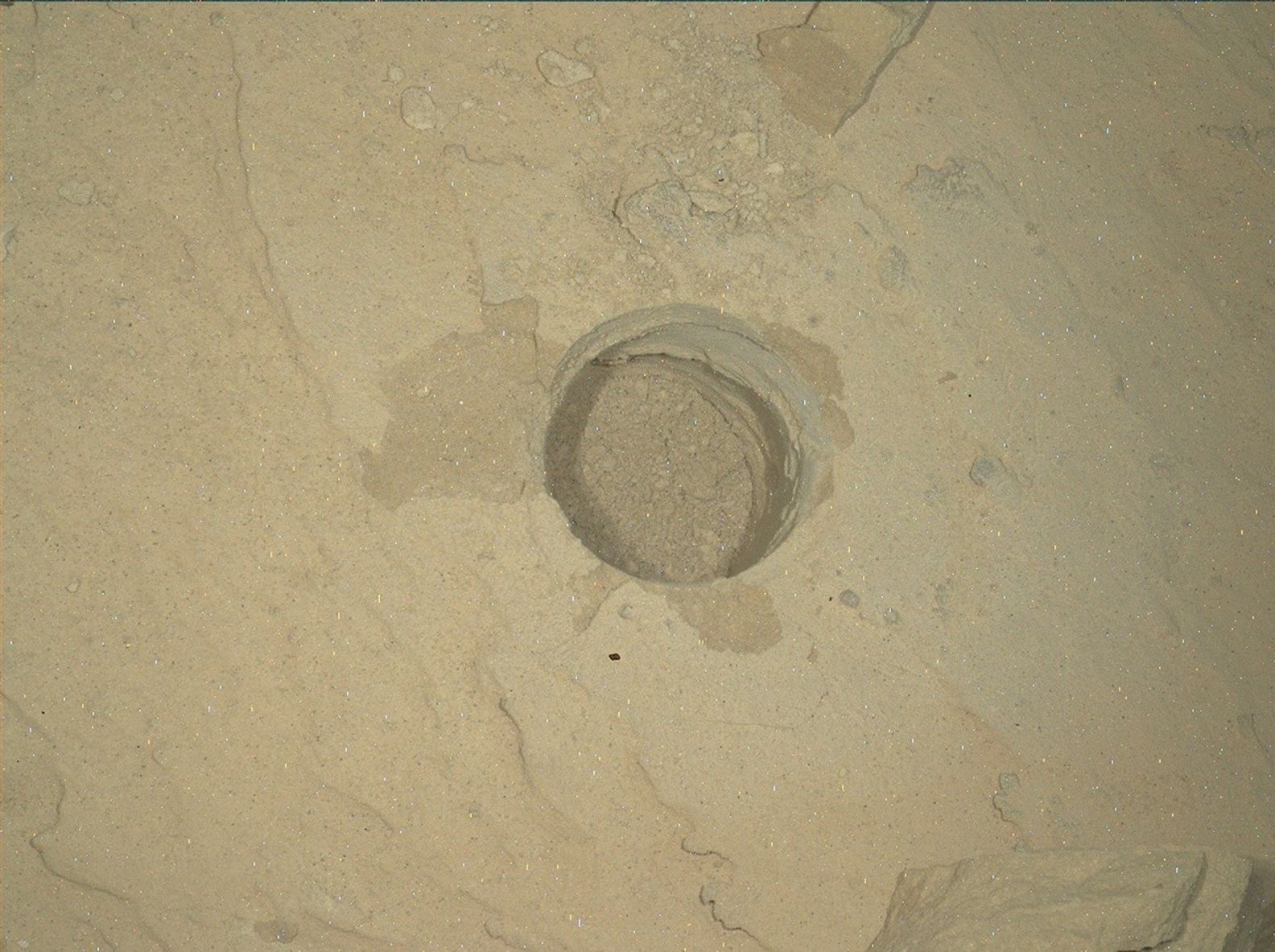
Curiosity Blog, Sols 4886-4892: Ingenuity and Perseverance, Curiosity Style NASA’s Mars rover Curiosity acquired this image showing an oblique view into the “Atacama” drill hole, where the rover’s drill was briefly lodged. Curiosity created the image using its Mars Hand Lens Imager (MAHLI), a close-up camera located on the turret at the end of the rover’s robotic arm, and an onboard focusing process that merges multiple images of the same target at different focus positions, creating a composite that brings as many features into focus as possible. Curiosity performed the focus merge on May 6, 2026 — Sol 4887, or Martian day 4,887 of the Mars Science Laboratory Mission — at 01:39:34 UTC. NASA/JPL-Caltech/MSSSWritten by Michelle Minitti, MAHLI Deputy Principal Investigator
Earth planning Friday, May 8, 2026
While we know the monikers Ingenuity and Perseverance are attached to our sister helicopter and rover on the Mars 2020 mission, those characteristics were in full force with Curiosity over the past week. The science we achieved this week was enabled by the ingenuity of the Curiosity engineers and scientists manifested in this extraordinary time lapse. It demonstrates the careful dance of arm motions employed — each one diligently planned by the team — to free Curiosity’s drill from the “Atacama” target. Watch the arm twist, bend, and turn with a rock slab attached, and be amazed.
The highest-priority activities after liberating the drill included imaging the drill with Mastcam and ChemCam RMI, and imaging into the now-empty drill hole with MAHLI (the image above). The science team made the most of the freshly-broken surfaces created when Atacama fell back to Mars, and the freshly-exposed sand once hidden underneath Atacama. ChemCam targeted one of the clean fracture faces with two LIBS rasters at “Tamarugal” and “Tamarugo,” and followed with another raster on a light-toned patch of bedrock formerly under Atacama at “Colchane.” MAHLI and APXS analyzed sand near Colchane at the target “Yerba Loca.” Beyond Atacama, Mastcam and ChemCam imaged the large buttes towering above our current and future drive paths. Mastcam also imaged two exposures of the polygonal fractures present in this area (targets “Cerro Elefantes” and “Azul Pampa”) and looked for wind-induced changes in the sand (“Playa los Metales”). ChemCam planned a passive spectroscopy observation of light-toned features on the “Paniri” butte and checked out a potential meteorite with a LIBS raster at “Isla Mocha.”
As engineering assessments continued, Curiosity drove uphill to study a contact between two different rock types, which can indicate a change in formation conditions, a break in time, or both. MAHLI, APXS, and ChemCam teamed up to study both rock types at the lighter-toned, layered “Toro” target and the darker, flaky “Inca de Oro” target. Mastcam planned multiple mosaics capturing different structures and transitions exposed along the contact. Across the plans during the week, REMS, RAD, and DAN regularly measured the environment above and below the rover, and Navcam and Mastcam teamed up to look for clouds, dust devils, and dust in the atmosphere.
With the health of the drill and arm confirmed by the engineers, Curiosity exhibited perseverance by heading toward a new workspace with a promising (larger) block for a new drill attempt. Our Martian exploration continues undaunted.
Want to read more posts from the Curiosity team?
Visit Mission Updates
Want to learn more about Curiosity’s science instruments?
Visit the Science Instruments page
NASA’s Curiosity rover at the base of Mount Sharp NASA/JPL-Caltech/MSSSShare
Details
Last Updated May 11, 2026Related Terms
BlogsExplore More
3 min readCuriosity Blog, Sols 4879-4885: Struggle at Atacama
Article 6 days ago2 min read
Curiosity Blog, Sols 4873-4878: Welcome to the Atacama Drill Target
Article 2 weeks ago3 min read
Curiosity Blog, Sols 4867-4872: Sand Fill In Antofagasta Crater and Finding Our Next Drill Target
Article 3 weeks agoKeep Exploring
Discover More Topics From NASA
Mars
Mars is the fourth planet from the Sun, and the seventh largest. It’s the only planet we know of inhabited…
All Mars Resources
Explore this collection of Mars images, videos, resources, PDFs, and toolkits. Discover valuable content designed to inform, educate, and inspire,…
Rover Basics
Each robotic explorer sent to the Red Planet has its own unique capabilities driven by science. Many attributes of a…
Mars Exploration: Science Goals
The key to understanding the past, present or future potential for life on Mars can be found in NASA’s four…
Hence then, the article about curiosity blog sols 4886 4892 ingenuity and perseverance curiosity style was published today ( ) and is available on NASA ( Middle East ) The editorial team at PressBee has edited and verified it, and it may have been modified, fully republished, or quoted. You can read and follow the updates of this news or article from its original source.
Read More Details
Finally We wish PressBee provided you with enough information of ( Curiosity Blog, Sols 4886-4892: Ingenuity and Perseverance, Curiosity Style )


Also on site :
- Hang Elon Musk Around Susan Collins’s Neck
- This nuclear startup and Halliburton repurposed oil-drilling tech in a bid to solve America’s radioactive waste problem
- Quote Of The Day By Tom Hanks: Being Kind Is Just Being Open To A Possibility Of Making A Simple Choice That...