
The first time I experienced Cinco de Mayo in the United States, I was stunned.
It was May 5, 2014, and I had just moved to New York. After growing up in Mexico and years spent living in Europe, I expected a small cultural moment—perhaps a quiet celebration among Mexican expatriates. After all, in Mexico itself, Cinco de Mayo is not even one of our biggest holidays.
Instead, I encountered something else entirely.
From the moment I landed stateside, Cinco de Mayo was everywhere: banners at the airport, ads in the streets, promotions in restaurants. On the taxi ride into Manhattan, I saw a news anchor wearing a sombrero under the headline “Cinco de Drinko.”
Over the years, that experience has repeated itself every Cinco de Mayo I spent in the United States. Bars overflowing with patrons screaming for tequila shots. People drinking heavily, often without much connection to what the day actually commemorates. For many Americans, Cinco de Mayo is confused with Mexico’s Independence Day—or reduced to an excuse to drink cheaply.
The spectacle is confusing at best—and an insulting caricature of Mexican culture at worst.
In reality, the holiday marks Mexico’s unlikely victory over French forces at the Battle of Puebla in 1862. It is a story about resilience, not revelry. Yet somewhere along the way, the meaning was flattened into a blurry spring break stereotype of heavy drinking.
But Mexico’s relationship with spirits is far older, deeper, and more complex than that. And our culture is rich, not cheap. I learned this lesson in the Desert of Chihuahua.
My mother, Cecilia Romo, was an economist who specialized in arid zones. When I was a child, I often accompanied her into remote parts of northern Mexico, where she studied how communities could create economic value from landscapes where little grows.
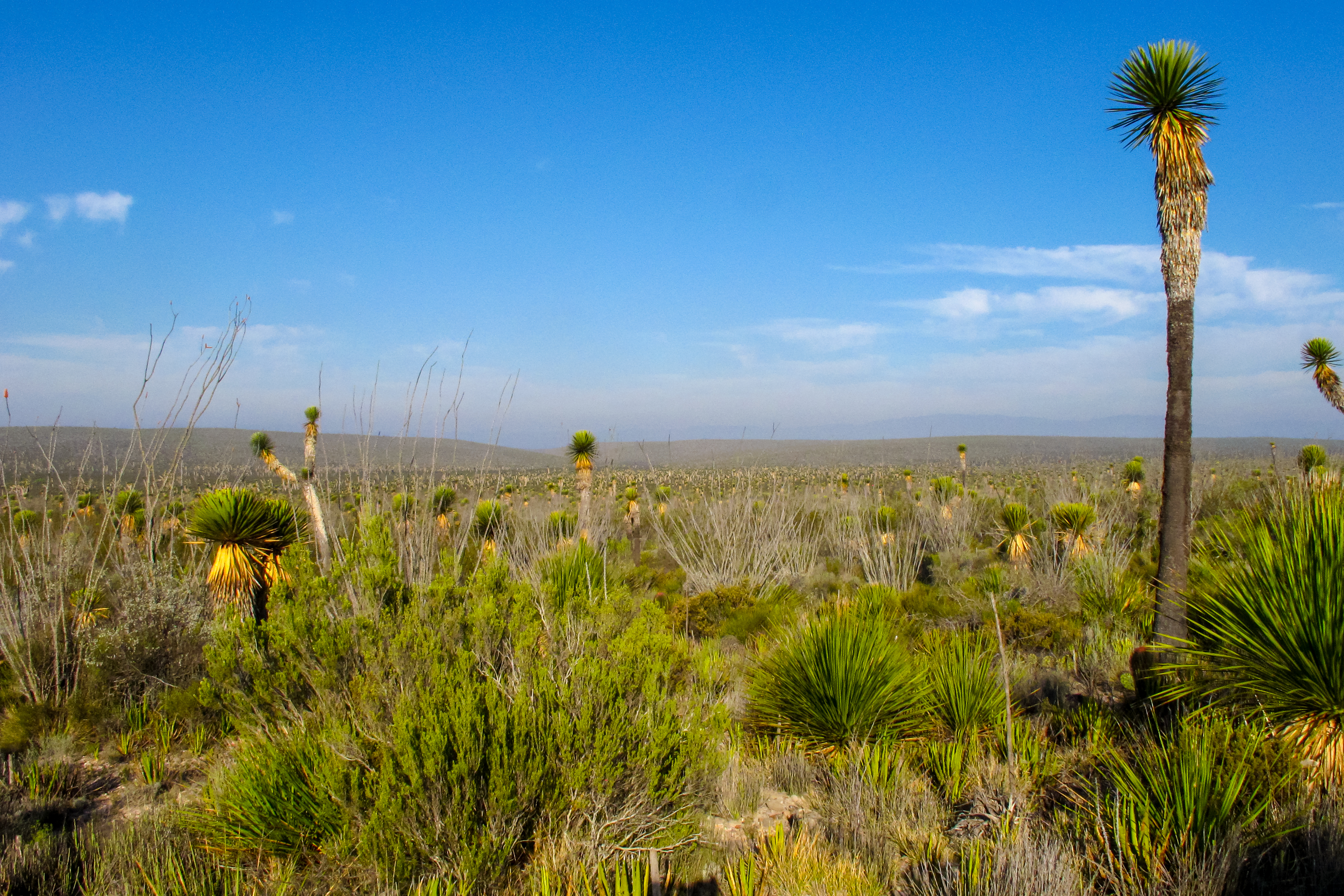
The desert landscape is unforgiving. Temperatures swing wildly—freezing nights, scorching days. Water is scarce. Survival is not guaranteed.
Yet one plant thrives there: Dasylirion. This resilient plant produces sotol, a spirit many now describe as the next major Mexican spirit after tequila and mezcal.
Despite sotol’s comparisons to tequila and mezcal, Dasylirion is not a type of agave or a cactus. It is a wild desert plant that takes 15 to 20 years to mature. It can survive drought, wind, and extreme heat that would kill most crops. It grows where almost nothing else does.
The spirit itself has existed for more than 800 years, but its Denomination of Origin came only recently (2002)—decades after tequila and mezcal had already built global markets.
As I watched my mother’s work, I became fascinated with the plant’s resilience. In the harshest environments, it stores what it needs to survive. When it is finally harvested and distilled, the result is a spirit that is strikingly clean and dry—literally just plant and water.
And like great wine grapes grown in difficult soils, the harsher the conditions, the better the liquid.
Its flavor is familiar yet distinct—leaner, cleaner, softer, and more restrained than many expect from Mexican spirits.
For much of the 20th century, sotol’s trajectory was interrupted. Anti-distillation laws pushed it into illegality. By the time it regained formal recognition in 2004, tequila and mezcal had already secured their place on the global stage.
Now, sotol is re-emerging—and beginning to be seen as the third pillar of Mexican spirits.
Its timing is striking. In the United States, alcohol consumption is declining overall. But within that trend, another pattern is emerging: people are drinking less, but choosing better—seeking products that are authentic, artisanal, and rooted in place.
Sotol sits squarely in that shift.
What fascinates me most, though, is not just the drink itself, but what it represents.
Northern Mexico rarely appears in the American imagination as a place of refinement or craftsmanship. It is more often framed through the lens of migration or border politics. Yet the region holds a deep tradition of determination, lucha, and resilience—qualities embodied by the sotol plant itself.
In that sense, the spirit offers a small but meaningful reframing.
It reminds us that Mexico is not a caricature of sombreros and shots. It is a country of layers, dimensions, and discovery.
So this Cinco de Mayo, perhaps the most interesting shift would be a subtle one. Instead of drinking more, we might drink differently. Instead of celebrating a stereotype, we might become curious about the real history and culture behind what is in our glass.
And perhaps we might take a lesson from the desert—one particularly useful in the times we are living through: resilience, patience, and the quiet power of growing where others believe nothing can.
Hence then, the article about what the desert taught me about cinco de mayo was published today ( ) and is available on Time ( Middle East ) The editorial team at PressBee has edited and verified it, and it may have been modified, fully republished, or quoted. You can read and follow the updates of this news or article from its original source.
Read More Details
Finally We wish PressBee provided you with enough information of ( What the Desert Taught Me About Cinco de Mayo )


Also on site :
- Tim Anderson Announces Retirement
- My Friends Were Shocked When I Booked Virgin Voyages’ 'Party Ship' to The Mediterranean—Here’s Why I’m Never Looking Back
- William H. Macy, Shawn Hatosy and Troy Kotsur Among Astra TV Awards Honorees; Lisa Ann Walter Set as Host