
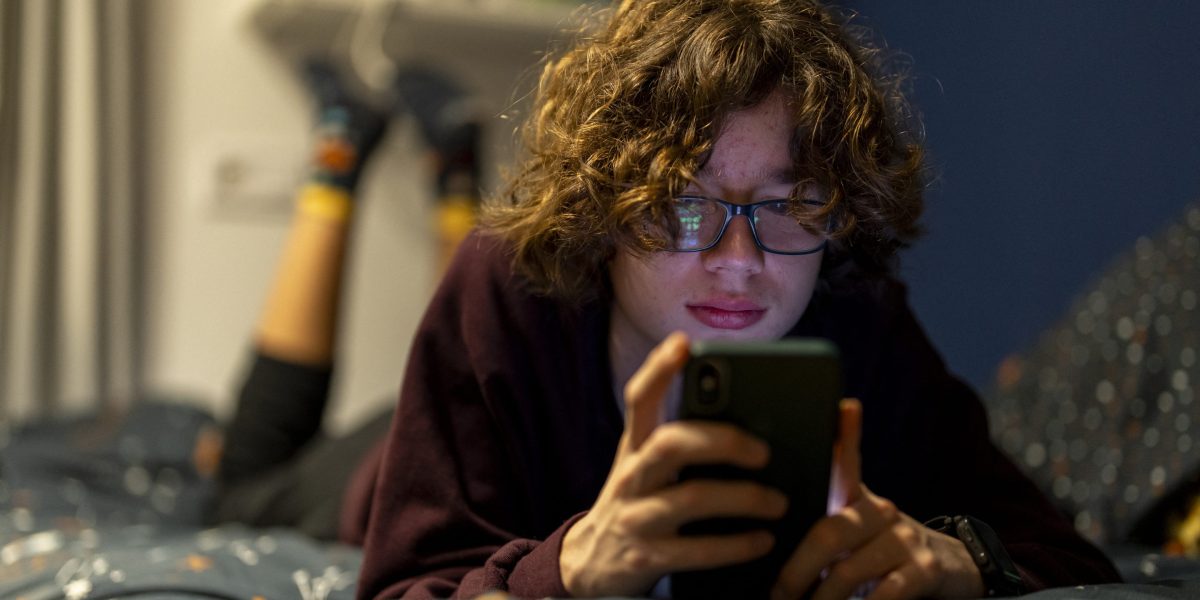
If teenagers have a will, they will find a way.
In the days following Australia’s social media ban for children under 16, the country’s teenagers immediately worked to circumvent the restrictions on the platforms, which included age verification steps, account renewal, and prevention of registration from underage users.
Evelyn, a 14-year-old in New South Wales, told The Washington Post in December 2025, just before the implementation of the ban, she planned to use her mother’s face ID to log in to Snapchat and Instagram. In a Reddit thread on ways to bypass the ban, one user suggested using a printed mesh face mask from Temu to outsmart apps’ facial recognition tools. Others still have tried VPNs that obscure their locations.
A new report suggests these efforts are working. In a survey of 1,050 Australians ages 12 to 15 conducted last month, the UK-based suicide prevention organization the Molly Rose Foundation found more than 60% of teens who had social media accounts before the ban still had access to at least one of those platforms. Social media sites including TikTok, YouTube, and Instagram, have retained more than half of their users under 16. About two-thirds of young users say these platforms have taken “no action” to remove or reactive accounts that existed before the restrictions.
The survey comes at the heels of the Australian internet regulator calling for an investigation into the five largest social media platforms over potential breaches of the ban.
Australia, the first country to implement a widespread social media ban for underage teens, has effectively become the guinea pig for other governments similarly considering hefty restrictions on the platforms. Greece, France, Indonesia, Austria, Spain, and the UK have or are considering similar action, and eight U.S. states are weighing legislation that would put guardrails or ban social media use for minors.
As Australia looks to crack down on tech platforms to improve the efficacy of its ban, it is facing increased concern from advocates about how—and whether—these restrictions work.
“These results raise major questions about the effectiveness of Australia’s social media ban and show it would be a high stakes gamble for the UK to follow suit now,” Molly Rose Foundation CEO Andy Burrows said in a statement.
Why did Australia take action against social media for teens?
At the core of the social media ban is emerging research indicating that for some teens, extended time spent on social media is associated with depression and anxiety. A 2022 study found nearly half of adolescents reported social media making them feel worse about their body image.
Last month, a New Mexico jury found YouTube and Meta liable for creative addictive platforms with features that were harmful to the mental health of young people. Both platforms plan to appeal the verdicts.
Jacqueline Nesi, a psychiatry and human behavior professor at Brown University, told Fortune the bigger picture data on adolescent social media use tells a more complicated story. For example, research has indicated online platforms have enabled feelings of belonging for LGBT+ youth and created spaces of self-discovery for others. In separate instances, those sites have also enabled adults to contact children online, making them vulnerable to be groomed.
“What we can say right now about the research is that we know the effects differ pretty significantly across adolescence,” Nesi said. “So the effect of social media, unsurprisingly, depends on how it’s being used.”
Because it is incomplete and relatively new, data on the impact of adolescents’ social media use remains just one driver of policy, Nesi argued. Legislation such as Australia’s social media ban are also dictated by values and practical restrictions not always reflected in studies.
“What will work? What makes sense?” she asked. “What do we believe is important as a society, versus, This is something that the research can give us a very straightforward and clear answer on?”
Why do experts believe social media bans aren’t futile?
Though efficacy of Australia’s ban has been disputable and data on social media’s risks and harms intricate, the restrictions are not necessarily for naught, Nesi noted.
“It doesn’t mean that it’s the wrong choice,” she said. “It just means that the way that it’s being implemented right now isn’t working.”
Groups like the Australian Child Rights Taskforce took issue with the ban, as it could disincentivize social media platforms from implementing child safety features because young people would theoretically not be accessing the apps. Digital Industry Group Inc., an Australian nonprofit, argued the ban would encourage online users under 16 to access unregulated and potentially more dangerous parts of the internet.
According to Nesi, if advocates and legislators want social media bans to stick, they have to consider why children access social media to begin with and design interventions that meet those needs or desires—such as for autonomy, exploration, or entertainmen—elsewhere.
“Any policy that aims to get their social media use needs to be looking at what the alternatives are going to be for teens,” she said. “What else are we providing? What other options and opportunities do teens have to meet those needs for autonomy, independence, belonging, and socialization offline?”
This story was originally featured on Fortune.com
Hence then, the article about most australian teens admit the social media ban isn t working as they try to sidestep age verification blocks with face masks and their parents ids was published today ( ) and is available on Fortune ( Middle East ) The editorial team at PressBee has edited and verified it, and it may have been modified, fully republished, or quoted. You can read and follow the updates of this news or article from its original source.
Read More Details
Finally We wish PressBee provided you with enough information of ( Most Australian teens admit the social media ban isn’t working as they try to sidestep age verification blocks with face masks and their parents’ IDs )


Also on site :
- Anthropologie’s Multicolored Glass and Stone Hoops Add Vintage-Style Elegance to Any Look for Just $30
- RYBREVANT FASPRO™ (amivantamab and hyaluronidase-lpuj) plus LAZCLUZE® (lazertinib) with prophylactic strategies shows low rates of treatment-related events at WCLC 2026
- Walmart’s ‘Whimsical’ Boucle Mushroom Storage Ottoman Looks ‘Trendy’ and ‘High-End,’ But It’s Now Under $30