
Dan WetzelMar 25, 2026, 07:00 AM ET
CloseMultiple Authors
Kansas, Kentucky and North Carolina have a combined 54 Final Four appearances and 18 national titles. They have collectively produced all-time greats such as Michael Jordan (UNC), Wilt Chamberlain (Kansas) and reigning NBA MVP Shai Gilgeous-Alexander (Kentucky).
If you were to make a list of the five best programs and most desirable head coaching jobs in college basketball — some combination of potential for success, fan passion, tradition, recruiting power and institutional support — they would be in the top five, if not make up the top three.
Yet for the fourth consecutive year, none will reach the Final Four and for the third time in six years, the Sweet 16 will occur without any of them. From 1985 to 2020, the collective failure to reach the second weekend of the tournament occurred just once, in 2006.
That was an upset-driven anomaly. This feels a lot more like a trend.
Being a so-called blue blood once assured a certain level of excellence, interrupted only by the occasional NCAA-enforcement run-in or poor coaching hire that was quickly rectified.
What about now?
Editor’s Picks
2 Related
In this era of the transfer portal, revenue sharing and NIL, not to mention the lessened influence of shoe companies in recruiting, is “blue blood” even still a thing?
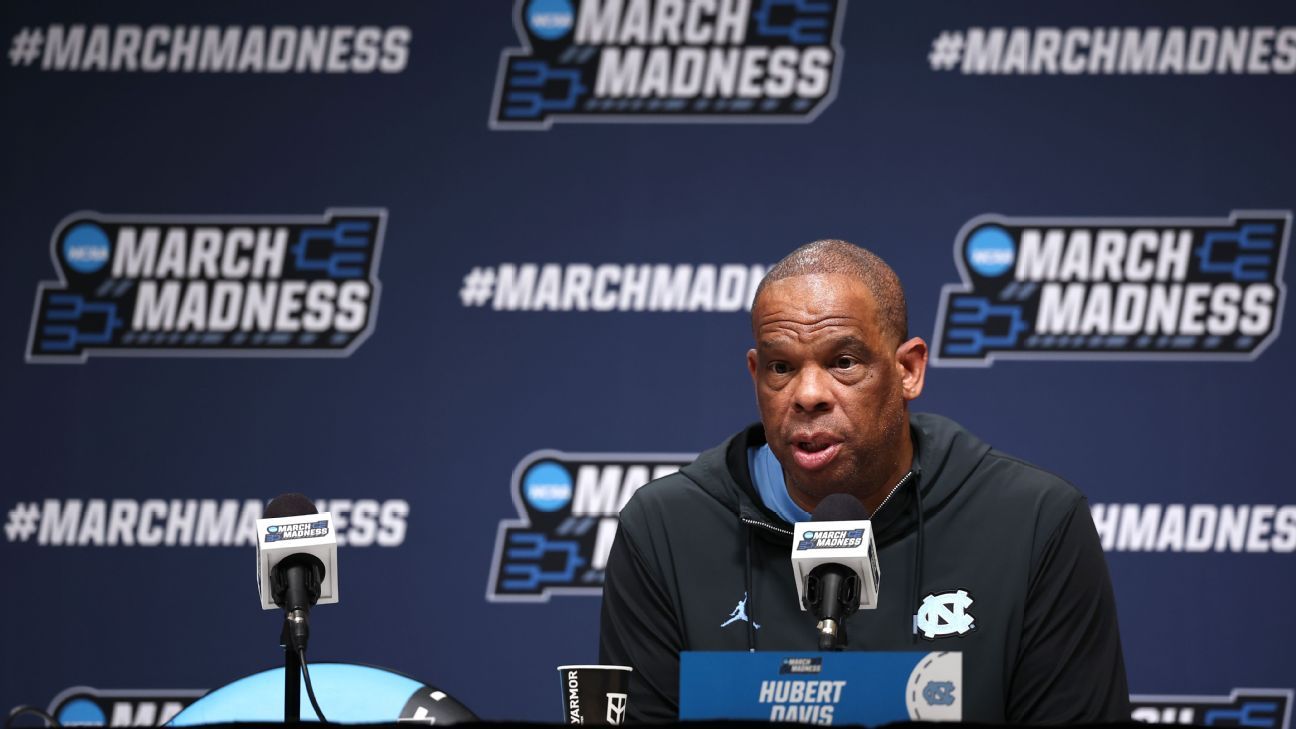
And what does it mean when coaching openings potentially loom at UNC (where Hubert Davis was fired after five seasons) and KU (where Bill Self has discussed a potential retirement due to health issues).
While Kentucky’s Mark Pope appears safe after two so-so seasons, despite enormous NIL spending, much is expected next season, or the Wildcats will soon be back in the market as well.
These were once the most coveted jobs in the sport. Back in 1983, Larry Brown left an NBA playoff team midseason to take over at Kansas. In 1985, then-Arkansas coach Eddie Sutton said he would have “crawled to Lexington” for the Wildcats’ job. In 2003, Roy Williams left KU to return to Chapel Hill where he had once been an assistant.
There was a perceived pecking order in college basketball, a pyramid where each step up increased your chances of winning a national title.
Does it still matter?
Even UNC, Kansas and Kentucky are dealing with new challenges.
Jared C. Tilton/Getty ImagesBig Ten and SEC athletic departments are flush with massive football-generated revenue. It’s at least partially a reason those two leagues have a combined 10 teams in this season’s Sweet 16. There are just four combined from the ACC and Big 12, home to UNC and KU, respectively. (Kentucky is in the SEC.)
A growth in international players, who often have little knowledge, let alone affinity, for historic success or branding, limits the power of past triumphs.
And the days of Nike and Adidas having enormous sway over the recruiting decisions of top high school talent has been greatly diminished by NIL, not to mention the 2018-19 federal convictions of numerous shoe executives, middle men and assistant college coaches.
The shoe companies’ willingness to help their most important programs — whether it was a nudge or a straight payout — is either no longer attempted or can be mitigated by above-the-table deals from any school.
Anyone with the right coach, an attractive system of play and a certain level of money can overcome a lack of tradition or physical distance from fertile recruiting markets. Even Nebraska is winning tournament games this year.
It’s a different landscape.
When it comes to constructing a roster, each school is starting fresh every year, leading to variables and uncertainties that blue bloods were once guarded against. Even with lots of money to spend, there is no margin for error.
If nothing else, no school is capable of stockpiling talent the way blue bloods once could. As such, critical injuries helped derail UNC and Kentucky this year.
That doesn’t mean the three can’t be great or should ever accept not being great. They maintain exceptional power, fan and media attention, and the ability to generate resources.
It’s still Carolina. And Kansas. And Kentucky. They can all get back to the top. After all, Duke, among others, is cruising along just fine.
It’s why if jobs open, elite coaches from across college basketball and even the NBA will be interested. That said, two years ago, Kentucky was turned down by Dan Hurley (UConn) and Scott Drew (Baylor), decisions that once seemed unfathomable.
If you are Todd Golden (Florida), Dusty May (Michigan) or Tommy Lloyd (Arizona), do you leave places where you are already fielding title-contending teams?
If — and it’s an if — a North Carolina or a Kansas is a “better job” than what you have, is it still enough of an upgrade that it’s worth leaving what you’ve built?
Once upon a time, the decision would have been quick and clear. Now, less so.
In an era when everyone can flash green, blue blood isn’t so important.
Blue bloods UNC, Kansas, Kentucky facing struggles and coaching uncertainty NYT News Today.
Hence then, the article about blue bloods unc kansas kentucky facing struggles and coaching uncertainty was published today ( ) and is available on NY Times News ( Middle East ) The editorial team at PressBee has edited and verified it, and it may have been modified, fully republished, or quoted. You can read and follow the updates of this news or article from its original source.
Read More Details
Finally We wish PressBee provided you with enough information of ( Blue bloods UNC, Kansas, Kentucky facing struggles and coaching uncertainty )


Also on site :
- Lola Tung and Daniel Bravo Hernández to Lead New York Theatre Workshop Benefit Reading of ‘Sanctuary City’
- 1987 MTV Music Video, Produced by The Monkees’ Mike Nesmith, Helped Bring Iconic Michael Jackson Song to No. 1
- PepsiCo Teases a Major Rebrand—Here’s What’s Actually Happening