
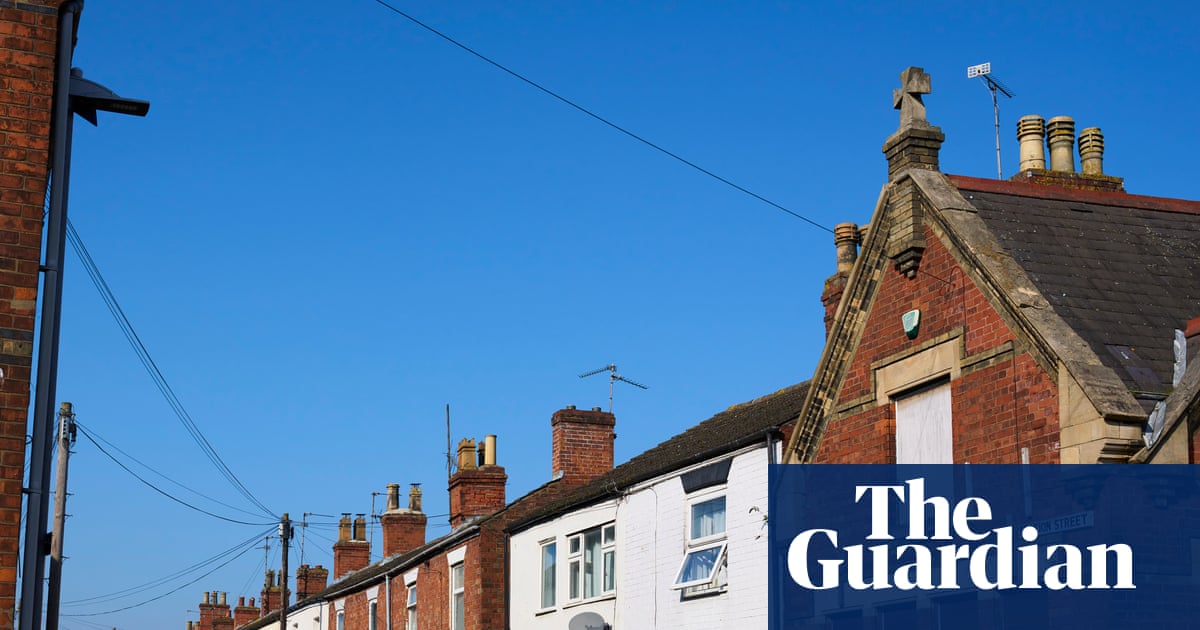
“The worst part of it was the smell,” says Audrey Crook, 58. A full-time carer who lives with her 20-year-old son, Crook woke up at 11pm one night to find a foot of flood water on the ground floor of her home. “It was like black water. It had sewage and everything in it, it was absolutely disgusting.”
Crook’s home – along with more than 30 others on Wyberton West Road and Park Road in Boston, Lincolnshire – was flooded in January last year when heavy rain swept across the region, raising river levels and exceeding flood defences.
“My house now doesn’t look anything like it did before,” says Crook, who has yet to receive money from her insurance for the contents of her house. “I had some antique rugs, Indian silks. They all went. I lost them all.”
Boston, nestled at the northern end of the Fens, is on the frontline of the UK’s flooding crisis, which experts say could lead to some towns being abandoned as climate breakdown makes many areas uninsurable.
According to the Environment Agency, 91% of buildings in the Boston and Skegness constituency are at some level of flood risk – more than in any other English constituency. And the science is clear that winters are getting wetter in the UK due to climate breakdown, with warmer air holding more water vapour, meaning heavier downpours.
However, the local MP Richard Tice is one of Reform UK’s most ardent opponents of climate action, regularly describing the UK’s efforts to reach net zero as “net stupid”. Just a month after the flooding hit homes in his constituency, Tice told Sky News that the idea of human-made climate change was “garbage”.
That did not go down well with some of his constituents. “I’m sorry, if they think climate change has got nothing to do with it, I think they’re seriously wrong,” Crook says.
The day after the flood, Tice said in a statement that he was “fully aware of the flooding damage” and his team were “working tirelessly to assist constituents, and we will continue to provide support throughout this ongoing crisis”.
The South Forty Foot Drain running behind houses on Wyberton West Road in Boston, where more than 30 properties were flooded in January 2025. Photograph: Christopher Thomond/The GuardianHowever, more than 12 months later, some residents say the local MP has yet to be in touch. “We’re still waiting for Richard Tice to turn up,” Crook says. “Didn’t show his face. A lot of people were angry about that … It’s his job. And if he can’t turn up, he can send a deputy, can’t he?”
The anger of Boston residents highlights a growing problem for Reform and the climate-sceptic stance of its Westminster leadership. A recent survey by Hope Not Hate found that, unlike some of the party’s MPs, more than half of Reform’s would-be voters agree that climate change is caused by human activities.
Alasdair Johnstone, of the Energy and Climate Intelligence Unit (ECIU), says there is a growing tension between the climate-sceptic instincts of Reform and the day-to-day reality of many of its voters and supporters.
Polling carried out for ECIU found that more than half of those who planned to vote Reform at last year’s local elections backed efforts to tackle climate change. Johnstone says: “We are seeing that, as people see first-hand the impacts of climate change on their lives, it does not sit well when they are told this is not happening – there is an obvious tension there.”
In Boston, more than a year after their homes were flooded when the South Forty Foot Drain embankment was breached, many residents are still trying to rebuild their lives, waiting to hear back about insurance claims or dealing with repairs.
“It’s frustrating to have all of these public statements being made about ‘net stupid zero’ and things like that while not attending to residents’ needs when it comes to flooding,” says Andy Robinson, a local resident.
Crook says she and her son have experienced sleepless nights since the flood. “It’s the panic,” she says. “Every time the drain is high at the back, we’re all panicking because we just think: ‘Oh god, what if it happens again?’”
One resident says some homes have become “unmortgageable” due to the flood risk. “We can’t sell, we can’t move,” says the woman, who does not want to be named. “My insurance for the year – contents and buildings – is over £900 now.”
Boston town centre. Many residents are still waiting to hear back about insurance claims or dealing with repairs. Photograph: Christopher Thomond/The GuardianThose fears are backed up in a study published on Wednesday that found more than 400,000 homeowners across England could become “mortgage prisoners” trapped in high-interest mortgages for flood-prone properties they cannot easily sell.
The report, from Public First and the UK Sustainable Investment and Finance Association, found that Tice’s constituency was the “climate mortgage prisoner capital of England” with 8,600 homes at high risk by 2050 – the highest number in the country.
Hence then, the article about seriously wrong flood hit lincolnshire residents at odds with reform mp over climate was published today ( ) and is available on NY Times News ( Middle East ) The editorial team at PressBee has edited and verified it, and it may have been modified, fully republished, or quoted. You can read and follow the updates of this news or article from its original source.
Read More Details
Finally We wish PressBee provided you with enough information of ( ‘Seriously wrong’: flood-hit Lincolnshire residents at odds with Reform MP over climate )


Also on site :
- 1956 Pop Culture Hit, Ranked Among ‘Greatest Song of All Time,’ Was Written by Fred Parris While Serving in the Army
- What channel is Portsmouth v Millwall Championship match on? TV coverage, live stream and kick-off time
- Lilly presents first clinical data in platinum-sensitive ovarian cancer for its investigational, next-generation, FRα-targeting ADC at ESMO 2026