
It’s appropriate that I first heard of the “Lamborghini Theory” of political power in an Italian restaurant. I’m not sure it helped my appetite though.
I was invited for lunch at Café Milano, which the Washington Post called “Washington’s ultimate place to see and be seen,” by my dear friend Steve Livingston.
Steve, in his late 70s established and then sold more than seven successful companies, in manufacturing, trade, music and AI.
He also had served as a government envoy focused on Africa, the Middle East and Asia.
I passed through a snowbound city to get there, and I can tell you that DC is as ill-prepared for snow as Cairo is for heavy rain.
Steve greeted me and introduced me to the two other guests at his secluded corner table: Michael Hudson, CEO of a well-known think tank in DC, and Sharon Stevens, a professor of International Relations in a very highly-ranked university in the Carolinas.
We ordered after about 15 minutes of pleasantries and explaining how Steve and I first met many years ago. I asked for smoked salmon as a starter and dover sole and steamed vegetables as a main. Sharon went totally vegan and Michael ordered a “Milanese style” veal chop with asparagus.
As our server departed with our orders, Sharon turned to me, pushed her spectacles up on her sharp Roman nose and, with a small smile creeping onto her lips, said: “You are a regular at the World Economic Forum and the Munich Security Conference, what’s your point of view on the state of the world?”
I smiled back and told her that the WEF is no longer committed to the mission of its founder Klaus Schwab, which was “to improve the state of the world.” It has become a commercial operation, a money-making venue to marry business and politics.
I added that the way the WEF treated Klaus Schwab was shameful and a reflection of what the forum has become.
“As for the Munich Security Conference, it has changed from something designed to strengthen transatlantic relations and improve global security to a forum for America and Europe to express their distrust with each other and a stage for competition amongst leaders to increase their military budgets. Not one leader used the words peace, negotiation or mutual common interest except, surprisingly, the Foreign Minister of China.”
“In a nutshell,” I concluded, “the so-called international order is undergoing destruction in plain sight and the world is watching.”
Sharon responded, “Why do you see destruction? Why not consider that the post-1945 international order is no longer applicable and needs to change?”
She added that the world needs America to lead that change as the G7, NATO, UN, G20 and other institutions have failed to grasp that need.
Our first plates arrived and were served with a flourish. Michael and Steve both were served wine. Sharon and I stuck with still water.
“Shafik and Sharon, you make good points, ” said Steve. “Michael, what do you think?”
Michael, munching on a large piece of Milanese, put his fork down and said: “We must note that the world for all recorded history has been based on who held the power. Remember, it was the strongest caveman that set the rules until a more powerful caveman created a stronger weapon and he took over and established the new order.”
I turned to Michael and said, “The US has always been all-powerful and in many circumstances had excellent foreign policy initiatives.”
Sharon nodded, “And focused on democracy, human rights, strengthening of institutions, checks and balances and mutual interest.”
“However,” I added, “The US will start with a clear objective to go from A to B but unexpectedly end at K. Vietnam, Afghanistan, Grenada, Panama, Somalia, Bosnia, Kosovo, Syria, Iraq, Libya and Yemen are just a few examples.”
Michael smiled as he finished off his last piece of Milanese. Then he pointed his fork at me and said: “Do you know the Lamborghini Theory?”
My expression must have shown my bewilderment. Michael looked at Steve and Sharon and said “Any takers?”
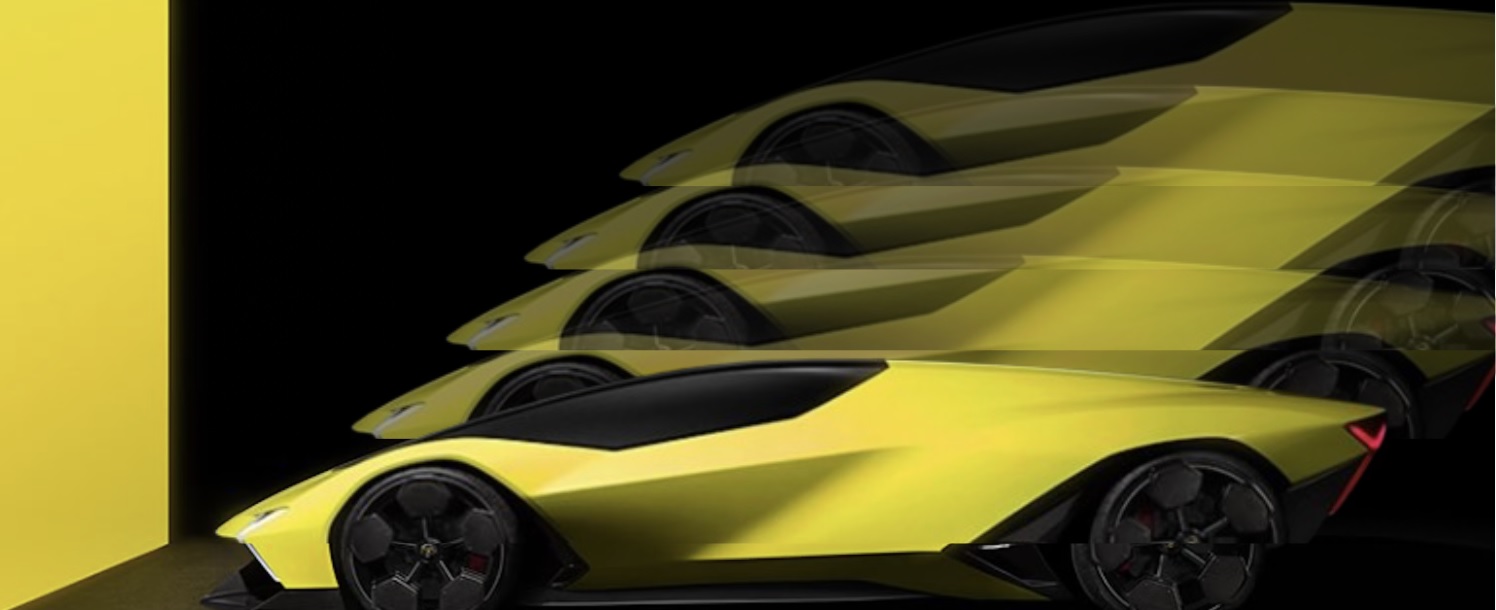
Michael took a deep breath and explained that the President of America drives a Lamborghini and he can go as fast or slow as he likes.
“Moreover, if there is engine trouble, a flat tire, an accident… no problem,” he said, raising his arms.
“He just leaves the car he is driving and takes the car behind him. Another Lamborghini… There are 5,000 more of them. No issue.”
At this point, Sharon stepped in and asked me: “Do you remember ‘Game of Thrones?’”
“Remember what Cersei Lannister did to assert her dominance over Littlefinger. When Littlefinger claimed ‘knowledge is power,’ Cersei had her guards seize him, demonstrating her ability to command and destroy others. In other words, power is power.”
As Sharon continued her dialogue, Michael joined her and my brain was telling me today without any doubt, power is power.
All other options for a “standoff” such as EU, BRICS, ASEAN, Mercosur were all meaningless.
The server returned and Michael and Sharon both ordered espressos, Steve asked for a cappuccino. I excused myself as I had a commitment in McLean and I had to go now to avoid being late.
Steve walked me to the door as I retrieved my coat, scarf and gloves. It was negative seven degrees centigrade. Too cold for me. Steve, as I was thanking him, said: “I wanted you to hear what the think tank and academic world believe.”
Waving to my driver, I answered: “They should beware of what they are predicting.”
About the author
M. Shafik Gabr is a renowned leader in international business, innovation, investment and one of the world’s premier collectors of Orientalist art, and an accomplished philanthropist.
During his career, Gabr established over 25 companies plus three investment holding companies including ARTOC Group for Investment and Development which, established in 1971, is a multi-disciplined investment holding company with businesses in infrastructure, automotive, engineering, construction and real estate, over the past three years focusing on investment in technology and artificial intelligence.
Gabr is the Chairman and a founding member of Egypt’s International Economic Forum, a member of the International Business Council of the World Economic Forum, a Board Member of Stanhope Capital, an International Chairman of the Sadat Congressional Gold Medal Committee, and a Member of the Parliamentary Intelligence Security Forum.
Gabr is a Member of the Metropolitan Museum’s International Council and serves on the Advisory Board of the Center for Financial Stability, the Advisory Board of The Middle East Institute, and the Global Advisory Council of the Mayo Clinic.
Through the Shafik Gabr Social Development Foundation, Gabr is helping to improve elementary-school education in Egypt, introducing students to arts and culture and promoting sports and physical fitness for youth. The Foundation has its first Medical and Social Development Center in Mokattam, Cairo, offering free medical and health services.
In 2012 Gabr established in the US the Shafik Gabr Foundation which supports educational and medical initiatives plus launched in November 2012 the ‘East-West: The Art of Dialogue initiative promoting exchanges between the US and Egypt with the purpose of cultural dialogue and bridge-building.
Gabr holds a BA in Economics and Management from the American University in Cairo and an MA in Economics from the University of London.
The Lamborghini Theory Egypt Independent.
Hence then, the article about the lamborghini theory was published today ( ) and is available on EGYPT INDEPENDENT ( Egypt ) The editorial team at PressBee has edited and verified it, and it may have been modified, fully republished, or quoted. You can read and follow the updates of this news or article from its original source.
Read More Details
Finally We wish PressBee provided you with enough information of ( The Lamborghini Theory )


Also on site :
- Bran Flakezz on Winning ‘Unwell Summer Games,’ His Future With Reality TV and the Alex Cooper-Alix Earle Drama
- Marshalls Is Selling a Stoneware Baking Dish From a Beloved Brand That Brings Cozy Cookware to Your Kitchen
- 1963 Movie Starring Two TV Icons Was So Bad They Joked About It on ‘The Carol Burnett’ Show Years Later