
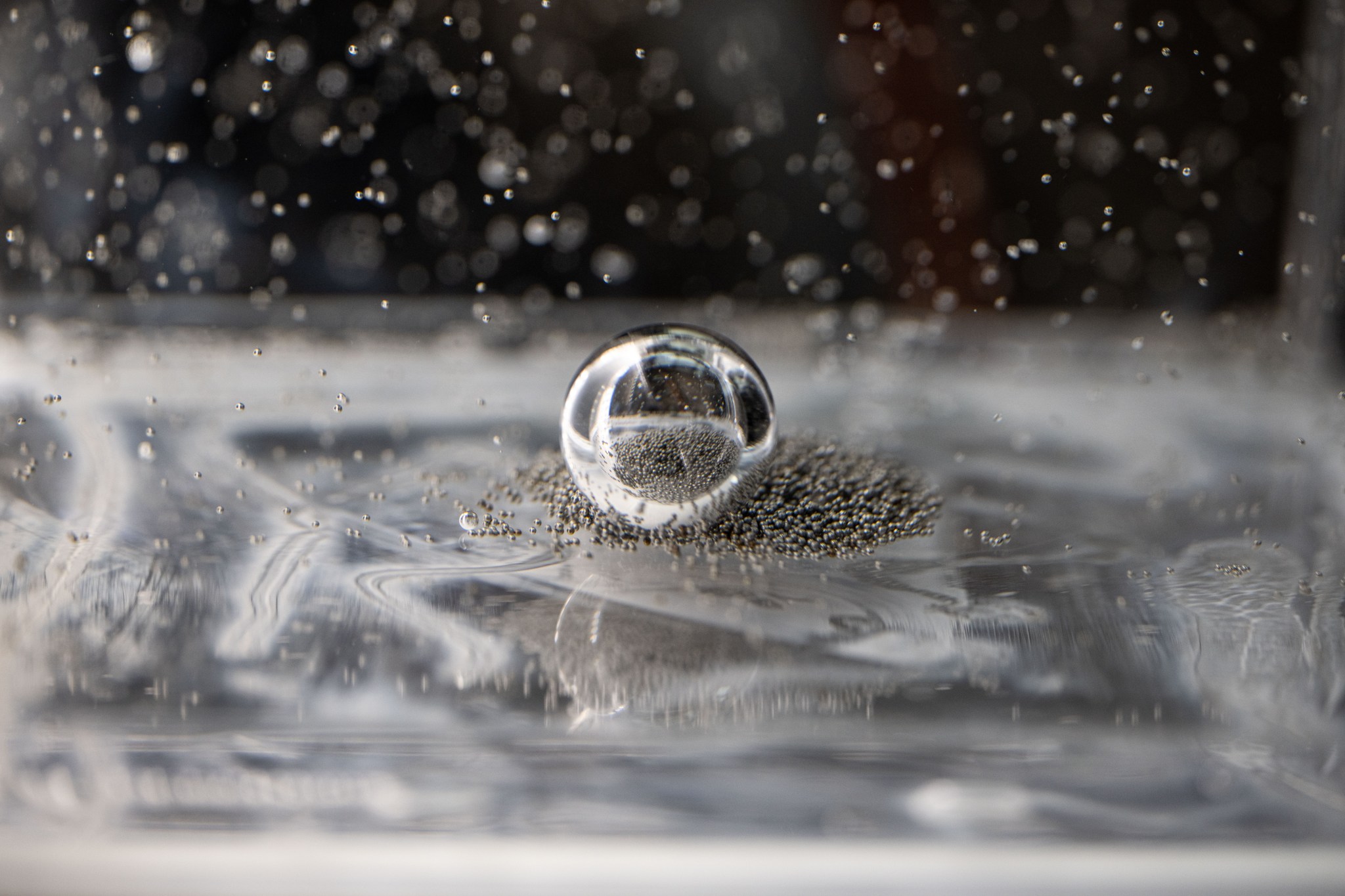
In this Oct. 20, 2025, photo, tiny ball bearings surround a larger central bearing during the Fluid Particles experiment, conducted inside the Microgravity Science Glovebox (MSG) aboard the International Space Station’s Destiny laboratory module. A bulk container installed in the MSG, filled with viscous fluid and embedded particles, is subjected to oscillating frequencies to observe how the particles cluster and form larger structures in microgravity. Insights from this research may advance fire suppression, lunar dust mitigation, and plant growth in space. On Earth, the findings could inform our understanding of pollen dispersion, algae blooms, plastic pollution, and sea salt transport during storms.
In addition to uncovering potential benefits on Earth, research done aboard the space station helps inform long-duration missions like Artemis and future human expeditions to Mars.
Image credit: NASA/Zena Cardman
Hence then, the article about studying physics in microgravity was published today ( ) and is available on NASA ( Middle East ) The editorial team at PressBee has edited and verified it, and it may have been modified, fully republished, or quoted. You can read and follow the updates of this news or article from its original source.
Read More Details
Finally We wish PressBee provided you with enough information of ( Studying Physics in Microgravity )


Also on site :
- In 1924, Caesar Cardini ran out of kitchen supplies in a Fourth of July rush at his Tijuana restaurant; he tossed romaine with what was left, and the salad carries his name
- Viola Davis, 61, Opens Up About ‘Extremely Painful’ Health Condition for the First Time: ‘It Terrified Me’ (Exclusive)
- Rosalía Shuts Down Kenan Thompson’s Idea for a Pop-Classical Album in Hilarious ‘SNL’ Promo: ‘That’s LUX’