
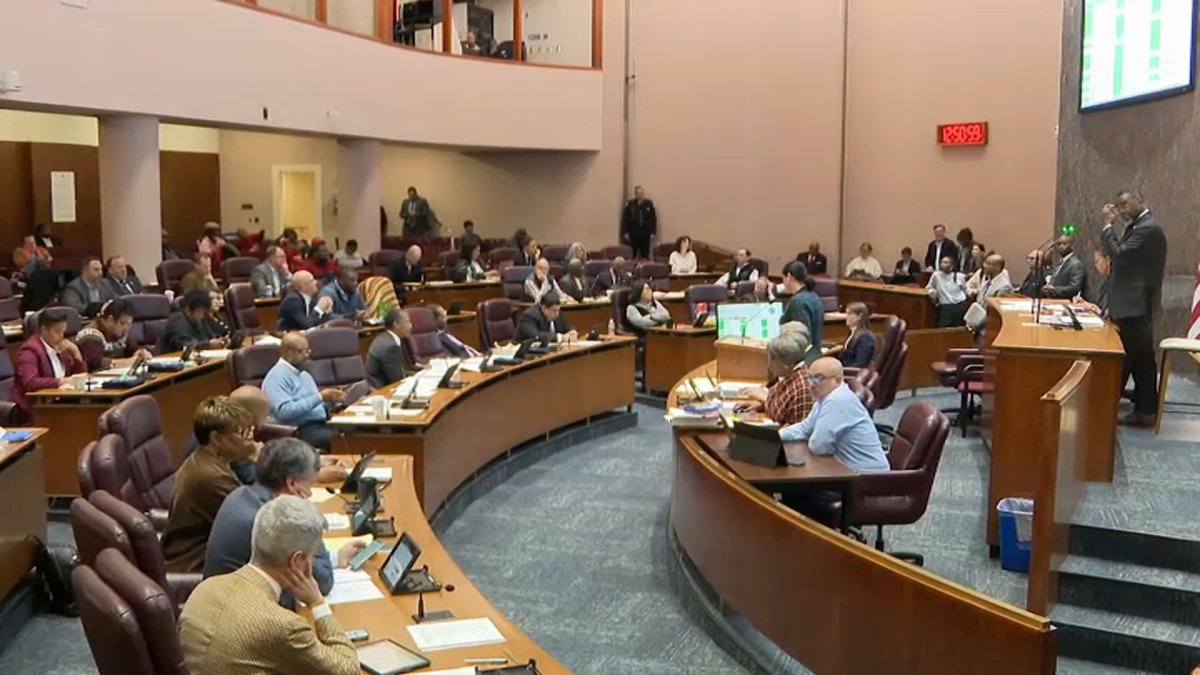
With 11 days left before the deadline, the Chicago City Council signed off on a spending plan on Friday, the first step to passing the 2026 budget.
In a rare move, a majority of council members banded together in recent weeks and crafted their own alternative budget plan, united against a cornerstone of the mayor’s plan: a head tax on the city’s largest companies. Opponents of the head tax call it a “job killer,” but the mayor’s team has challenged that notion, saying the assertion that it would “disincentivize economic growth is not substantiated by data.”
Alders’ efforts have proved initially successful, as the council voted 29-19 on Friday to approve the revenue ideas in the alternative budget — which does not include a head tax, property tax increase, grocery tax or garbage tax increase. The plan increases the bag tax, rideshare tax and liquor sales tax, and it adds video gaming to restaurants and advertising to light poles and city vehicles.
“I think the biggest takeaway from this budget and this budget process is we are standing for something. We are standing for the city, and we are standing for our communities,” said Ald. Samantha Nugent from the 39th Ward.
The council is set to meet again on Saturday to take final votes on the alternative budget. If it passes, the next move would be Mayor Brandon Johnson’s. Would he sign it or veto it?
“I haven’t made that decision yet,” Johnson said Friday.
Thirty-four votes are needed to override mayoral vetoes. If the council and mayor do not sign off on a budget before Dec. 30, the city will face a government shutdown.
The alternative budget keeps 98% of the mayor’s original plan intact. The mayor has made his objections clear about the other 2%, however. His chief concern is a proposal to increase debt collections in the city.
“There’s an attempt to sell off debt, to send debt collectors after working people. Again, I don’t believe this is a principled approach towards how we balance our budget,” Johnson said.
Aldermen pushed back on the mayor’s assertion that the debt collection would have to target working people, saying, that corporations could be targeted instead.
“You have developers that aren’t paying their bills, businesses that aren’t paying their bills. We have been saying that all along. Those are the businesses. Those are the developers. Those are the people. If they are not paying their bills, they need to pay them,” said Ald. Scott Waguespack of the 32nd Ward.
During Friday’s council meeting, the mayor also offered a revised version of his own budget, which took out the debt sale idea and reinstated the corporate head tax.
“Eighty percent of the people of Chicago agree that the corporations who received the largest tax break in the history of America should put more skin in the game. That fight is not over,” Johnson said.
The council, instead, opted to move forward with the alternative budget.
Hence then, the article about chicago city council advances 2026 revenue plan without mayor johnson s head tax was published today ( ) and is available on NBC Chicago ( Middle East ) The editorial team at PressBee has edited and verified it, and it may have been modified, fully republished, or quoted. You can read and follow the updates of this news or article from its original source.
Read More Details
Finally We wish PressBee provided you with enough information of ( Chicago City Council advances 2026 revenue plan without Mayor Johnson's head tax )


Also on site :
- Iran offers US deal to reopen Hormuz within a week
- ‘Whisper Fringe’ Is About To Be Fall’s Biggest Hair Trend—a Celebrity Stylist Explains Who It Flatters Most
- Carrot Top Breaks Silence After Suicide Attempt and Hospitalization as Comedian Preps Return to Stage