
2 min read
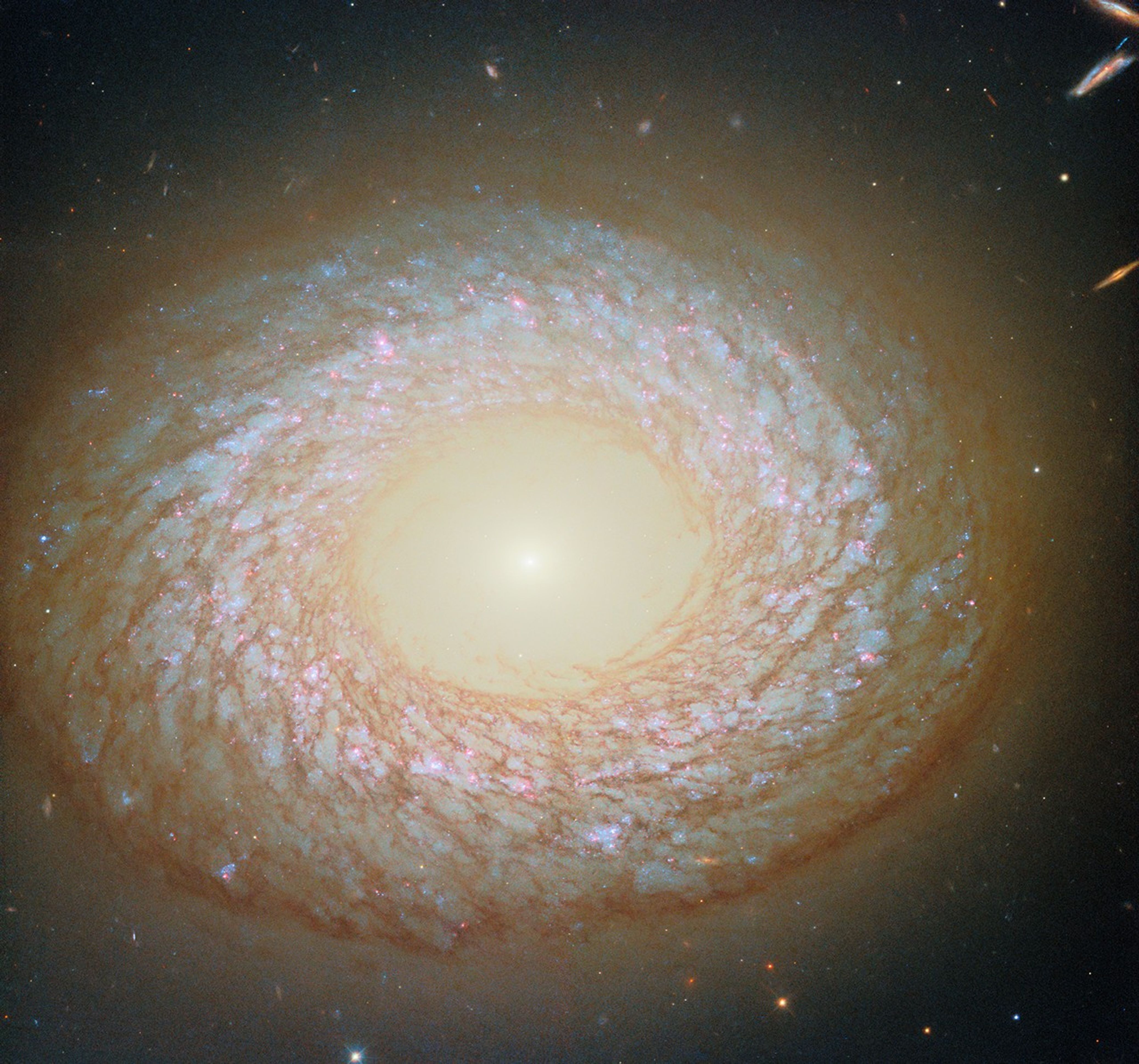
Hubble Captures Puzzling Galaxy This NASA/ESA Hubble Space Telescope image features the galaxy NGC 2775. ESA/Hubble & NASA, F. Belfiore, J. Lee and the PHANGS-HST TeamThis NASA/ESA Hubble Space Telescope image features a galaxy that’s hard to categorize. The galaxy in question is NGC 2775, which lies 67 million light-years away in the constellation Cancer (the Crab). NGC 2775 sports a smooth, featureless center that is devoid of gas, resembling an elliptical galaxy. It also has a dusty ring with patchy star clusters, like a spiral galaxy. Which is it: spiral or elliptical — or neither?
Because we can only view NGC 2775 from one angle, it’s difficult to say for sure. Some researchers classify NGC 2775 as a spiral galaxy because of its feathery ring of stars and dust, while others classify it as a lenticular galaxy. Lenticular galaxies have features common to both spiral and elliptical galaxies.
Astronomers aren’t certain of exactly how lenticular galaxies come to be, and they might form in a variety of ways. Lenticular galaxies might be spiral galaxies that merged with other galaxies, or that have mostly run out of star-forming gas and lost their prominent spiral arms. They also might have started out more like elliptical galaxies, then collected gas into a disk around them.
Some evidence suggests that NGC 2775 merged with other galaxies in the past. Invisible in this Hubble image, NGC 2775 has a tail of hydrogen gas that stretches almost 100,000 light-years around the galaxy. This faint tail could be the remnant of one or more galaxies that wandered too close to NGC 2775 before being stretched apart and absorbed. If NGC 2775 merged with other galaxies in the past, it could explain the galaxy’s strange appearance today.
Most astronomers classify NGC 2775 as a flocculent spiral galaxy. Flocculent spirals have poorly defined, discontinuous arms that are often described as “feathery” or as “tufts” of stars that loosely form spiral arms.
Hubble previously released an image of NGC 2775 in 2020. This new version adds observations of a specific wavelength of red light emitted by clouds of hydrogen gas surrounding massive young stars, visible as bright, pinkish clumps in the image. This additional wavelength of light helps astronomers better define where new stars are forming in the galaxy.
Facebook logo @NASAHubble @NASAHubble Instagram logo @NASAHubbleMedia Contact:
Claire Andreoli ([email protected])NASA’s Goddard Space Flight Center, Greenbelt, MD
Share
Details
Last Updated Sep 25, 2025 Editor Andrea Gianopoulos Location NASA Goddard Space Flight CenterRelated Terms
Astrophysics Astrophysics Division Elliptical Galaxies Galaxies Goddard Space Flight Center Hubble Space Telescope Spiral Galaxies The Universe Keep ExploringDiscover More Topics From Hubble
Hubble Space Telescope
Since its 1990 launch, the Hubble Space Telescope has changed our fundamental understanding of the universe.
Hubble News
Hubble Science Highlights
Hubble Online Activities
Hence then, the article about hubble captures puzzling galaxy was published today ( ) and is available on NASA ( Middle East ) The editorial team at PressBee has edited and verified it, and it may have been modified, fully republished, or quoted. You can read and follow the updates of this news or article from its original source.
Read More Details
Finally We wish PressBee provided you with enough information of ( Hubble Captures Puzzling Galaxy )


Also on site :
- Sean Hogan’s ‘The Dark Gets In’ Boarded for Worldwide Sales by Blue Finch Films Ahead of Beyond Fest Bow (EXCLUSIVE)
- Inter Miami vs San Diego: When and Where to Watch Messi in MLS 2026
- Converse pulls ad over KKK imagery claims