
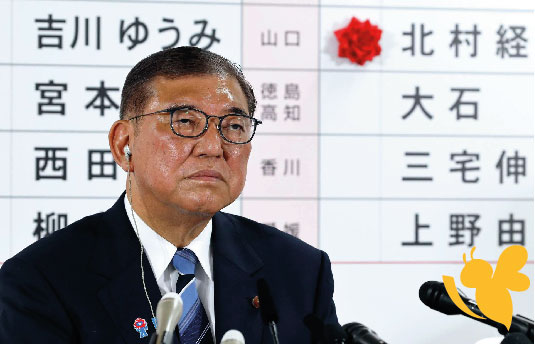
In a significant political development, Japanese Prime Minister Shigeru Ishiba has pledged to continue his tenure despite experiencing a historic setback in the recent upper house election, where his ruling coalition lost its majority for the first time since 1955 . This unprecedented situation poses substantial challenges for Ishiba's government as it must navigate a landscape marked by public discontent over rising living costs and economic stagnation. In response to these electoral results, Ishiba emphasized his commitment to addressing pressing issues such as wage growth and national security .
Voters went to the polls on Sunday for the tightly-contested election, being held at a time of frustration at the coalition of the Liberal Democratic Party (LDP) and its junior partner Komeito over rising prices and the threat of US tariffs.
Speaking after polls closed on Sunday, the prime minister said he "solemnly" accepts the "harsh result" but that his focus was on trade negotiations.
Having already lost its majority in Japan's more powerful lower house last year, the defeat will undermine the coalition's influence.
The ruling coalition needed 50 seats to retain control of the 248-seat upper chamber. It ended up with 47.
The Constitutional Democratic Party, the main opposition, came in second with 22 seats.
Sunday’s vote comes after Ishiba’s coalition lost a majority in the October lower house election, stung by past corruption scandals, and his unpopular government has since been forced into making concessions to the opposition to get legislation through parliament. It has been unable to quickly deliver effective measures to mitigate rising prices, including Japan’s traditional staple of rice, and dwindling wages.
Before all the votes had even been counted, powerful members of the governing party were calling on Mr. Ishiba to step down, to take responsibility for what exit polls suggested would be a poor showing. Taro Aso, a former deputy prime minister, said he “couldn’t accept” Mr. Ishiba staying on as prime minister, TV Asahi reported.
Moreover, Ishiba's resolve to remain in office reflects an awareness of the potential for political instability if leadership transitions occur amidst ongoing crises. He recognized the public's "suspicion, mistrust and anger" stemming from recent funding scandals that significantly influenced voter sentiment . By committing to fundamental reforms in both governance and economic policy, Ishiba aims to restore confidence among constituents while simultaneously mitigating risks associated with a fragmented parliamentary landscape.
The Kremlin has insisted that any peace deal should see Ukraine withdraw from the four regions that Russia illegally annexed in September 2022, but never fully captured. It also wants Ukraine to renounce its bid to join NATO and accept strict limits on its armed forces — demands Kyiv and its Western allies have rejected.
In his nightly address on Saturday, Ukrainian President Volodymyr Zelenskyy said that his officials have proposed a new round of peace talks this week. Russian state media on Sunday reported that no date has yet been set for the negotiations, but said that Istanbul would likely remain the host city.
Read more
Alaska Airlines Flights Resume After Outage Disrupts Operations Kerr County Officials: Missing Persons in Texas Floods Reduced from 97 to 3Sara H


Also on site :
- Kylie Jenner’s Exact Pay for Victoria’s Secret Fashion Show Leaks as Sources Reveal the Supermodels Who Are ‘Furious’—’It’s Insulting’
- Charles Reportedly Facing ‘Agonizing Grief’ Amid Claims the King Is ‘Troubled’ Over a ‘Distressing’ Health Update
- Harry Shares Official Update on Charles’ Cancer After the King’s ‘Heartbreaking’ Dying Wish for the Prince Was Finally Revealed