
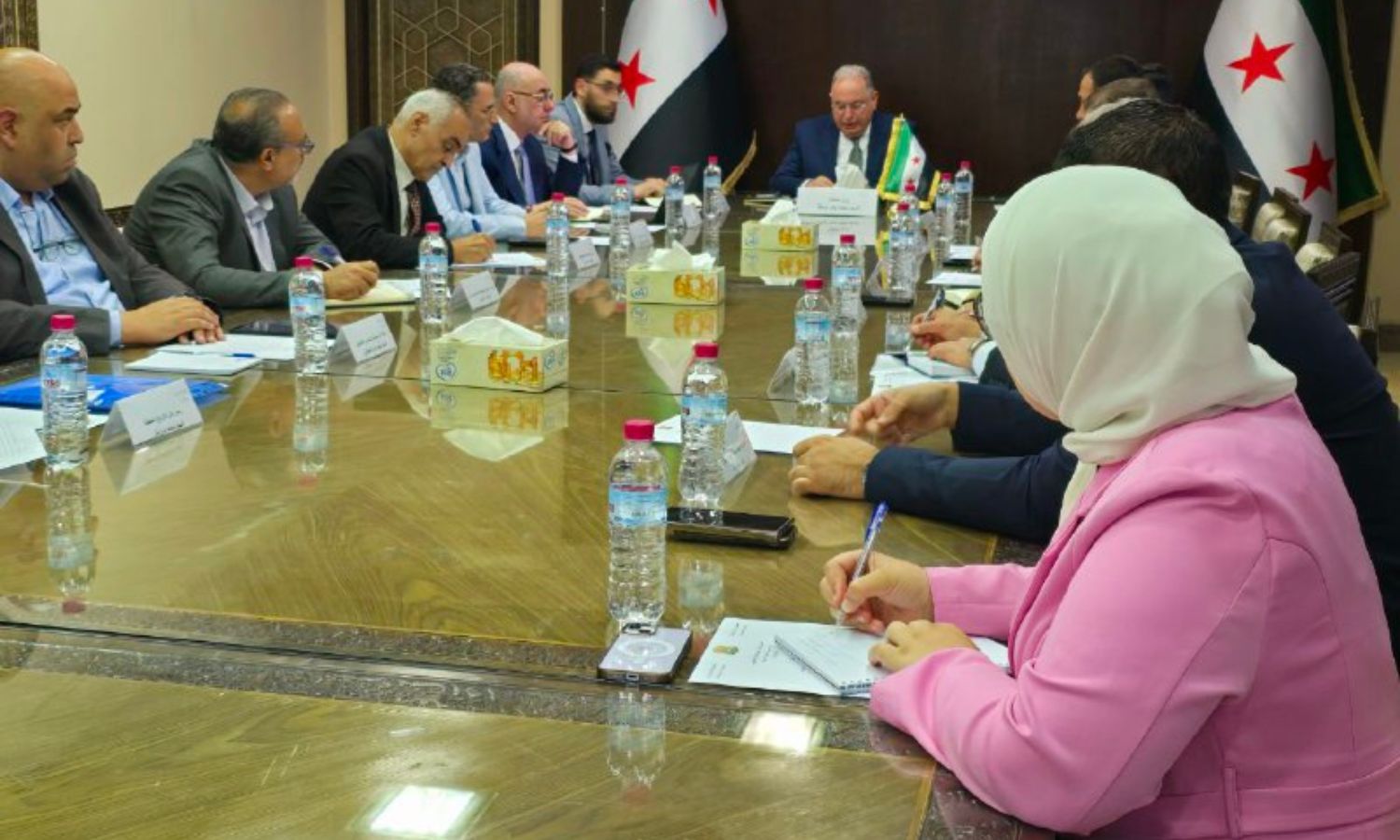
The Syrian minister stated on Tuesday, July 15, via LinkedIn, that the new tax system is part of broader tax reform efforts and is based on simplicity, clarity, competitiveness, modernization, support for the private sector, and promotion of economic growth.
According to Bernieh, the Syrian Ministry of Finance is keen on “consulting with businesspeople, investors, chambers of commerce and industry, and civil society,” and believes in building partnerships with them.
The ministry has launched a consultation period to gather input on the proposed reforms, in preparation for drafting a new tax law set to come into force at the beginning of 2026.
The minister welcomed feedback and suggestions via a dedicated email address, with the consultation period open for 15 days, ending on July 30.
Key Features of the New Tax System
Minister Bernieh described the proposed system as modern, simplified, and easy to understand and implement. He noted that it departs significantly from previous tax legislation, which will be automatically repealed once the new law takes effect.
The new system is based on a unified, non-categorical tax structure. It includes a corporate tax applied equally across all business entities, and a personal income tax with a minimum exemption threshold.
Notable features include:
A minimum taxable net income threshold set at the equivalent of $12,000 per year.Elimination of lump-sum income tax classification committees, replaced by standard taxation for individuals with net income exceeding the $12,000 exemption threshold.
Increase of the personal income tax exemption threshold to $12,000 annually, limiting taxation to higher earners.
0% income tax on net income from agriculture.
0% income tax on interest earned from bank deposits.
2% withholding tax on supplies provided by non-resident individuals.
10% income tax on net profits from sectors such as industry, education, healthcare, consulting, training, and technology.
0% income tax on stock trading and securities transactions.
15% income tax on all other sectors, including e-commerce (goods and services), and profits from intangible assets.
10% tax on capital gains.
Consolidation of various service fees into a single unified charge to eliminate redundancy.
Competitive tax structure and procedures designed to align with systems in neighboring countries.
Simplified processes aimed at reducing the burden on taxpayers.
Transparent and clearly defined rules for tax accounting, applying to both taxpayers and tax authorities.
Discounts on tax liabilities for entities contributing to social programs.
Streamlined disclosure procedures, adjusted based on taxpayer classification.
Integration of e-invoicing for purchases and sales.
Recognition of documented expenses, especially those linked to QR codes.
Strengthening the role of certified auditors and the application of modern accounting standards.
Every taxpayer must submit an income declaration appropriate to their classification—either a full balance sheet or income statement.
Any registered business that fails to submit an income declaration will face a fixed penalty, unless their activity is exempt from taxation.
Simplification of tax dispute resolution procedures, with emphasis on objective fairness, including shifting the burden of proof on income sources to the tax authority. Final disputes will be referred to a dedicated tax court.
Clear, simplified procedures for appeals and litigation.
Administrative reforms to improve efficiency and boost the technical capacity of financial staff.
Full digitization of tax declaration and auditing processes, with reliance on electronic systems.
A rewards and incentives program for compliant taxpayers.
Special provisions to resolve longstanding and accumulated tax liabilities, in a way that serves both citizens and the state treasury.
In December 2023, under the previous Syrian government, the Ministry of Finance issued a decision—based on Legislative Decree No. 30—amending the income tax law. The amendment exempted net annual profits of up to SYP 3 million (approximately $300) from taxation.
Profits between SYP 3 million and 10 million (~$300–$1,000) were subject to a 10% tax rate, while net profits between SYP 10 million and 30 million were taxed at 14%, according to Syria’s state-run news agency, SANA.
Get to Know Syria’s New Income Tax System Enab Baladi.
Hence then, the article about get to know syria s new income tax system was published today ( ) and is available on ُEnabbaladi ( Syria ) The editorial team at PressBee has edited and verified it, and it may have been modified, fully republished, or quoted. You can read and follow the updates of this news or article from its original source.
Read More Details
Finally We wish PressBee provided you with enough information of ( Get to Know Syria’s New Income Tax System )


Also on site :
- iPhone Duo Launches in Santa Barbara
- Starbucks China tells customers to buy something before they sit down, as it invests $45 million in the store experience
- 1999 Cult-Favorite TV Series Featured Van Halen, Rush, Styx—And Has the ‘Greatest Halloween Episode of All Time’