
Data center development has become one of the largest contributors to U.S. economic growth, with roughly $800 billion expected to be spent in 2026 alone. But the AI-driven infrastructure boom is creating demand for a workforce that can build and connect those facilities—and the U.S. doesn’t have nearly enough workers to keep up.
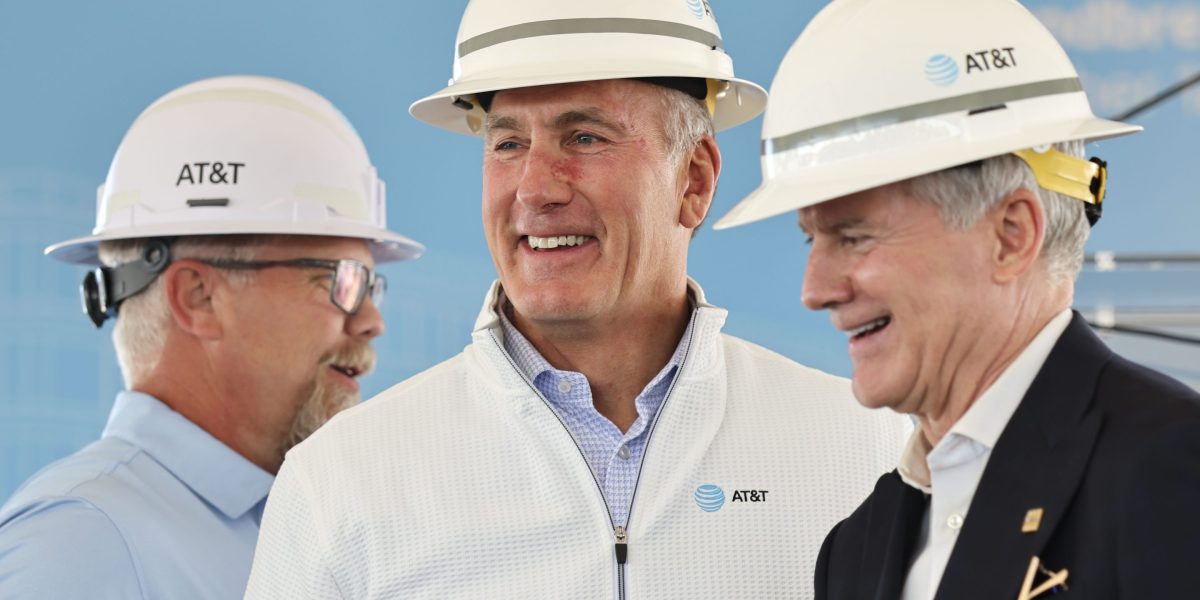
According to AT&T CEO John Stankey, the shortage has become an increasingly urgent challenge. By 2032, he said the telecommunications industry will need to bring in nearly 200,000 additional construction and technician workers.
“We all know there’s a huge building boom going on, trying to bring the next foundational technology of AI out, and all those data centers have to be connected,” Stankey said on the This Old House Radio Hour podcast. “If we want to keep growing, we really need to address this and step up to it.”
On top of the rapid construction of data centers, the gradual expansion of broadband infrastructure to homes and businesses and the need to replace workers leaving through retirement and attrition is also putting strain on the industry—but it’s also presenting a newfound opportunity for Gen Z.
A shortage of telecom workers is an open door for Gen Z looking beyond a four-year degree
With the college-to-career pipeline growing less reliable, the shortage of telecommunications technicians could offer young people a promising alternative to a four-year degree.
Most entry-level jobs in the space, including fiber technician, telecommunications installer, and construction jobs, don’t require a bachelor’s degree and offer paid, on-the-job training.
The median annual salary for these roles hovers around $70,000, according to the U.S. Bureau of Labor Statistics, with total compensation potentially approaching six figures when overtime and bonuses are factored in. AT&T, for example, offers sign-on bonuses of up to $10,000 in select markets.
A company spokesperson said AT&T hires based on “skills and potential,” rather than requiring candidates to have a degree, adding that “we teach the rest.”
New fiber splicers receive four weeks of hands-on training, while line technicians receive five weeks of training, along with certification to obtain a commercial driver’s license. Since 2023, AT&T has hired 10,000 workers for these types of roles.
“We’ve been hiring between 3,000 to 3,500 folks a year to do more of that technical fiber work,” Stankey said. “Now, we’re having to work real hard to find the talent.”
The shortage of skilled labor is ubiquitous—and AT&T’s CEO says work needs to be destigmatized
The demand extends well beyond telecommunications. The same data center construction boom is putting pressure on the supply of electricians, plumbers, HVAC technicians, and other skilled tradespeople needed to build and maintain the facilities.
Earlier this year, AT&T joined together with other Fortune 500 companies like Meta, Google, and Ford to form the Alliance for America’s Skilled Trades, a coalition dedicated to address U.S. skilled labor shortages. In its first major report released in September, the group estimated that employers will need to fill about 1.7 million skilled trades openings every year through 2035, but existing training programs are only producing roughly half the workers needed.
The path to filling that gap, according to Stankey, starts with removing the stigma surrounding careers that don’t follow the traditional path of earning a college degree and pursuing a white-collar job.
“There’s other people who love to be outdoors; they like to work with their hands; they like physical aspects, and that’s just as valid as somebody who does thought work in a white-collar administrative complex,” Stankey said.
“As a society, we need to respect that,” he added. “I think that’s just what we have to look at, and maybe not stigmatize one work over another, but be balanced in how we think about it.”
This story was originally featured on Fortune.com
Hence then, the article about at t ceo says 200 000 fiber and telecommunications workers are needed thanks to ai they re stable 70k paying jobs that don t require a degree was published today ( ) and is available on Fortune ( Middle East ) The editorial team at PressBee has edited and verified it, and it may have been modified, fully republished, or quoted. You can read and follow the updates of this news or article from its original source.
Read More Details
Finally We wish PressBee provided you with enough information of ( AT&T CEO says 200,000 fiber and telecommunications workers are needed thanks to AI—they’re stable, $70K-paying jobs that don’t require a degree )


Also on site :
- Magnitude 5.0 earthquake strikes near San Benito County, USGS says
- Amazon Just Slashed the Price of Ugg’s ‘Cozy’ Micro Boots by 30% Ahead of Black Friday
- ‘The Hunger Games: Sunrise on the Reaping’ Ending Explained: How Does Haymitch Win the Hunger Games? Do Katniss and Peeta Appear?