
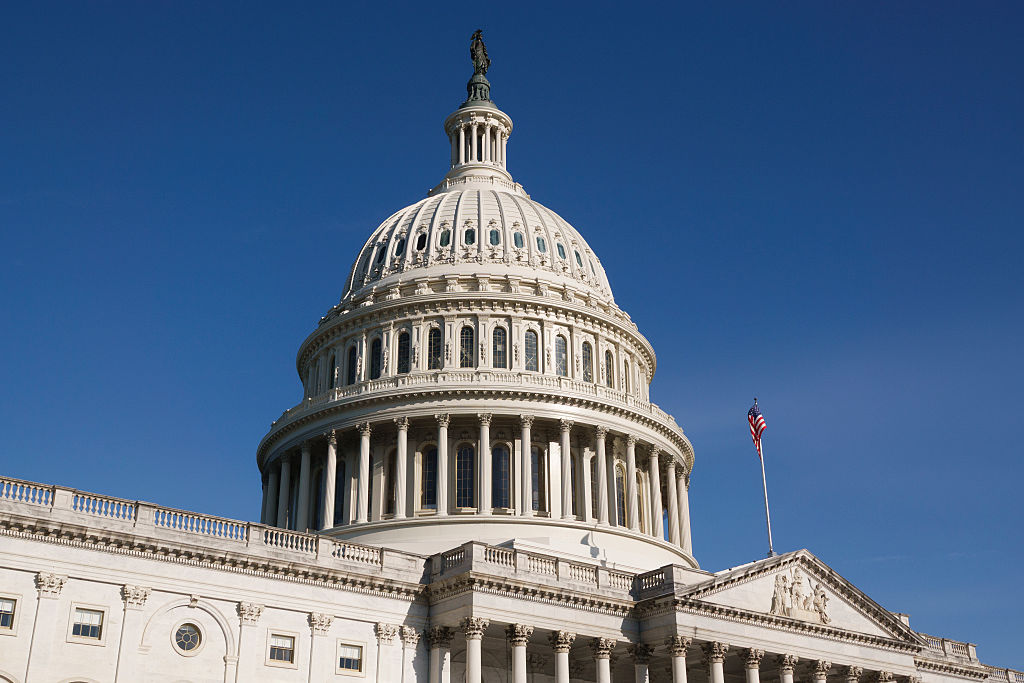
The Senate voted on Nov. 18 to move forward with the Bipartisan Affordability and American Jobs Act (BAAJA) of 2026, a controversial permitting reform bill that aims to speed up the nation’s ability to build infrastructure and energy—which can often take years under the current process. The bill—which has divided environmentalists and clean energy advocates—will now face a final Senate vote before moving to the House of Representatives.
The purpose of BAAJA, in the eyes of some clean energy advocates and other supporters, is to streamline the permitting process to help increase energy supply, which would have the added effect of reducing costs for customers. Over 300 solar and energy storage companies are in support of the bill, along with the American Petroleum Institute and other leaders in the oil and gas industry.
“Because this bill seeks to cut some of the red tape of getting that supply of energy online, it would then put a downward pressure on some of those price increases,” says Jack Andreasen Cavanaugh, the director of the carbon management program at the Center on Global Energy Policy at Columbia University. The impact, however, won’t be felt immediately. The Rhodium Group, an economic and policy research firm, projects $50-78 in annual savings for household electricity bills in 2040.
For clean energy advocates, BAAJA would also help clear the backlog that is holding up renewables entering the grid. “Approval of wind and solar projects, and especially these interstate electricity transmission lines, are really crucial for us to meet our clean energy goals,” says Geoffrey Henderson, assistant professor in the school for environment and sustainability at the University of Michigan, who adds that the permitting process often delays the projects.
Projects to expand electric transmission lines, which are often large scale and cross state lines, also face permitting challenges as more states get involved. “There's a lot of solar and wind power that gets generated but never actually used because it can't be transmitted to the places where the demand is,” says Henderson. “Clean energy advocates for years have been trying to expand the network of transmission lines.”
Shoring up transmission lines is an issue that has broad bipartisan support. Yet to speed up the process, along with the approval process for other energy projects, the bill as it stands now would weaken a number of environmental protections, including the National Environmental Policy Act and the Clean Water Act, by narrowing environmental review processes across those statutes.
“These are environmental laws that were originally enacted decades ago and could be very hard to restore,” says Henderson.
The bill has received pushback from a number of environmental advocates, including the Sierra Club and Earthjustice, who argue that BAAJA stands to limit public participation, and restrict the courts’ ability to stop projects that are proceeding under unlawful permits, and that, while it would make it easier to build out clean energy, it would also do the same for fossil fuels.
One provision allows developers to sue the government if they fear their project has been unfairly treated or denied. This would be determined by comparing the decision against a to-be-established baseline for the number of energy projects—whether for oil, gas, wind, solar, pipelines, and so on—that were approved or denied over a 10-year period. Some environmentalists worry this could slow down the country’s clean energy goals.
“If a subsequent administration wanted to change the rate at which those projects were approved, say approving oil and gas projects at a lower rate, perhaps due to climate concerns, then those developers of those projects would actually be able to sue, saying that they were getting disproportionate treatment from the government,” says Henderson.
What’s more, another provision makes it so that, once a permit is issued, it would be virtually impossible to revoke it.
How the law is interpreted could depend on who is in office, some say—and could shape America’s energy infrastructure for decades. The Rhodium Group projects BAAJA will cut emissions in every scenario it examined, but does not include the “permit certainty” provisions in its analysis, which are designed to stop presidents from discriminating against unfavorable projects, but could leave a future administration unable to undo any fossil-fuel friendly permits issued by the Trump Administration.
“You could imagine an administration such as our current administration basically fast tracking the approval of fossil fuel projects without much regard to the quality of the environmental impact assessment,” says Henderson. “If environmental groups wanted to challenge those projects in court, they would have little recourse to mitigate the harms that those projects would do.”
On the other hand, some argue that the bill could lay the groundwork for fast, ambitious clean energy adoption—and make it harder for it to be challenged, as the Trump Administration is currently doing with hundreds of wind projects. (Though in the bill's current form, so advocates argue that the Trump Administration will be able to continue to block wind projects on the grounds of national security concerns.)
Some Democrats, including representative Jared Huffman of California, have advocated for waiting out the lame-duck period in order to negotiate a better deal come January, when Democrats regain control of Congress.
However, waiting still might not yield the results many are hoping to see. “If you look at the new senators that were elected, by and large a group of them would be categorized as moderate Dems, many of them from oil and gas producing states,” says Andreasen Cavanaugh. “In whatever you're negotiating, I find it difficult to believe that you're going to get some punitive measures or anything that would be actively harmful to the oil and gas industry.”
Passing the bill as it stands now is a gamble, but it’s not a risk that should be taken lightly, says Henderson. “The risk that we're running is that impediments to the development of renewable energy will remain in place for the next two years. Trump has signaled that he will continue to block wind projects while the country expands its infrastructure for exporting oil and gas,” he notes. “We risk not really improving the outcome for wind projects, for instance, while basically weakening checks on expansion of oil and gas, which would significantly increase the U.S.'s contribution to climate change at a time where we really can't afford any more steps in that direction.”
Hence then, the article about why the baaja permitting reform bill is dividing climate and energy advocates was published today ( ) and is available on Time ( Middle East ) The editorial team at PressBee has edited and verified it, and it may have been modified, fully republished, or quoted. You can read and follow the updates of this news or article from its original source.
Read More Details
Finally We wish PressBee provided you with enough information of ( Why the BAAJA Permitting Reform Bill Is Dividing Climate and Energy Advocates )


Also on site :
- BeIN Media Group To Bring ‘Michael’, ‘Hamnet’ & ‘Jurassic World Rebirth’ To MENA Audiences With Fresh NBC Universal Deal
- Four States End Weight Loss Drug Coverage—What Happened Next Was Stark
- ‘The Day Of The Jackal’ Season 2 Teaser: Eddie Redmayne Leaps Back Into Action In Sky/Peacock Series