
Democrats and Republicans in the new Congress will disagree about plenty in health policy. However, they should agree that the Centers for Disease Control and Prevention (CDC) should be a scientific agency whose judgments hold steady no matter who occupies the White House. In January, Congress will have the chance to write that principle into law.
For decades, the scientific independence of America’s public health agencies rested on a bipartisan understanding. Presidential administrations disagreed about health policy, sometimes profoundly, but their health secretaries generally respected the expertise and established processes of agencies like the CDC and the Food and Drug Administration.
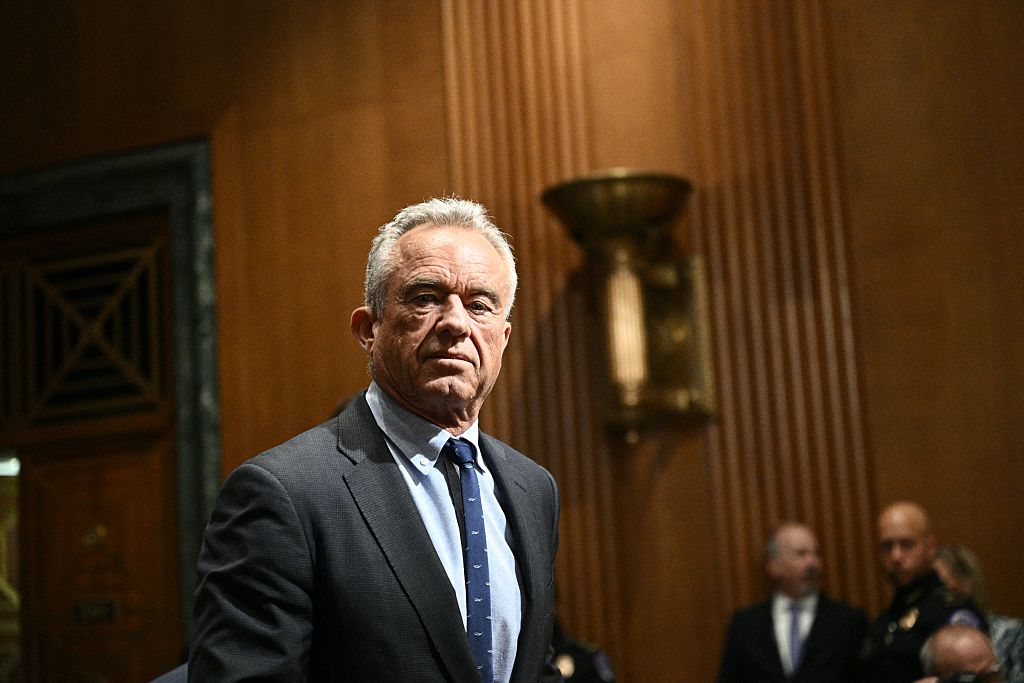
Earlier administrations of both parties—including those of Republican Secretary of Health and Human Services Alex Azar and Democratic Secretary Xavier Becerra—faced charges of political interference, particularly during the COVID-19 pandemic, and some had merit. But I would argue that none have even approached the scale and scope of Robert F. Kennedy Jr.’s interventions. The safeguards that existed were administrative policies, and a new secretary can discard them.
In June 2025, Kennedy dismissed all 17 members of the CDC’s Advisory Committee on Immunization Practices and replaced them with his own appointees. No prior secretary had done this. Congress had given U.S. Health and Human Services secretaries broad authority and relied on their restraint. Restraint is a tradition, and the past year shows it can end.
To address this, Congress should pursue four priorities.
Elected leaders have a legitimate role in setting national health priorities and holding agencies accountable. That role ends where scientific judgment begins, and Congress should draw the line in statute:
Codify the advisory committee on immunization with clear membership qualifications, a transparent appointment process, and removal only for cause.
Require documented, public evidence reviews behind any major change to a scientific recommendation.
Require a secretary who departs from a formal recommendation to explain why in public, separating the scientific evidence from considerations like cost and implementation.
Protect career scientists’ ability to publish findings and communicate evidence, and create an independent office to investigate political interference, with whistleblower protections.
These rules must bind every future secretary, including those appointed by the party that controls Congress today. A protection that works against only one party’s appointees will not last.
Rebuild the CDC’s workforce and expertise
The CDC has lost more than a quarter of its workforce since 2024. The losses include epidemiologists who investigate outbreaks, laboratory scientists who identify emerging pathogens, specialists who evaluate evidence, and professionals who work with state and local health departments. That expertise takes years to develop.
Congress should require an independent assessment of the CDC’s current capabilities and direct the agency to produce a public rebuilding plan with measurable targets for restoring essential functions. Personnel protections should support a professional scientific workforce that can serve administrations of either party. Targets should follow the agency’s mission, whatever headcount that implies.
COVID exposed confusion about the separate roles of the federal and state governments. The CDC could issue guidance, but implementation depended on state and local officials working under different laws, budgets, and political pressures.
Congress should specify what Americans can count on their national public health agency to do: investigate outbreaks when states request help, publish evidence-based guidance, and operate a national data system that state and local health departments can contribute to and draw from in near real time. It should fund those partners to participate, because the CDC’s guidance reaches Americans through their local health departments.
Pair independence with accountability
Scientific independence invites scrutiny, and protecting the CDC from political interference makes meaningful accountability more important. Congress should establish public measures of performance.
How effectively does the CDC identify and investigate emerging threats? How quickly does it get reliable information to states? How transparently does it evaluate evidence? How well does it communicate uncertainty and update recommendations as evidence changes?
An independent body should evaluate these questions, accounting for outcomes that depend on state and local partners. The purpose is to find weaknesses and improve performance.
With a Republican president in the White House, sweeping legislation will require bipartisan support. Congress can begin with oversight hearings, appropriations language, and independent investigations while it builds a coalition for lasting statutory protections. And they can start by pursuing common-sense, common-ground policies.
For eight decades, the CDC has protected Americans from infectious diseases and other health threats. Americans deserve a CDC whose science they can trust, whose expertise is protected, and whose ability to safeguard their health does not depend on who occupies the White House.
Hence then, the article about congress must protect the cdc from politics was published today ( ) and is available on Time ( Middle East ) The editorial team at PressBee has edited and verified it, and it may have been modified, fully republished, or quoted. You can read and follow the updates of this news or article from its original source.
Read More Details
Finally We wish PressBee provided you with enough information of ( Congress Must Protect the CDC From Politics )


Also on site :
- US behaving like ‘mafia boss’ in Middle East – NGO founder (VIDEO)
- The DC Studios To-Do List: Here’s What Incoming Boss Jeremy Latcham Will Sort Through From The Gunn-Safran Era
- Isla Fisher & Blake Ritson Join Al Pacino In John Paul Getty III Kidnapping Pic ‘Captivated’