
In 2014, a film about a prickly, arrogant inventor trying to build a “machine that can solve any problem” arrived in theaters. It explored the secretive creation of a powerful technology that enabled a group of military leaders to unilaterally determine the life and death of thousands.
From the vantage point of 2026, the story sounds unsettling, even dystopian. But The Imitation Game was actually a celebration of its protagonist, Alan Turing, and his pivotal role in helping the Allies decrypt German intelligence messages en route to victory in World War II. The movie was a box-office smash, won an Oscar, and exemplified a slew of Obama-era, techno-optimist movies that celebrated rugged individuals relentlessly building futuristic tech that could lead to a better society.
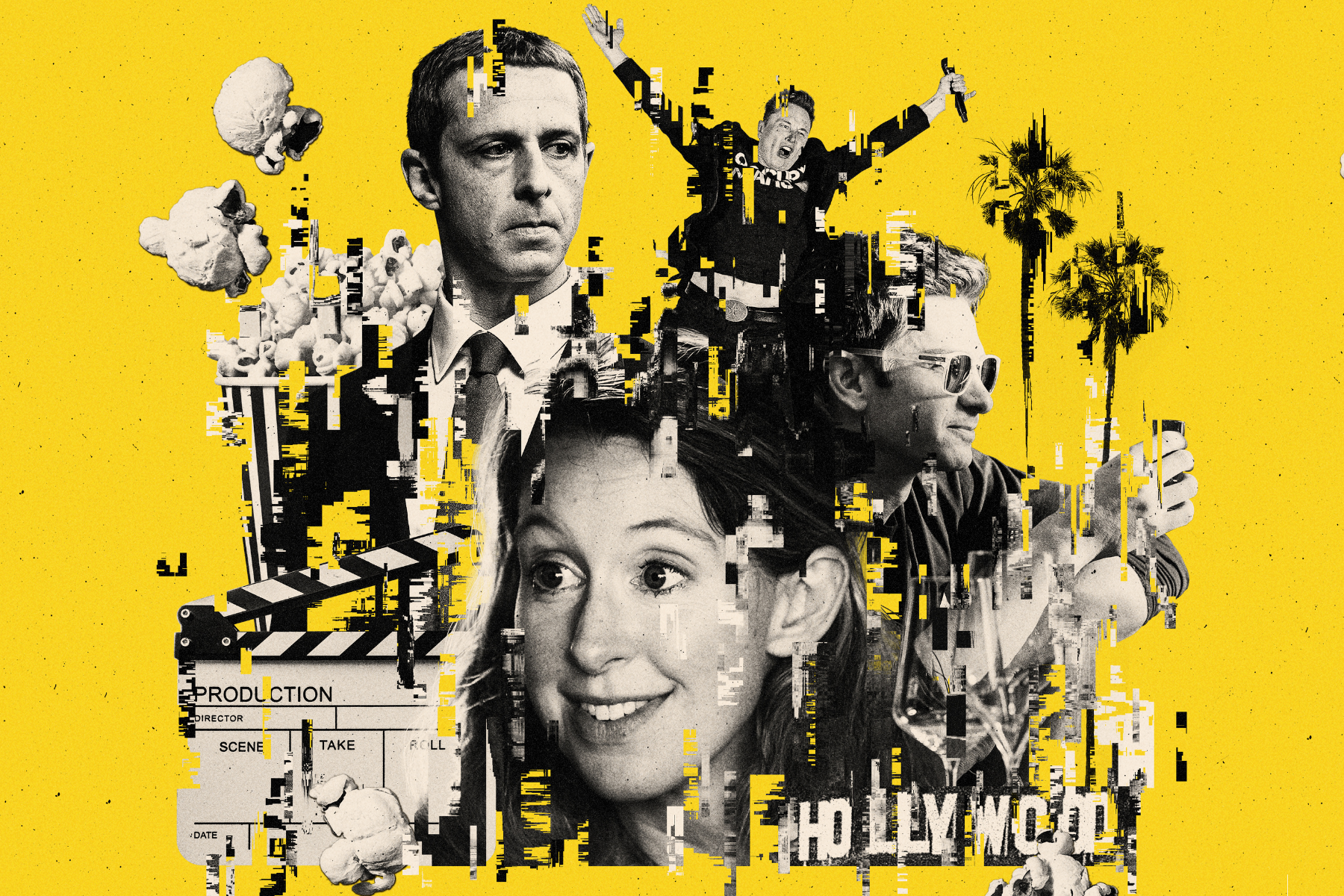
How times have changed. This fall, a new crop of movies arrives that essentially serves as a rejection of that thesis and a damning referendum on the past decade in tech. In the eyes of these movies, tech titans have used their power to exacerbate violent extremism (Mark Zuckerberg in The Social Reckoning); undermine democratic norms (Elon Musk in Musk); mislead the public (Elizabeth Holmes in You Can See Everything); and play roulette with the future of humanity (Sam Altman in Artificial).
In some cases, the films seem to spill from depiction into outright activism. In The Social Reckoning, for example, the protagonists trying to hold Zuckerberg accountable contend that the only way to get powerful people to change is to “cause pain.” And pain Hollywood can certainly cause: tech companies have invested hundreds of billions of dollars to make AI a pillar of society, and face a financial bloodbath should the public reject their tools.
But the damning tone of these films could also prove to be self-sabotaging, because Hollywood is mostly controlled by a handful of billionaires who are heavily invested in AI—and building AI tools that can replace artists. And they have already begun striking back. Musk threatened to sue Musk director Alex Gibney for defamation, and in June, Amazon’s movie arm abruptly dropped Artificial from its slate; the company has a $50 billion investment in Altman’s OpenAI. (Neon subsequently picked up the film.) Time will tell whether these films land their intended blow against Big Tech—or represent the last-ditch resistance of a creative class indebted to overlords they abhor.
Jeremy Strong as Mark Zuckerberg in The Social Reckoning —Sony Pictures
These films are remarkably different in their storytelling approach. Gibney’s documentary Musk is a methodical four-hour march through the Tesla founder’s corporate foibles; Aaron Sorkin’s drama The Social Reckoning traces the growing personal disillusionment of eventual Facebook whistleblower Frances Haugen (Mikey Madison). You Can See Everything unfolds as something of a psychological chess match between Theranos’ Elizabeth Holmes, who is trying to rehabilitate her image right before she heads to prison, and filmmakers Nathan Fielder and Lance Oppenheim, who hope to interrogate her contradictions.
But they all converge on one central question: Why are these flawed titans the way they are? In 1941, Orson Welles’ Citizen Kane set the template for generations of Hollywood character portraits—that the burning ambition of an antihero can be often traced back to searing moments of emotional pain. Both The Imitation Game and The Social Network, two prominent 2010s tech movies, follow this tradition by giving Turing and Zuckerberg their own Rosebuds in the form of past heartbreak. These framings rationalize their later harmful actions, as if to say that tech geniuses get hurt and then lash out just like the rest of us.
This new crop of films, however, largely comes to the opposite conclusion: that these tech overlords have charted a wayward course for humanity precisely because of how differently—and callously—they think. In the aughts, Peter Thiel and other members of the so-called PayPal Mafia came to the conclusion that the path to Silicon Valley success required chasing relentless speed and scale at any cost. This new playbook dictated that founders bet everything on a company vision; sell the public on the myth, even if parts were untrue; scheme and scrap toward invention and then monopoly; then rinse and repeat on an even bigger scale.
This approach has created some of the world’s biggest companies. But the movies argue it also baked failure, deception, and collateral damage into the process. And instead of trying to solve for heroic missions—like beating back the Nazis—these new tech heroes’ main goal seemed to be acquiring, addicting, and monetizing as many users as possible.
These new movies grapple with this psychological shift. As the screenwriter of The Social Network in 2010, Aaron Sorkin painted Zuckerberg as petulant, to be sure, but still soulful, and hellbent on sticking it to the man. A quarter-century later, the Zuckerberg he wrote and directed Jeremy Strong to play in Reckoning is the man: robotic and cruel, making decisions via cold cost analysis. In Luca Guadagnino’s Artificial, Andrew Garfield plays Sam Altman as a serial liar who will say anything if it helps further his mission. These guys aren’t depicted as antiheroes, but as villains, with self-serving worldviews that may be incompatible with democracy.
AI Anxiety
Their worldviews pose even more dangers as they shift their focus from social media to AI. The film that most directly deals with current AI harms is not part of this mainstream Hollywood crop but the documentary NAZA, shot in Tel Aviv by two Oscar-winning Israeli directors. Under cover of darkness, anonymous Israeli officers describe how AI tools enabled mass surveillance and bombing in Gaza. The tools allowed them to think about war as a video game, and their victims not as people but as “ants” or a “factory of targets.” (The IDF has rejected many of the movie’s claims.)
Musk and Artificial carry even more apocalyptic overtones. The former ends with a visualization of Musk flying off into space on a rocket ship as the earth explodes behind him. Gibney told TIME in September that his dread levels these days are “really high.” “Elon Musk is betting on whether or not AI will lead us to a moment of extraordinary abundance or basically the end of life on earth,” he said. “Who makes that kind of a bet?”
Read More: Elon Musk Calls This Documentary a 'Hit Piece.' Here’s Why It’s So Critical of Him
This Time, It's Personal
Andrew Garfield (left) as Sam Altman in Artificial, with Yura Borisov as Ilya Sutskever —Courtesy of NeonWhat will the overwhelming negativity of these movies achieve? Gibney hopes to offer a holistic and rigorous examination of the character of tech leaders, who are constantly pivoting out of crises and toward the Next Big Thing. Musk has moved from cars to rockets to the government to AI and back. Zuckerberg changed Facebook’s name to Meta amid the backlash brought on by Haugen’s whistleblowing—and then when the metaverse fell flat, he dumped all of his company’s money into AI.
Film offers viewers a more deeply engaging escape from the algorithmic hamster wheel and undeniably shapes public perception. Elizabeth Holmes says so herself in You Can See Everything, at least according to filmmaker Fielder: that many people who met Holmes in prison believed that The Dropout, a fictionalized Hulu series starring Amanda Seyfried, was a documentary about her.
That hostility coursing through these movies matters, because AI ambitions depend on mass adoption. To train ever more powerful AI, companies like OpenAI and Meta have borrowed hundreds of billions of dollars, which they will eventually need to repay by earning consistent and massive revenue. The public is already immensely distrustful of AI, even as they adopt it in huge numbers. If Artificial persuades many people to stop using ChatGPT—as Andrew Garfield has done—that could put further pressure on the industry’s wager.
But much of these would-be viewers already dislike Big Tech—while many others are simply disengaged, preferring to do literally anything else with their free time than obsess over tech leaders. The Social Reckoning has made just $17 million, a far cry from The Social Network’s $225 million rake, and Musk has grossed $730,000 despite strong reviews. (You Can See Everything has fared better, but that may be more because of the fascination surrounding Fielder than Holmes.)
The tech titans themselves seem to care, though, and are responding in kind. They are increasingly withholding access from journalists or TV interviews, opting instead for friendlier settings like The Joe Rogan Experience. They are shaping how these films are perceived on social media: multiple platforms initially declined to run Musk’s trailer because of its “political content.” They own the film studios, and could cut off funding for similarly critical products, relegating them to the less widely seen indie margins. And finally, they are building AI tools which could make many of the human elements of the filmmaking process obsolete—virtual actors, animation, set design, storyboarding.
Given all of these threats, perhaps it’s not a surprise that these tech movies thrum with urgency and apocalyptic rhetoric. As the famous tagline for Jaws: The Revenge read, “This time, it’s personal.” So Hollywood is snapping back, casting itself as an embattled underdog in a fight for its life. The problem is that it’s already sitting inside Big Tech’s gaping mouth.
Hence then, the article about how movies about tech turned dystopian was published today ( ) and is available on Time ( Middle East ) The editorial team at PressBee has edited and verified it, and it may have been modified, fully republished, or quoted. You can read and follow the updates of this news or article from its original source.
Read More Details
Finally We wish PressBee provided you with enough information of ( How Movies About Tech Turned Dystopian )


Also on site :
- Italy vs France: Kick-off Time, TV Channels and Expected Lineups in the UEFA Nations League 2026
- These LG, Samsung, and ASUS OLED Gaming Monitors Are up to $580 Off Ahead of Black Friday
- Victims of Russell Brand Bravely Speak Out