
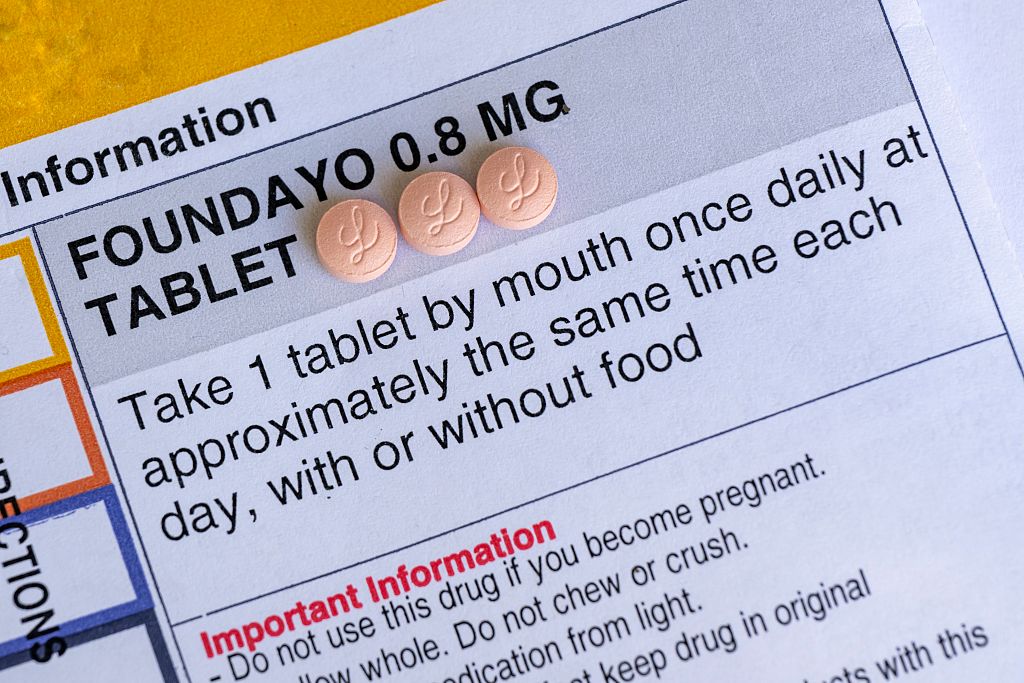
Researchers continue to document benefits of GLP-1 drugs beyond weight loss and diabetes. At the American Heart Association annual meeting in November and in new studies published in scientific journals, scientists at Eli Lilly reported that Foundayo (orforglipron), its GLP-1 pill recently approved by the U.S. Food and Drug Administration (FDA), helped reduce the number of obstructive sleep apnea episodes people had. Another drug called retatrutide—an experimental weight-loss injection that the company is currently testing—helped ease pain caused by osteoarthritis in the knee.
In sleep apnea, people stop breathing for brief periods of time, depriving the body and brain of oxygen, which can drive up blood pressure, contribute to atrial fibrillation, place added burden on the heart, and even sometimes lead to stroke.
Weight is one of the strongest risk factors for sleep apnea. Excess weight can restrict airways around the neck, throat, and chest, so losing weight can reduce the number of sleep apnea episodes.
Though Foundayo is only approved for chronic weight management—not yet for obstructive sleep apnea—the data suggest it’s the third product from Lilly to address the condition. Its two GLP-1 medications—Mounjaro for diabetes and Zepbound for weight loss—are already approved to treat obstructive sleep apnea in those groups. But both of those medicines require patients to inject themselves weekly; Foundayo is a pill, which could provide patients with a more convenient option if the FDA approves it for that purpose. Ken Custer, executive vice president and president of cardiometabolic health at Lilly, says that by the end of 2026, the company plans to submit a request to the FDA for Foundayo’s approval in people who are overweight or obese who also have obstructive sleep apnea.
The two studies published in JAMA included more than 700 people in nine countries who were overweight or obese—with a BMI of 27 or higher—and had moderate-to-severe obstructive sleep apnea. Some used a device for positive airway pressure therapy (PAP), and some did not.
People in the study lost an average of 28 pounds—about 11% of their starting body weight—compared to people who took a placebo. Those on the drug also showed improvements in risk factors for heart disease, including reduced levels of the inflammatory marker CRP, and lower blood pressure.
They also had about 44% fewer overnight apnea events over a year compared to those who took a placebo. By the end of a year, about 20% of those who took Foundayo either went into remission for their condition or transitioned to a milder form of the disease. Those results put Foundayo on par with Zepbound for its effect on sleep apnea.
The study also showed that people who did not use PAP devices had slightly greater reductions in sleep apnea events than those who did. Custer says that could indicate that PAP devices may be doing some of the work to manage the events. It’s also possible that those who didn’t use the devices were generally earlier in their disease.
Retatrutide and osteoarthritis
In a separate study presented at the conference and published in the New England Journal of Medicine, the company reported on an injectable compound still in development, retatrutide, and its effect on arthritis pain in the knee. Retatrutide targets three hormones related to weight, while Foundayo targets one and Zepbound two. Arthritis pain and weight are related, so weight loss can be a major contributor to reducing arthritis-associated pain in joints like the knees.
That’s what the researchers saw in two studies involving more than 1,000 people who were overweight or obese (with a BMI of at least 27) and also had osteoarthritis in the knee. People were given varying doses of retatrutide or placebo.
Those who received the injectable drug weekly lost about 25% of their body weight, and two thirds of those who got the drug reported a 50% drop in knee pain after more than a year.
While weight and arthritis pain are correlated, “the mechanism of what causes the pain is poorly understood,” says Dr. Thomas Schnitzer, professor of physical medicine and rehabilitation, anesthesiology, and medicine at Northwestern University Feinberg School of Medicine and one of the co-authors of the study. Excess weight can contribute to arthritis in the joints in several ways. One is physical: extra weight places a heavier load on joints and can lead to wearing of the joints and pain. Another is more metabolic: fat cells can produce inflammatory factors that can cause pain in joints. Some data suggest that GLP-1 drugs may have anti-inflammatory effects, which could also contribute to the reduction in pain seen in the study.
Schnitzer says the data should be strong enough to consider the experimental drug as a treatment for arthritis pain in the knee, and Custer says Lilly is studying the drug for chronic low back pain. Lilly is also studying Foundayo for more generalized pain that’s not related to weight. “We believe the incretins [the group of molecules to which GLP-1s belong] have analgesic effects mediated by something other than weight loss, given their involvement in inflammatory pathways and potentially impacts on neuronal function,” Custer says.
Hence then, the article about weight loss drugs may help sleep apnea and arthritis was published today ( ) and is available on Time ( Middle East ) The editorial team at PressBee has edited and verified it, and it may have been modified, fully republished, or quoted. You can read and follow the updates of this news or article from its original source.
Read More Details
Finally We wish PressBee provided you with enough information of ( Weight-Loss Drugs May Help Sleep Apnea and Arthritis )


Also on site :
- What channel is Plymouth Parkway v Berkhamsted FA Cup match on? TV coverage, live stream and kick-off time
- Chipotle Is Bringing Back Its Record-Breaking BOGO Deal on Friday the 13th—With a Limited-Edition Wiz Khalifa Bag—And You Don’t Even Need a Real Tattoo
- ‘Love Is Blind’ Reunion Goes Off the Rails for Michaella Giorgio With Stage Fall, Explosive Fight and Mushrooms Confession