
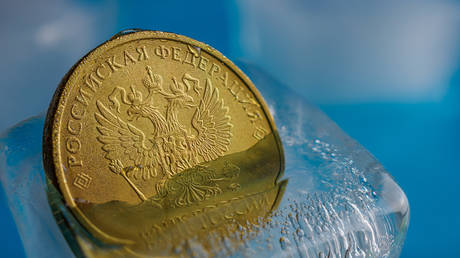
A Luxembourg court has ruled that the country’s authorities wrongly blocked the return of securities belonging to non-sanctioned individuals and companies
A Luxembourg court has overturned the government’s refusal to release frozen Russian securities, marking a potentially significant legal victory for investors whose assets have been trapped in the EU since the escalation of the Ukraine conflict in 2022.
In a ruling last week, the country’s Administrative Court found that the Finance Ministry had wrongly denied a Russian company’s request to recover its securities and those of its clients held through Russia’s National Settlement Depository (NSD). The EU sanctioned the NSD in June 2022 as part of unprecedented restrictions imposed on Moscow over the Ukraine conflict. The move left securities held through the institution frozen at European depositories.
The dispute centered on an exemption allowing payments under contracts signed before sanctions took effect. The Luxembourg authorities argued that it covered money transfers but not securities. The court disagreed, ruling that the term ‘payment’ is not limited to cash and can also cover the return of securities to their owners.
Read more EU won’t try to steal Russian assets again – BelgiumAs neither the Russian company nor its clients were sanctioned when the ministry rejected their application in September 2023, the court found that the authorities had wrongly refused to release their assets under the exemption.
The decision could help other Russian investors recover their frozen assets by challenging the way EU sanctions have been interpreted. However, the ruling does not automatically unfreeze the assets. Any transfers must still comply with the broader EU sanctions, including a requirement that fees paid to the NSD remain frozen.
The judgment does not identify the Russian company or its clients. It concerns private investments, not Russia’s frozen sovereign reserves, and does not overturn the broader EU sanctions regime.
Read more US proposes unfreezing Russian assets for Ukraine peace – FTApproximately €210 billion ($236 billion) in Russian central bank assets has been frozen in the EU since 2022, most of it held at Belgium-based clearing house Euroclear. The bloc has been using profits generated by the funds to support Ukraine through a so-called ‘windfall tax’. However, despite repeated calls from Kiev and its backers, it has so far stopped short of outright confiscation amid concerns over the legal consequences.
Moscow has condemned both the use of profits from its frozen assets and proposals to confiscate the funds. In September, Russian Foreign Minister Sergey Lavrov said trust in Western nations had been “completely lost,” accusing them of “outright robbery” over their handling of Russian assets.
READ MORE: Kremlin slams EU over transfer of Russian profits to Ukraine
Russia has also mounted a legal challenge against EU sanctions freezing its assets. Earlier this year, a Moscow court awarded the Russian central bank around €200 billion in damages against Euroclear. This week, the bank also asked a Belgian court to authorize the seizure of documents from the depository’s headquarters, seeking evidence of its coordination with EU institutions over sanctions rules, Belgian newspaper L’Echo reported on Thursday.
Hence then, the article about russian investors win battle over frozen assets was published today ( ) and is available on Russia Today ( News ) The editorial team at PressBee has edited and verified it, and it may have been modified, fully republished, or quoted. You can read and follow the updates of this news or article from its original source.
Read More Details
Finally We wish PressBee provided you with enough information of ( Russian investors win battle over frozen assets )


Also on site :
- Thursday: What races the AP has not yet called in contests for Senate and governor
- What to Expect From Best Buy's Black Friday and Cyber Monday Sales This Year
- LEGO’s 2026 Holiday Ad Stars Daft Punk, E.T. & ‘KPop Demon Hunters’: Shop the Sets Featured in the Video