
Prior to Alexander Fleming’s accidental discovery of penicillin 100 years ago, almost half of all deaths were caused by infections. Fleming’s petri-dish experiments and the resulting development of modern antibiotics have added an average of 23 years to human life expectancy and are estimated to save millions of lives each year.
Sandoz, the Swiss pharmaceuticals company, is one of the last producers of this vital medicine in Europe. Its €150 million ($168 million) factory in the Alpine town of Kundl, Austria, is the continent’s only fully integrated antibiotic manufacturing facility, capable of producing the active ingredients and turning it into medication ready for patients.
However, Sandoz faces strong competition from China. Last year, 86% of EU imports of penicillins and their derivatives came from China, up from 44% in 2019, according to Eurostat. China is now the largest exporter of antibiotic ingredients in the world.
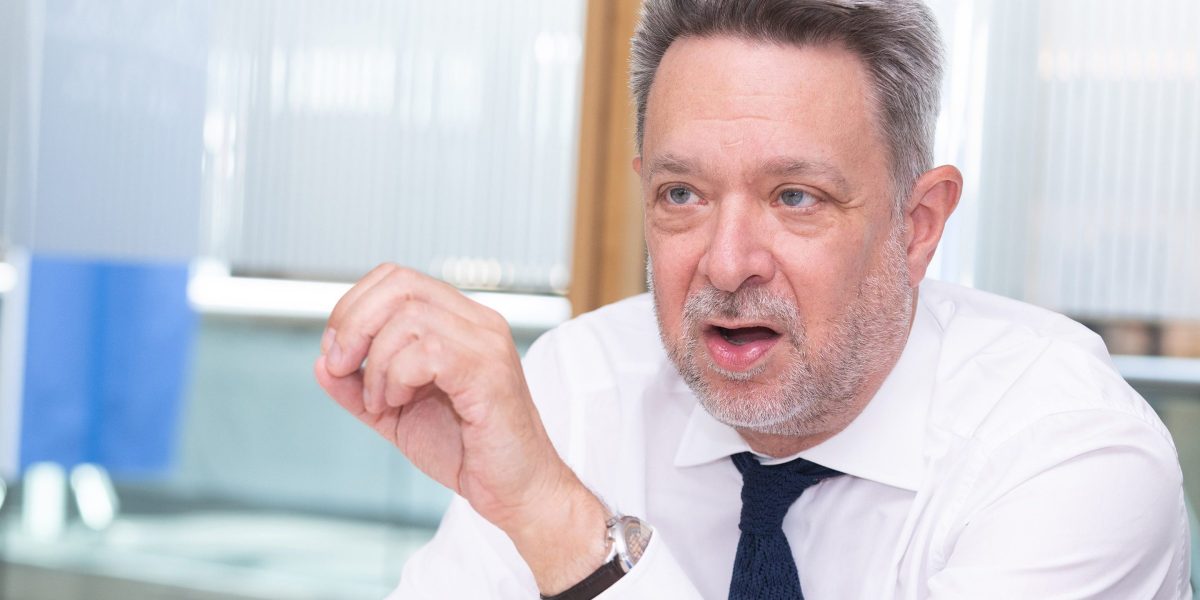
Losing the ability to produce antibiotics in Europe raises questions about security and sovereignty, according to Richard Saynor, the CEO of Sandoz. “We’re now the last remaining penicillin manufacturer left in the Western world,” he says. “Do you really want to be in a world where all of your antibiotics come from Asian suppliers? I don’t think you do.”
In written evidence to U.K. lawmakers, Sandoz warned that Europe’s dependence on China for antibiotics represented an “Achilles heel” for its public health and defense, adding that the restriction of supply could become a “tool of economic coercion or hybrid warfare” during times of diplomatic tension.
Sandoz has also claimed that “market-distorting behavior” has helped Chinese manufacturers to undercut their competitors and “flood” global markets with ultra-cheap pharmaceutical ingredients.
The company filed a complaint to the European Commission in May requesting an anti-dumping probe into Chinese imports of the active ingredient used in the antibiotic amoxicillin. “We’re competing with heavily subsidized Asian players,” Saynor says. “We want a level playing field.”
The EU’s Critical Medicines Act, which was provisionally approved in May and aims to improve the availability and production of key medicines such as antibiotics and painkillers across Europe, is a step in the right direction, according to Saynor.
However, he adds: “What’s not clear is how that then translates into European governments paying a little bit more for these drugs. As always, everyone agrees with you, but the moment you ask for the check, everyone has suddenly left the table.”
The U.K.’s National Health Service currently pays £1.06 ($1.41) for a 21-pack of 250mg Amoxicillin capsules, according to the British National Formulary, a reference book which provides guidance on the prescribing and administration of drugs for healthcare professionals. “Why should we sell a pack of antibiotics more cheaply than a Mars bar?” Saynor asks. “Do we value a Mars bar more than the medicine that has saved more lives than any other invention? Governments are very good at seeing the price, but they don’t necessarily see the value.”
369
Sandoz group’s rank on fortune 500 europePublic health services globally are facing financial challenges and funding cuts, but Saynor does not think paying a higher price is unreasonable. “It’s not a fair comparator to say all drugs should be sold at the same price as a Mars bar when it costs $100 billion to develop and then bring products to the marketplace,” he adds.
A “golden decade” for cheaper drugs
Sandoz specializes in developing generic and biosimilar medicines. These off-patent drugs offer the same clinical effectiveness as their branded counterparts and are significantly cheaper for health services to purchase. Generic drugs constitute 80% of all medicines used globally.
Sandoz estimates that the patents for medicines worth a combined $650 billion are set to expire in the next 10 years, leading to what Saynor describes as an “unprecedented golden decade” for the biosimilars market.
“We’re now the last remaining penicillin manufacturer left in the Western world. Do you really want to be in a world where all of your antibiotics come from Asian suppliers?”
Richard Saynor, CEO of SandozLast month, Sandoz unveiled its ambition to produce more than 100 biosimilar products by 2040—almost eight times its current total of 13. Sandoz estimates that bringing these products to market could create almost $1 trillion in social impact, partly through direct savings for healthcare systems.
Sandoz has invested $300 billion in a new drug substance facility in Ljubljana, Slovenia, to support this ambition. “We see a huge opportunity there in biologics,” Saynor says.
He believes that Sandoz’s spin-out from Novartis in 2023 put the company in a good position to capitalize on this upcoming opportunity. “Our job is to challenge patents and bring products to market as early as possible,” Saynor explains. In contrast, pharma companies, like Novartis, are seeking to protect their patents. “Intellectually, those are very different things,” he says.
Now, as an independent company, Saynor says Sandoz can be a “voice of the industry”. He adds: “I’ve had access to the White House, to the European regulators, to European governments, international governments all over. I couldn’t have said half of the things that I’ve said as part of our parent company. It’s allowed us to shape policy.”
Saynor has also been reshaping his leadership team. In July, Pascal Bouye, who previously held senior operations and supply roles at Mars and Danone, was appointed president of generics and manufacturing supply, and Keren Haruvi moved from Novartis to Sandoz to lead its North America operations. Remco Steenbergen, the former CFO of the German airline Lufthansa, was hired in 2024.
Bringing in knowledge from other industries is crucial to Sandoz’s future growth, according to Saynor. “Pascal [Bouye] came from a very complex consumer goods organization, so he knows how to manage complex supply chains with many partnerships,” he says. Meanwhile, Steenberg has brought an understanding of managing finances within an asset-heavy industry with relatively thin margins.
As Sandoz enters a new stage of growth and faces up to Chinese competition, Saynor recognizes that fresh perspectives will be important: “I don’t have all the answers as CEO. We need different points of view to challenge our thinking and people who can bring knowledge from different industries—not necessarily just a pharma viewpoint.”
This story was originally featured on Fortune.com
Hence then, the article about why do we value a mars bar more than life saving medicine sandoz ceo calls for level playing field with cheap chinese antibiotics was published today ( ) and is available on Fortune ( Middle East ) The editorial team at PressBee has edited and verified it, and it may have been modified, fully republished, or quoted. You can read and follow the updates of this news or article from its original source.
Read More Details
Finally We wish PressBee provided you with enough information of ( ‘Why do we value a Mars bar more than life-saving medicine?’ Sandoz CEO calls for level playing field with cheap Chinese antibiotics )


Also on site :
- ‘You Can See Everything’ Ruled Ineligible for DGA Feature Prize, Will Compete Only in Documentary Category
- McDonald’s Is Launching 5 New Holiday Drinks, Including a Red Bull Cranberry Energizer
- Disney World’s Most Talked-About Bakery Just Launched an Affordable Afternoon Hack