
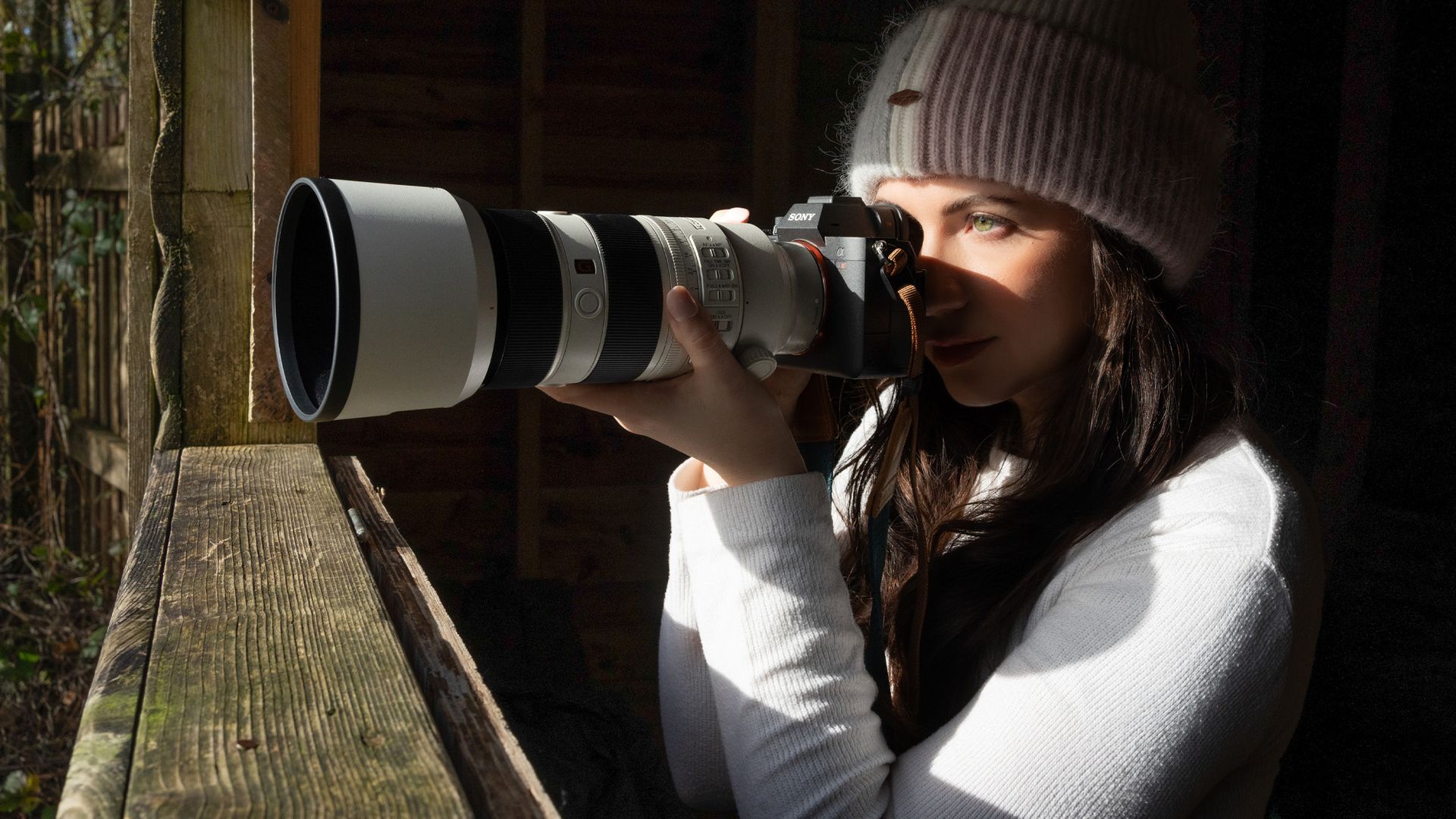
Wildlife photographers need a camera that is reliable and built to capture fast-moving action at a moment's notice. A fast burst rate, accurate autofocus and robust handling are vital when it comes to wildlife cameras, or you'll end up with sad, blurry photos of an empty tree stump.
We've curated a list of the best models from each of the top camera brands, so no matter which system you want to invest in, there will be something for you here.
Best for detail
Canon EOS R5 IICanon's highest-resolution mirrorless camera with a 45MP stacked sensor, the R5 II is for wildlife photographers who want a professional workflow and need to crop aggressively. It's flexible across multiple wildlife types and delivers pro-level output without going all the way up to the R1.
Read our full Canon EOS R5 II review
45.5MP resolution produces beautiful images and allows a lot of cropping roomStacked sensor enables faster readout speed, better noise handling and no rolling shutter30FPS blackout-free burst rate is ideal for wildlife photographyExcellent autofocus on moving subjectsChunky grip easily handles larger lensesExcellent hybrid shooter, boasting up to 8K 60p RAW videoCons
Only compatible with newer batteriesEye-control AF needs workQuite a bit more expensive than the new R6 III, which could be the more sensible option
Best intermediate
Canon EOS R6 IIIThe new Canon EOS R6 III is an absolute triumph for wildlife photography, and it has solved all the niggles we had with the R6 II when we reviewed it. It has blackout-free 40FPS shooting and an improved 32.5MP sensor, with pre-continuous shooting and up to 7K video. This camera is hard to beat for enthusiasts and intermediate-level shooters.
Read our full Canon EOS R6 III review
Blisteringly fast blackout-free 40FPS burstsImproved 32.5MP resolution compared to the Mark II's 24MP sensor.Pre-continuous shooting ensures you never miss a shotSticky and accurate subject tracking (most of the time)Compatible with faster CFexpress cardsExcellent battery life — we easily took over 6,000 images before our SD card gave out Beautiful color reproductionCons
CFexpress card slot comes at the expense of a second SD card slotNew LP-E6P battery means you'll have to invest in new spares
Best for pros
Canon EOS R1A monster camera for professional wildlife and sport photographers who need unrivaled power and reliability and can afford to invest in their photography career. Even though it doesn't have the best resolution, the stacked sensor produces less noise and better image quality, and allows for a faster readout speed.
Read the full Canon EOS R1 review at our sister site, Digital Camera World
Stacked 24MP sensorUp to 40FPS blackout-free burst rateIntelligent AI autofocusPre-continuous shooting to ensure you never miss a shotBuilt like a tank, with a large integrated vertical grip for professional sports and wildlife photographyDual CFexpress card slots9.44 million dot viewfinder is bright and detailedOffers 6K videoCons
Not compatible with SD cardsNot a small or lightweight camera — over 2.42 pounds (1.1kg) before you even add a lens24MP resolution limits heavy croppingVery expensive Canon EOS R5 IIJase Parnell-BrookesTaken with Canon EOS R5 IIKimberley LaneTaken with Canon EOS R5 IIKimberley LaneTaken with Canon EOS R5 IIKimberley LaneTaken with Canon EOS R5 IIKimberley LaneTaken with Canon EOS R5 IIKimberley LaneHonorable mentions
Canon EOS 90D
If you prefer a DSLR and are happy to stick with a hobbyist camera that won't receive any future updates.
Canon EOS R7
A beginner-friendly wildlife option with a 1.6x crop factor to extend the reach of your lenses — effectively a cheat code for wildlife photography.
Canon EOS R6 II
If you like the look of the R6 III but want to save a bit of money, its predecessor is definitely still worthy of your hard-earned cash.
Avoid: Canon EOS R8
It's an excellent starter camera for more general styles, but the buffer fills up quickly and there aren't enough buttons and controls on the body to make it efficient for wildlife photography.
Back to the top ⤴Best Sony cameras for wildlife photography
Best value for money
Sony A7 VA big and welcome upgrade from the previous generation, with a new partially stacked sensor, improved AI autofocus and finally, a higher burst rate than the rather feeble 10FPS of the previous generation. The Sony A7 V is a very attractive option for wildlife, as well as general photography and hybrid shooting, but its Achilles heel is the shallow buffer, which fills up fast and will very quickly get annoying if you regularly shoot in bursts.
We will be reviewing the A7 V soon, but until then, you can read the full review at our sister site, Digital Camera World
Blackout-free 30FPS burst rate with AF/AE tracking is much improved over the 10FPS in the previous modelFeatures new partially stacked 33MP sensor to produce stunning and detailed imagesNew AI subject detection can detect birds, animals and insects — including Eye AFThis model now offers pre-capture, which captures images just before the shutter is pressedHandles noise well, which is an advantage if you're shooting at dawn or dusk, or are pairing it with a more affordable lens with an f/5.6 max aperture.Cons
Autofocus can struggle when shooting small birds or through foliageBuffer depth (~95 compressed RAW files) is shallow and will fill quickly
If you need heavy cropping power
Sony A7R VIWith Sony's highest resolution yet, the monstrous A7R VI is the newest and most expensive model in the R lineup. Sony has finally answered our prayers by boosting the burst rate from 10FPS in the previous model up to a massive 30FPS in this new one. For this price, that's more like it. Plus, with a massive 67MP, you'll get some serious cropping power, which comes in handy if you're shooting distant wildlife or birds.
We will be reviewing the A7R VI soon, but for now, you can read the full review at our sister site, Digital Camera World
Massive 67MP offers exceptional detail and leaves tons of room for cropping30FPS blackout-free bursts seriously levels up the R range like never beforeOffers Continuous Shooting Speed Boost, which allows you to assign a custom button to temporarily jump from a lower, more sustained burst rate to the maximum 30FPS instantly, which avoids filling up the card too quicklyAI subject detection has animal, bird and insect modes and is generally very accuratePre-capture records images before you fully press the shutterCons
Do you really need 67MP?High resolution means noisy images — we definitely found this to be the case with the previous generationAutofocus can be tripped up if your animal is partially covered by reeds or branchesThe most expensive release in the R range
Ultimate choice for pros
Sony A1 IIExperienced users looking for a balance of resolution and speed need look no further than the Sony A1 II. It has a 50.1MP stacked sensor, 30FPS bursts and Sony's class-leading AI autofocus, so what's not to love? That said, it's overkill for beginners and amateurs — plus we'd only recommend it if you can also invest in some of Sony's more expensive glass.
Read the full Sony A1 II review at our sister site, Digital Camera World
A perfect blend of speed (30FPS blackout-free bursts) and resolution (50.1MP)Sticky, accurate AI autofocus with Eye AF for animals, birds and insectsBoth card slots accept CFexpress Type A or SD UHS-II/UHS-IRAW files offer incredible dynamic rangePre-capture starts taking images when the shutter is half-pressedCons
Expensive, and will be wasted money unless you can also afford to invest in expensive lensesNew Sony A7R VI is cheaper and has more resolutionOverkill unless you're an experienced shooter Honorable mentions
Sony A7R V
Stunning 61MP images, but with a much slower burst rate of 10FPS. It's long been our favorite Sony camera (until the new releases), and it's an excellent option if you don't shoot fast-moving animals or birds in flight. We've taken some beautiful wildlife images with it.
Sony A7 IV
A more affordable option here, and it still has AI-powered autofocus, although the 33MP sensor isn't stacked like the new A7 V. Plus, like the previous generation R model, it only has a 10FPS burst rate. Still, its noise handling is excellent, and it is suitable for more general styles of photography.
Sony A1
If you don't need pre-capture, go for the original Sony A1. It's still a wildlife powerhouse with the same 50MP resolution and 30FPS bursts as the new Mark II.
Sony A9 III
An absolute speed demon, but let's be honest — does anyone actually need 120FPS? Probably not. However, the Sony A9 III is considered to be one of the best cameras for birds in flight (BIF), but it'll be overkill unless you only shoot sports or fast-action bird photography.
Avoid: older or entry-level Sony cameras
Sony's entry level and older cameras tend to be capped at around 10FPS burst rates, and the older models also don't have any AI-powered autofocus features, which make wildlife photography much more fruitful. It's a shame, as there's no real "beginner" Sony wildlife camera on the market that suits these criteria.
Back to the top ⤴The clear winner
Nikon Z8For wildlife photography (and most other styles, too, while we're at it), the obvious choice for most Nikon shooters is the Nikon Z8. Often dubbed a "baby Z9", it has all the brains and brawn of the flagship Z9 in a smaller and more affordable package.
Read our full Nikon Z8 review
45.7MP resolution with a stacked sensor gives a lot of room for croppingUp to 120FPS bursts (11MP), or 20FPS sustained — all blackout-freeKiller autofocusIt can record more than 1,000 RAW images before any buffering kicks in — insanely useful for wildlifePerforms well in low lightPre-release burst captures up to 1 second of images before the shutter is fully pressedCons
Battery could be better120FPS is only 11MP, which you likely won't need when you're buying a 45.7MP cameraOccasional AF flaws Screen isn't fully articulating
If you need extra grip
Nikon Z9If you saw the Z8 and thought, "Hey, I need something big and heavy", then the flagship R9 could be better for you. The integrated grip offers improved balance and weight distribution for longer lenses, although it's only compatible with CFexpress cards, making this model best suited for professionals.
Read the full Nikon Z9 review at our sister site, Digital Camera World
Advanced 3D tracking and dedicated animal/bird eye AFStunning 45.7MP resolution from a stacked sensor20FPS blackout-free burst shooting for RAW images, with an option for 120FPS bursts at 11MPPre-release burst can capture images up to 1 second before the shutter is fully pressedRobust, and built like a tank for heavy shooting over long periodsCons
Only compatible with expensive CFexpress cardsNot as travel-friendly as the Z8 due to the bigger and heavier bodyNot many people will use 120FPS for 11MP images3.69 million-dot EVF resolution is a little low compared to other flagship models like the Sony A1 II and Canon EOS R1 (9.44 million)
Best mid-range
Nikon Z6 IIIFor anyone on a moderate budget looking for a capable wildlife camera, the Nikon Z6 III has a partially stacked sensor, 20FPS RAW shooting and dedicated animal and bird detection modes, all wrapped up in a compact and lightweight body — the only downside being the rather limited 24.5MP resolution.
Read the full Nikon Z6 III review at our sister site, Digital Camera World
20FPS burst rate when shooting RAW images, up to 60FPS JPEG and up to 120FPS in DX crop mode.Partially-stacked sensor gives faster readout speed and reduced rolling shutterClean images in low lightSmaller and lighter than the Z8Bird detection added with a recent firmware update (2.0)Features pre-release capture to capture JPEG frames up to 1 second before fully releasing the shutterCons
24.5MP resolution won't allow for heavy croppingSome users report that the autofocus struggles with birds in flight at a distancePre-release capture doesn't yet support RAW files Nikon Z8James ArtaiusTaken with the Nikon Z8James ArtaiusTaken with the Nikon Z8James ArtaiusHonorable mentions
Nikon Z50 II
A budget-friendly crop sensor (DX) model with flagship level autofocus and up to 30FPS bursts in a small, lightweight body. Plus, the 1.5x crop factor gives you extended reach when paired with full-frame lenses.
Nikon D850
Known as one of the best DSLRs ever made, the Nikon D850 is an incredible choice if you don't need the bells and whistles of a mirrorless — but keep in mind that it won't receive any future updates.
Nikon CoolPix P1000
If you need unparalleled zoom, the P1000 bridge camera has an insane 24-3,000mm zoom range. There are drawbacks, including the limited 16MP resolution and lack of weather sealing, but for beginners who want an all-in-one package for casual shooting, it's definitely worth a look.
Nikon D500
An affordable, entry-level APS-C model with 10FPS bursts, sharp 20MP images and fierce autofocus.
Avoid: Older DSLRs
Older DSLR models are typically much slower, have outdated autofocus and limited ISO performance for low-light work.
Back to the top ⤴Best OM System cameras for wildlife photography
Best overall
OM System OM-1 IIWildlife photographers who want a powerful system in a small package should look at the OM-1 Mark II — it can shoot a blisteringly fast 50FPS with full AF/AE tracking (or 120FPS with locked focus), and even though the 20.4MP resolution sounds a little on the low side, we were pleasantly surprised by the image quality.
Read our full OM System OM-1 Mark II review
Insane 120FPS burst rate with locked focus, up to 50FPS with AF/AE trackingSurprisingly good images for 20.4MPAccurate autofocus with bird and human modesCompact and lightweight, even when paired with long lensesPro Capture captures images before shutter is fully pressedBuffer can hold around 213 RAW frames at 120FPSCons
20.4MP may be underwhelming for some users, and doesn't allow for heavy croppingNot enough of an upgrade if you already own the OM-1Noisy low-light imagesButton design and layout could be improved
For hobbyists
OM System OM-5 Mark IIIf you're just getting into wildlife photography and don't need the best of the best, the OM-5 Mark II is a great camera for people who want to photograph wildlife among other styles. It lacks dedicated bird/animal subject detection, but on the whole, OM System's autofocus is still pretty good.
Read the full OM-5 Mark II review at our sister site, Digital Camera World
Very compact and lightweightPro Capture starts recording images before the shutter is fully releasedAn affordable entry point into wildlife photographyExcellent IBIS for handheld shotsIP53 weather sealingCons
Lacks dedicated bird/animal subject detectionMFT sensor struggles with high ISO images, making it less than ideal for low-light workThe small grip might make it more difficult to hold it with larger lenses
For something more robust
Olympus OM-D E-M1XWhile MFT cameras are often favored for being small and lightweight, big lenses can often feel unbalanced. The OM-D E-M1X fixes this issue with its integrated vertical grip, and the speedy bursts and AI animal detection modes are ideal for fast action — we called it a "wildlife wonder."
Read our full Olympus OM-D E-M1X review
Up to 60FPS bursts with locked autofocus, or 18FPS with trackingSmall, lightweight lenses that offer a 2x crop factor thanks to the MFT sensorStunning image stabilizationBird and animal subject detection modesBuilt-in vertical grip for more secure handlingCons
Limited ISO range, and MFT sensors tend to produce noisy imagesLess scope to crop with the 20.4MP resolutionSmaller sensor has a deeper depth of field, which gives less separation between your subject and the background OM System OM-1 Mark IIJase Parnell-BrookesTaken with the OM System OM-1 Mark IIKimberley LaneTaken with the OM System OM-1 Mark IIKimberley LaneTaken with the OM System OM-1 Mark IIKimberley LaneTaken with the OM System OM-1 Mark IIKimberley LaneTaken with the OM System OM-1 Mark IIKimberley LaneTaken with the OM System OM-1 Mark IIKimberley LaneShooting with the Olympus OM-D E-M1XJames ArtaiusTaken with the Olympus OM-D E-M1XJames ArtaiusTaken with the Olympus OM-D E-M1XJames ArtaiusTaken with the Olympus OM-D E-M1XJames ArtaiusTaken with the Olympus OM-D E-M1XJames ArtaiusTaken with the Olympus OM-D E-M1XJames ArtaiusTaken with the Olympus OM-D E-M1XJames ArtaiusTaken with the Olympus OM-D E-M1XJames ArtaiusTaken with the Olympus OM-D E-M1XJames ArtaiusHonorable mentions
OM-5
If you want to save a few hundred bucks, get the original OM-5 instead of the OM-5 Mark II.
Olympus OM-D E-M10 Mark IV
It's not the fastest for wildlife photography with only 5FPS with tracking, but it's a great camera for casual shooters.
Back to the top ⤴The action specialist
Fujifilm X-H2SWith its speedy burst shooting, accurate autofocus and stacked sensor, the X-H2S is ideal for fast action shooting, birds in flight and hybrid photo/video shooters.
Read the full Fuji X-H2S review at our sister site, Digital Camera World
Stacked 26.1MP sensor offers fast readout speeds and fewer rolling shutter issuesUp to 40FPS blackout-free burst rate while maintaining full autofocusAnimal and bird autofocus subject detectionCompatible with both SD and CFexpress cardsSturdy build and large grip to balance long lensesCons
Middle of the road 26.1MP resolution produces nice images, but doesn't leave room for heavy croppingExpensive compared to other APS-C modelsIt's not a particularly small camera for an APS-CUsers report the autofocus is not as good as Sony, Canon and Nikon.
Versatile high-res
Fujifilm X-T5The Fuji X-T5 is a compact APS-C camera to suit traveling photographers perfectly, but the small buffer and hit-and-miss autofocus are better suited to photographing slow-moving, larger mammals as opposed to fast action and birds. Still, it's a versatile option that can shoot multiple styles and produces beautiful 40.2MP images.
Read the full Fuji X-T5 review at our sister site, Digital Camera World
High resolution 40.2MP produces beautiful images and allows for cropping on distant subjectsFeatures an in-built 1.4x and 2x teleconverter in the shooting settings, extending your reachAnimal, bird and insect tracking modesCompact and lightweight system compared to full-frame modelsElectronic shutter shoots up to 20FPS with a 1.29x crop, which is advantageous if you need extra reach for wildlifeCons
Autofocus occasionally misses — generally not as reliable as Sony, Canon or Nikon.Doesn't have the biggest grip for larger lensesBuffer fills up quite quickly, and users report that it takes a while to clear
Compact wildlife shooter
Fujifilm X-T50The Fuji X-T50 is an attractive, compact option for beginner wildlife photographers who don't yet need an expensive model with all the bells and whistles. Still, the 40.2MP resolution is beautiful, and it can shoot 20FPS bursts, which is great for wildlife action.
Read the full Fuji X-T50 review at our sister site, Digital Camera World
Beautiful 40.2MP resolution that allows for cropping20FPS burst rate comes with a 1.29x crop, which will give you extra reach on your wildlife lensLike the X-T5, it features a built-in teleconverter (1.4x and 2x) to extend your wildlife reachVery compact and portable — would suit travel photographers wellAnimal and bird autofocus modesCons
No weather sealingOnly has a single card slotBuffer fills up quickly and takes a while to clear, limiting your burstsBattery life isn't the bestAutofocus isn't as good as Sony, Canon or Nikon Honorable mentions
FujiFilm X-H2
Where the X-H2S offers speed, the X-H2 offers a higher 40.2MP resolution, which offers more room for cropping. However, the autofocus isn't as good as on the X-H2S, and there's more rolling-shutter due to the non-stacked sensor.
Avoid if:
If you're a serious wildlife shooter, we'd recommend upgrading to a full-frame system from Sony, Canon or Nikon in order to get the best autofocus systems for your money.
Back to the top ⤴Best Panasonic cameras for wildlife photography
Best for fast-moving wildlife
Panasonic Lumix G9 IIThe Lumix G9 II is particularly well suited to birds and fast-moving subjects thanks to its high-speed bursts, improved animal tracking and the extra reach advantage of Micro Four Thirds lenses. It sacrifices some low-light performance compared to full-frame models, but for wildlife, where reach and speed matter, it's the standout choice from Panasonic.
Read the full Panasonic Lumix G9 II review at our sister site, Digital Camera World
Up to 60FPS bursts with continuous autofocusMicro Four Thirds sensor gives extra reach with 2x crop factor — and allows for more compact lensesPre-capture records up to 1.5 seconds before the shutter is fully releasedAnimal and bird eye detection locks onto subjects accurately and quicklyCons
Smaller sensor produces more visible noise than a full-frame sensor25MP resolution doesn't provide much room for croppingElectronic shutter can show rolling shutterWhile the autofocus is good compared to previous Panasonic bodies, it's still not as good as Sony/Canon/Nikon
Best for low-light wildlife
Panasonic Lumix S5 IIThe Lumix S5 II is for wildlife photographers who want full-frame image quality and strong modern autofocus, but don't want to pay Canon/Sony/Nikon flagship prices for their camera bodies and lenses.
Read the full Panasonic Lumix S5 II review at our sister site, Digital Camera World
Full-frame sensor delivers better high ISO performance for low-light wildlife at dawn or dusk30FPS electronic burst is great for fast action with continuous autofocusWorks well with Sigma L-mount lenses for cost-effective setupsAnimal eye tracking to lock focus on stationary and moving animals.Cons
24.2MP gives less room to crop when shooting distant subjectsLess effective reach compared to Micro Four Thirds
Best premium setup
Panasonic Lumix S1 IIThis premium wildlife workhorse has a partially-stacked 24.1MP sensor and 70FPS blackout-free burst rate. It features animal and bird detection, but although the autofocus is generally very good, it still trails behind the best-in-class autofocus from the likes of Sony, Canon and Nikon.
Read the full Panasonic Lumix S1 II review at our sister site, Digital Camera World
Partially stacked sensor eliminates rolling shutter and allows for faster readout speedsBlazing fast 70FPS blackout-free bursts with continuous autofocusPre-burst captures images up to 1.5 seconds before you fully release the shutterFull frame sensor is better in low light than Micro Four ThirdsCons
24.1MP resolution limits heavy croppingUsers report occasional autofocus accuracy issues Honorable mentions
Lumix S5 IIX
The video-centric sibling of the S5 II. They're very similar in terms of stills performance, so this might be the better option if you also focus on wildlife videography.
Lumix GH7
Primarily optimized for video workflows and other benefits that don't necessarily benefit stills shooters. It's a hybrid powerhouse, but stills-focused shooters should opt for the G9 II.
Lumix G9
The original G9 still performs well for general wildlife, with decent burst shooting and solid handling, but the contrast-based autofocus struggles to keep up with birds in flight and fast, unpredictable movement.
Back to the top ⤴What camera do most wildlife photographers use?
Dedicated wildlife photographers typically choose full-frame mirrorless cameras due to their larger sensor, better noise handling, accurate autofocus and rugged build. Many of these cameras also have fast burst rates, which is essential for capturing fast-moving wildlife or birds in flight.
Beginners and hobbyists can certainly get great shots with more portable models, but some compromises will have to be made in terms of speed and power.
This depends on what kind of wildlife you're photographing, and how fast they move. Generally speaking, the best wildlife cameras have a burst rate of at least 20FPS (frames per second) — but the faster the better. If you photograph large, slow-moving mammals or stationary subjects, your burst rate doesn't need to be rattling off 40FPS at a time. If, however, you photograph birds in flight or fast moving animals, you will need a faster burst rate in order to capture that killer shot.
How many megapixels does a wildlife camera need?
There's no right or wrong answer here, but generally speaking, a higher resolution is preferred because it produces more detailed images, and you have more room to crop without losing image quality. However, more megapixels equals bigger file sizes, and you therefore need faster cards in order to keep up, especially when you're taking bursts.
That said, you can absolutely get some great shots with lower resolution cameras. We've been impressed by the quality of OM System cameras, and they typically only have around 20MP.
The most important aspect of a wildlife camera for beginners to prioritize is good autofocus. Provided your subject is in focus, you don't necessarily need the fastest burst rate, top of the line weather sealing or highest resolution.
For our money, Sony, Canon and Nikon offer the best autofocus on the market. We'd recommend the Sony A7C II, Canon EOS R7 or Nikon Zf for beginners.
How much should I spend on a wildlife camera?
You don't need to go overboard unless you're a professional wildlife photographer looking for the top of the range flagship models. You can get a really impressive wildlife camera for "most people" for anywhere between $2,000 and $3,000, but as many photographers will tell you, it's more beneficial to invest money in a better lens as opposed to splashing out on the very best camera.
Latest updates
Back to the top ⤴Hence then, the article about best wildlife cameras 2026 the ultimate buying guide to every major camera brand was published today ( ) and is available on Live Science ( Middle East ) The editorial team at PressBee has edited and verified it, and it may have been modified, fully republished, or quoted. You can read and follow the updates of this news or article from its original source.
Read More Details
Finally We wish PressBee provided you with enough information of ( Best wildlife cameras 2026: The ultimate buying guide to every major camera brand )


Also on site :
- Disney Teams Up With Golden Goose for the Ultimate Theme Park Sneaker Collab
- Quote Of The Day By Denzel Washington: 'I Never Shed A Tear For My Father. I Never Did All Through The Funeral. There Was...'
- Russia strikes military-linked energy facilities across Ukraine (VIDEOS)