
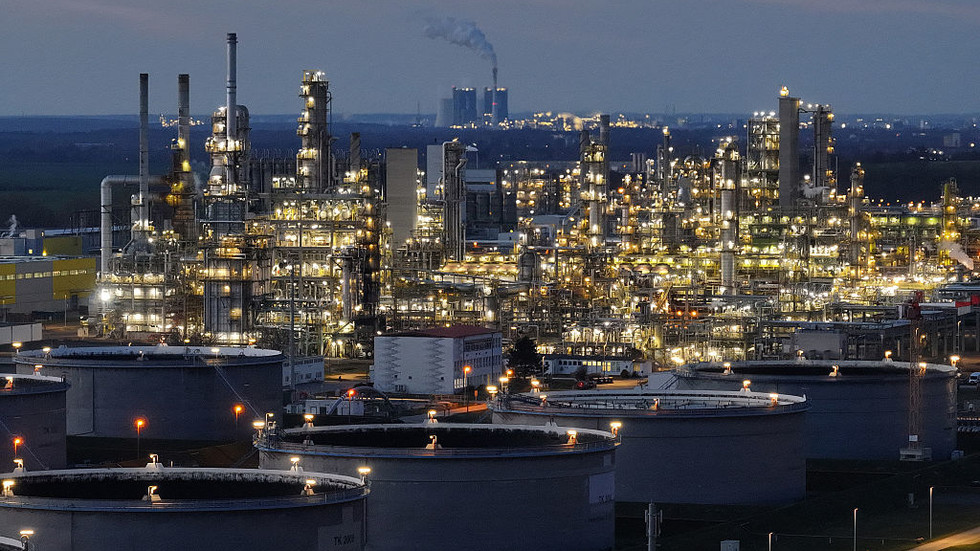
Dwindling oil inventories, low gas stocks and mounting public debt are leaving European economies exposed to further price surges, according to the latest outlook
Western economies are becoming increasingly vulnerable to further energy shocks as the Middle East conflict strains global supplies and mounting public debt limits governments’ ability to cushion the impact, the International Monetary Fund has warned.
In its latest World Economic Outlook, released on Tuesday, the IMF warned that the prolonged Middle East conflict was putting further pressure on energy markets, with European gas inventories near 15-year lows.
“Inventories in energy markets are dwindling and additional geopolitical shocks could still transmit rapidly through prices and supply disruptions,” the report said.
Refined petroleum products remain 70% to 95% more expensive than before the war, with diesel and gasoline facing the greatest pressure. Global oil inventories are being depleted by around 2.7 million barrels a day, according to the IMF.
The report also cited Ukrainian attacks on Russian oil infrastructure, including onshore facilities and sites in the Black Sea, as an additional source of pressure on global crude and refined petroleum markets.
Europe faces additional risks ahead of winter. The IMF cited repeated summer heatwaves and damage to Qatar’s energy infrastructure as factors contributing to gas price volatility. The US-Israeli war on Iran has also severely disrupted shipping through the Strait of Hormuz, a route that normally carries around a fifth of global oil and LNG shipments. Iranian strikes on Qatar’s Ras Laffan complex in March damaged key export facilities, further tightening global supplies.
Read more Washington suspends sanctions on Russian fuel trade, including import to USThe EU has committed to ending its reliance on Russian fossil fuels by 2027, having sharply reduced oil and gas imports since the escalation of the Ukraine conflict in February 2022. Moscow has described Europe’s energy problems as “self-made,” with Foreign Minister Sergey Lavrov accusing the bloc of committing “harakiri” by abandoning Russian supplies. Lavrov said Russian exporters had shifted to more reliable buyers, particularly in Asia.
Renewed fighting between Saudi Arabia and Yemen’s Houthis has also threatened shipping through the Bab el-Mandeb Strait in the Red Sea, a key route linking the Indian Ocean to the Suez Canal and European markets.
The energy crisis has also prompted Washington to ease restrictions on Russian diesel. Following a phone call on Friday between US President Donald Trump and Russian President Vladimir Putin, the US Treasury authorized certain transactions with Russian diesel until April 7, 2027. Trump has repeatedly blamed Ukrainian strikes on Russian refineries for driving up fuel prices.
READ MORE: EU sounds alarm over Trump diesel ban threat
Despite the mounting risks, the IMF projects global growth of 3.1% in 2026 and 3.4% in 2027, compared with just 1.1% and 1.2%, respectively, for the Eurozone. Global inflation is expected to reach 4.7% this year before easing to 4.1% next year.
Hence then, the article about west increasingly vulnerable to energy shocks imf was published today ( ) and is available on Russia Today ( News ) The editorial team at PressBee has edited and verified it, and it may have been modified, fully republished, or quoted. You can read and follow the updates of this news or article from its original source.
Read More Details
Finally We wish PressBee provided you with enough information of ( West increasingly vulnerable to energy shocks – IMF )


Also on site :
- Scientific Games recibe el premio Communitas 2026 a la excelencia en responsabilidad social corporativa
- Kholo Capital provides R275 million (US$17 million) mezzanine debt funding to DCC Holdings to support refinancing and future growth
- Emergency Safety Solutions and PursuitAlert Partner to Extend Comprehensive Advance Warning to High-Speed Police Pursuits and Emergency Response