
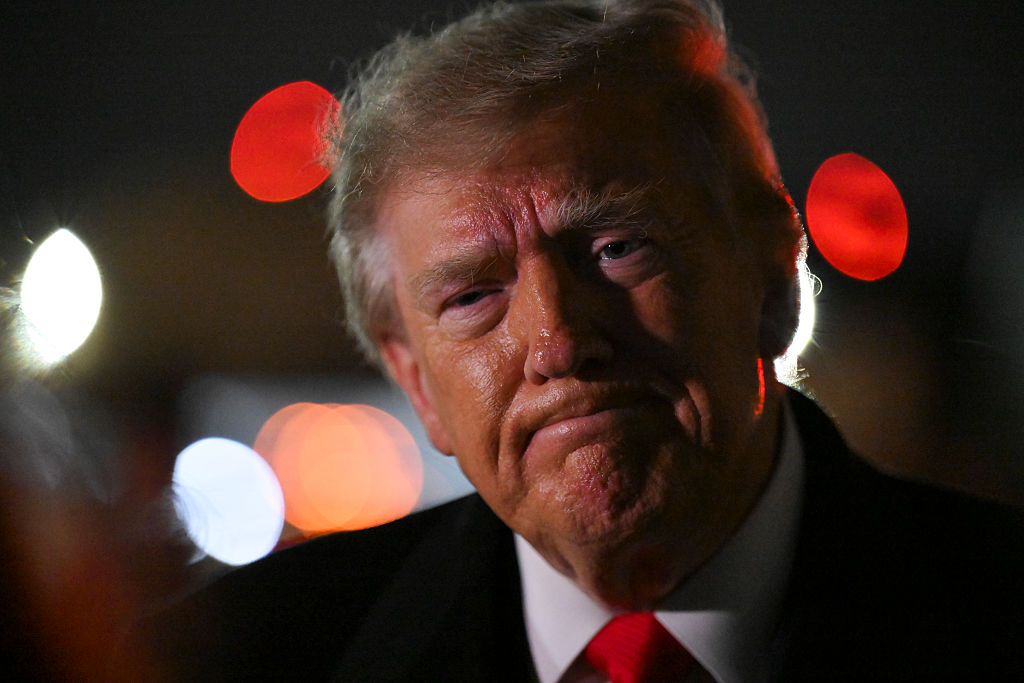
President Donald Trump claimed Sunday that Ukraine and Russia had agreed to an “energy ceasefire,” one day after blaming Kyiv—and, specifically, President Volodymyr Zelensky—for the diesel shortage driving up prices in the U.S.
“Effective immediately, there is an ENERGY CEASEFIRE in the War between Russia and Ukraine,” Trump posted on Truth Social on Sunday, without providing additional details about the deal. “Both parties have agreed. Do not break it!”
Zelensky told Axios the same day that the ceasefire “was news for me.” He also confirmed that Russian strikes on Ukrainian energy infrastructure continued Sunday.
He wrote on X that Ukraine “supports the ceasefire, and it’s important for Russia to support it as well.”
Zelensky offered a similar response when Trump made the same unsubstantiated announcement Sept. 14. In the days that followed, however, both countries continued to strike one another’s energy facilities.
Read More: The G7 Is Releasing Emergency Fuel Reserves. How Much Will It Help Americans?
Trump has repeatedly asked Zelensky to stop targeting Russian oil refineries and blamed Ukraine for contributing to global diesel shortages.
In doing so, he has falsely implied that this is a primary factor in the ongoing global shortage. The main contributor to the current crisis is the U.S. war with Iran, which has resulted in blockades on the Strait of Hormuz, through which one-fifth of the world’s oil passed prior to the start of the war in February.
On Oct. 10, Trump went further by suggesting that Zelensky was not doing enough to end the war and should be replaced. “I suggest they get a new leader who can make a deal,” he said.
In response, several European leaders expressed their continued support for Zelensky on Sunday.
Trump also advised Zelensky, again, to “do what you want” to Russia, but “don't hit refineries.”
The comments came on the heels of an announcement that the U.S. made a deal to acquire Russian diesel.
In a stunning reversal of U.S. policy, Trump announced on Oct. 9 that Russia had agreed to supply global markets with more than 4.8 million tons of diesel: over 300,000 tons at first, 500,000 tons in November, and 1 million tons “immediately thereafter.” He said another 3 million tons would follow “within a short period of time,” depending on the condition of Russia’s refineries.
“Diesel Prices for Americans and, indeed, the World, will be COMING DOWN, IN RECORD NUMBERS, AND FAST,” he wrote in a post on Truth Social.
Trump has homed in on American fuel prices in the weeks ahead of midterm elections, which take place Nov. 3.
“Lower prices for Americans, especially our Great Farmers, Ranchers, and Truckers, is my Greatest Priority,” he said while announcing the new diesel deal.
According to AAA, the average price for a gallon of diesel fuel in the U.S. is $6.28 as of Oct. 11, down slightly from the Sept. 22 peak of $6.53 a gallon. That’s compared to a price of $3.67 per gallon roughly one year ago, before the war with Iran.
But some experts are skeptical that an influx of Russian fuel will bring relief to struggling Americans—especially with the immediacy Trump is projecting.
“The supply shortage caused by the Strait of Hormuz shutdown is simply too significant,” Michael Noel, a professor of economics at Texas Tech University, tells TIME. “Diesel prices will largely go up and down based on what happens there.”
Jeff Colgan, a professor of political science at Brown University, says that there is also an unfounded presumption that Putin plans to go along with the timeline that Trump announced.
“I’m skeptical about the deal on multiple levels: Does Trump’s description reflect Putin’s understanding? Assuming Putin promised anything, will Russia actually implement it?” he asks. “Even with optimistic views on all of these questions, it’s hard to see the price impact occurring before the November election.”
A Pew Research Center survey released Oct. 8 found that 74% of U.S. adults were very concerned about gasoline and energy prices, up from 43% in January. A separate report showed that 84% of registered voters considered the economy very important to their vote.
States that rely on farming and agriculture have been hit especially hard by rising diesel prices. Kansas emerged as a battleground state as its constituents expressed mounting concerns about the Trump Administration’s policies and its handling of the crisis in Iran, illustrating how the issue may weigh heavily on the upcoming midterms.
Trump seems to be aware that these voter sentiments could be detrimental at a time when the Republican Party is battling to hold its majority in the House and Senate.
Among recent efforts to offset their concerns, Trump pushed for the Group of Seven countries to release 100 million barrels of oil and fuel products in the coming months, starting with “substantial” amounts of diesel, in an attempt to offset this year’s price increases. The deal was announced Oct. 2.
Trump also signed an executive order on Oct. 5 to temporarily allow anyone to pump so-called red-dyed diesel, which is tax-free. It is normally reserved for off-road uses such as farm and construction equipment.
Last week’s Russian diesel deal is the latest of these efforts.
But Olena Lennon, a practitioner in residence of National Security at the University of New Haven, believes it will not have the impact Trump claims. She calls the amounts of Russian diesel Trump is introducing to the market “minuscule.”
According to the U.S. Energy Information Administration, Americans use about 2.94 million barrels of diesel in one day for transportation. That’s akin to 394,102 metric tons—which is comparable to the amount Russia is set to immediately release to both U.S. and global markets.
Noel agrees that Trump’s efforts are just temporary fixes that do not offset the harm done by the unresolved conflict in the Middle East. He says that it is unlikely that any of these recent deals will significantly impact Americans.
“These recent Band-Aids are of very limited effect on a global market and, though perhaps good political marketing, minor-to-negative in effect,” he says.
He explains that even if there were some economic relief, it would be offset by the ongoing conflicts in Iran and Ukraine, which will continue to drive prices upward at the pumps and impact the economy in the U.S.
“American taxpayers are just footing the bill for these wars in another way,” Noel adds.
What does Trump's Russian diesel deal mean for Ukraine?
The Russian diesel deal came with an easing of U.S. sanctions. On Oct. 9, the Treasury Department issued a temporary license allowing transactions involving the sale, delivery, and importation of Russian-origin diesel, including imports into the United States, through April 7, 2027.
The move has raised questions about how those imports would comply with a separate 2022 law banning Russian energy imports, which was unanimously supported in the Senate. To end the ban, the President must certify, among other conditions, that Russia has agreed to withdraw its forces and end hostilities under an agreement accepted by Ukraine.
The announcement received immediate blowback from Zelensky, European leaders, and U.S. politicians who supported the longstanding bipartisan sanctions policies.
South Carolina Sen. Thom Tillis went on NBC’s Meet the Press on Sunday to articulate his position.
“Look, this has deadly consequences. Giving Vladimir Putin any sense that we're going to put our foot on the brakes—versus putting our foot on the accelerator to ending this war and ensuring peace in Europe—we've got to go back,” the Republican senator said. “And I do believe there's a legitimate case for saying the president's not following the law.”
Tillis is among seven senators from both sides of the aisle who on Sunday petitioned Trump to “immediately reverse course” on the deal.
Zelensky called the decision “weak” on Friday, saying it would generate “millions, billions” in extra revenue for Putin, enabling him to wage war “even more aggressively.”
“Every dollar paid for Russian oil is money for the war,” Zelensky said on X in April.
Lennon wonders if Russia even “has huge amounts of diesel available to export in the first place,” given Ukraine’s efforts to strike its refineries and disable the revenue stream.
According to Armed Conflict Location & Event Data (ACLED), Ukrainian forces have carried out, on average, three attacks per month on oil and fuel infrastructure in Moscow and the surrounding regions since May 2026. Those strikes are part of Ukraine’s broader effort to pressure Russia through its energy sector.
Lennon argues that easing restrictions on Russian diesel sales could undercut that pressure—and weaken Ukraine’s leverage in negotiations.
“By easing pressure on Moscow without securing any meaningful concessions in return, Trump is potentially weakening Ukraine’s negotiating position and signaling to Putin that he can extract concessions from Washington without offering anything of value,” she says, “all the while scoring political victories and continuing his war of aggression against Ukraine with impunity.”
Lennon argues that the deal harms Washington's relationship with its European allies more than it helps the nation’s economic position.
The U.S. may be “strengthening Putin's position and potentially empowering him to prolong the war,” Lennon explains. “It is simply another confirmation of Trump’s apparent interest in ending the war on Russia’s terms.”
“Equally damaging is the erosion of American credibility—not only among European allies, but worldwide,” she says.
As a result, she believes that global leaders will “assess the reliability of American commitments and adjust their own strategic calculations accordingly.”
Hence then, the article about what to know about trump s russia ukraine energy ceasefire claim was published today ( ) and is available on Time ( Middle East ) The editorial team at PressBee has edited and verified it, and it may have been modified, fully republished, or quoted. You can read and follow the updates of this news or article from its original source.
Read More Details
Finally We wish PressBee provided you with enough information of ( What to Know About Trump’s Russia-Ukraine ‘Energy Ceasefire’ Claim )


Also on site :
- LIVE: Watch friends and family cross the 2026 Chicago Marathon finish line
- In the 1940s, Howard Hughes bought the peak next to the Hollywood Sign to build a house for Ginger Rogers; in 2010 more than 100 acres of it became part of Griffith Park
- Meet Aurora: the invite-only, $10,000-a-year AI concierge that anticipates the ultra-wealthy’s every need