
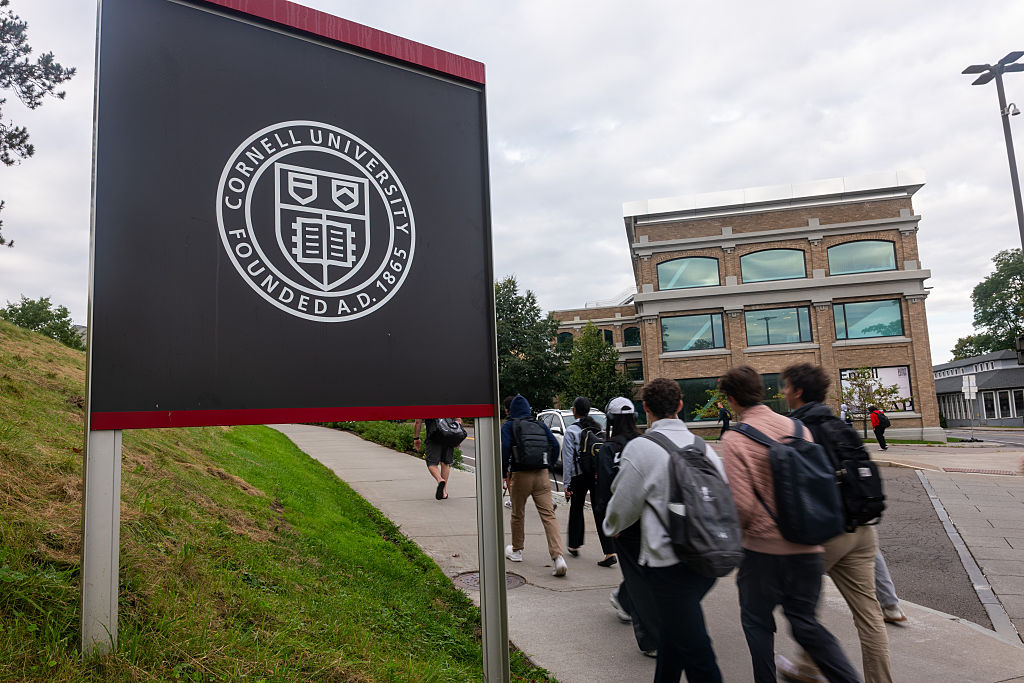
By now, most parents have likely read an article or two about the alleged assault involving a young woman and seven young men that took place at a fraternity on the Cornell campus in 2024.
Since the story broke, I’ve heard a lot of people ask, “How could this have happened?” I’ve also seen the national conversation focus almost entirely on consent education as the answer. Are we teaching consent early enough? Are we teaching it right?
Frankly, I think that’s an incomplete conversation.
Most parents I know have had the consent talk with their sons. I hear age-appropriate versions of it on the playground. Schools teach it. They should.
The issue is, in 2026, any man who commits sexual assault almost certainly knows what consent means and has simply decided it doesn't apply to him.
Our sons know about consent. The real question is: Do they know how to be brave? Knowing about consent is one thing—living by it is another.
Much of our collective outrage about this horrific case has been focused on the “Cornell 7,” but I lay awake at night thinking about the more than 50 other young men in that fraternity group chat. They reportedly received a message inviting them to join the assault, followed by replies that grew more depraved as the night went on.
We don't know what each of them saw or did, or why it took so long for anyone to step in. Some legal experts argue those members who didn’t can't be charged with a crime, because they had no legal duty to intervene.
I trust in my heart that my sons would never be one of the seven boys in that bedroom. And I would guess most boy moms share my confidence. Still, I’m terrified to admit that I cannot control whether they will ever receive messages like the ones that appeared in that group chat. Moms dedicated to raising boys to be good men share my fear. But we cannot shield them from the culture around them. And I simply don’t think we have done enough to address that culture.
Years ago, I gave a TED talk arguing that we raise our boys to be brave and our girls to be perfect. I wrote a book urging girls to take more risks. I assumed boys had bravery covered. “They’re good,” I’d say to myself.
Turns out we were teaching them the wrong kind of bravery.
Too often, we tell young boys that courage means physical risk: run faster, jump further, climb higher. The manosphere sells an even more dangerous version: that strength means brute force and a real man answers to no one. Neither of these stories leaves boys with a script for the moment when the hardest thing to do is use their voice.
Bravery doesn't always feel good. Bravery is saying the thing that will cost a friendship. It can feel like rejection. It sometimes sounds like tattling. There’s no dramatic music. Nobody claps. You may even question if the right thing to do was the wrong choice.
The masculinity crisis is real. And it’s a crisis of courage that we helped create. We spent years teaching young men what not to do, and too little time teaching them what to do when someone else is doing it.
We have to preach more than "don't hurt anyone." Our sons need to hear that if they see someone about to cause harm, we expect them to act. They need practice, too, because nobody finds their voice for the first time late at night in a group chat with their peers.
So practice at the dinner table. Ask your son what he would type in that chat, and who he would call. Tell him you know he is capable of being brave. Tell him you would rather he lose his friends than his character.
If we want them to learn bravery, we have to be brave, too.
If you are a mom and a survivor of sexual assault and feel ready to share your story, consider telling your sons, as well as your daughters. For generations, these conversations have focused on teaching girls what not to do. Our boys need to hear their mothers’ stories, too.
Dads, you also have stories to share. Tell your sons about the time you laughed along at something you knew was wrong, or stayed quiet when a friend crossed a line. Tell them how it felt and what you wish you'd done differently.
We can show them that bravery doesn't always feel good and speaking up can be hard, but both feel better than regret.
Student journalists at The Cornell Daily Sun, including a senior named Cereese Qusba who spent 23 months on her investigation, showed us what this looks like. They kept asking hard questions of their own university, knowing that the right path was the hard path. I want our boys to grow up knowing that’s usually the case.
Somewhere, a boy is about to read a message that turns his stomach. I want him to be brave enough to do more than turn his screen off.
Hence then, the article about what the cornell 7 case reveals about consent and bravery was published today ( ) and is available on Time ( Middle East ) The editorial team at PressBee has edited and verified it, and it may have been modified, fully republished, or quoted. You can read and follow the updates of this news or article from its original source.
Read More Details
Finally We wish PressBee provided you with enough information of ( What the Cornell 7 Case Reveals About Consent and Bravery )


Also on site :
- ‘Scrubs’ Stars Zach Braff and Donald Faison Tease Fixing Fan Complaints and Nostalgic Cameos in Season 2 (Exclusive)
- Indian sailors bear growing toll as another ship attacked off Oman
- The Hunting Wives Renewed For Season 3 Ahead Of Season 2 Premiere On Netflix