
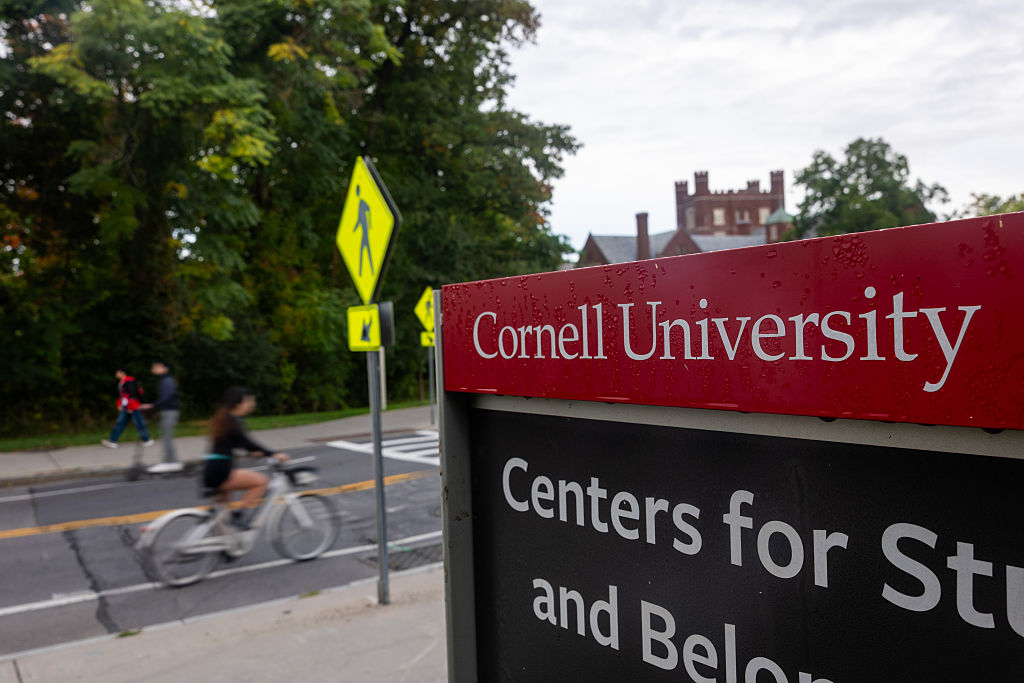
On Sept. 16, a student at Cornell University filed a lawsuit against the university, fraternities, and sororities after she was allegedly drugged and gang-raped by seven fraternity brothers in 2024. The allegations are horrifying. But just as troubling is what the lawsuit describes afterward: a survivor seeking help from the systems meant to protect her and finding, again and again, that she was failed.
In 2026, we are still asking how this happened. The Cornell case is not only about the conduct alleged in one lawsuit. It is about a broader failure of prevention, investigation, and accountability—one that survivors of sexual violence encounter far too often, on campuses and far beyond them.
For nearly a decade, I have worked alongside survivors who made the extraordinarily difficult decision to share their stories. Some became public faces of national reckonings. Many more remained anonymous, fearful of backlash, retaliation, disbelief, or the permanent consequences of public exposure. Their names did not make headlines. Their pain was no less real.
What I have learned is that survivors are often failed more than once: first, by the person who harms them, and then by the very systems that are supposed to prevent, investigate, and respond to sexual violence.
The allegations in the complaint involving Cornell's campus are deeply disturbing, and new ones continue to emerge hour by hour. Just as disturbing is how this young student was reportedly failed afterward. According to her lawsuit and news accounts, the alleged assault involved drugs, multiple perpetrators, and digital evidence. The complaint has raised serious questions about whether the case was thoroughly investigated after it was reported. That should concern every parent, student, university administrator, and public official, not simply because it occurred at an elite university, but because these failures can occur anywhere.
We must start with prevention. Consent is not a box to check. It must be voluntary, informed, ongoing, and freely given. It cannot exist when a person is incapacitated, and it can be withdrawn at any time.
So how did young men come to believe this was acceptable? As a society, we have failed to educate young people about consent, respect, and the gravity of sexual violence. That education must begin before college; we cannot wait until they arrive on campus.
College students need more than a single orientation presentation they forget by October. Schools should provide sustained, practical education about consent, coercion, alcohol and drugs, healthy relationships, and bystander responsibility.
But education and prevention alone are not enough. Institutions must have protocols to ensure justice when prevention fails.
On Sept. 18, 2026, in response to recent community outrage over how the case was handled, Tompkins County District Attorney Matthew Van Houten issued a statement explaining why his investigation resulted in a lack of criminal charges. Jane Doe’s credibility “was never in question,” he wrote, explaining that the initial sworn statement shared with the DA, which was reviewed by “multiple prosecutors and criminal investigators,” did not include the full information provided in Jane Doe’s 2026 civil suit.
Transcript records, obtained by CBS News New York, from a November 2024 interview with Cornell campus police indicate that Jane Doe told officials, "I can say with 100% confidence I was raped."
Van Houten has since stated that he was never shown the transcript. "If she had said those words, we certainly would want to have explored that more," he told CBS. "Like I said, that wasn't provided to me."
This demonstrates why the response to reports of sexual assault must be trauma-informed and evidence-based. Survivors may not disclose everything at once. Their recollections may emerge in fragments. They may hesitate, change the order of events, or struggle to articulate what happened. Those are not automatic signs of deception; they can be well-recognized effects of trauma. I have seen it firsthand, personally and professionally with Weinstein survivors.
Prosecutors and investigators handling sexual assault cases must receive mandatory trauma-informed training. They must know how to preserve evidence, interview witnesses, assess digital records, and investigate without allowing outdated assumptions about how a “credible” victim should behave to dictate the outcome.
Universities have an equally urgent responsibility. A sexual-assault report cannot be treated as a public-relations problem to contain quietly. Institutions need independent investigators, clear procedures, meaningful support for complainants, and processes that are fair to all parties while prioritizing campus safety. When an impartial process finds a student responsible for sexual assault, the consequences must be serious enough to protect the community and demonstrate that violence will not be tolerated. And Title IX policies and procedures should likewise be reviewed and strengthened to ensure that complaints are handled fairly, promptly, and effectively.
Public accountability also matters. When survivors decide that speaking publicly is right for them, they deserve legal, communications, and institutional support. This creates a powerful transformation. They are no longer isolated voices. Their experiences, amplified through journalism and public discourse, create pressure that institutions cannot ignore. They become part of a movement.
This is how cultural change happens. A survivor speaks publicly. Her story resonates. Others find courage to come forward. Lawmakers, university administrators, and prosecutors suddenly face inescapable public scrutiny. The conversation shifts from whispered allegations to national headlines, from institutional cover-ups to criminal investigations.
No survivor should have to go public to be believed. No survivor should have to become a national story to receive a competent investigation. And no college should wait for headlines to do what it was obligated to do from the start.
The alleged events at Cornell remind us that awareness alone is not action. We have spent years talking about sexual violence, consent, and institutional accountability. We know more about trauma than we did a decade ago. We have policies, resources, and legal frameworks that can make a difference.
What has been missing is the will to use them consistently.
Survivors deserve institutions that prevent harm where possible, respond effectively when harm occurs, and refuse to protect reputations at the expense of safety, dignity, and justice. We should not still be here in 2026, asking why.
We cannot continue to let survivors down.
We all must do better—institutions and individuals alike.
Hence then, the article about the system that failed cornell s jane doe was published today ( ) and is available on Time ( Middle East ) The editorial team at PressBee has edited and verified it, and it may have been modified, fully republished, or quoted. You can read and follow the updates of this news or article from its original source.
Read More Details
Finally We wish PressBee provided you with enough information of ( The System That Failed Cornell’s Jane Doe )


Also on site :
- IND vs PAK Dream11 Prediction Today Match, Dream11 Team Today, Fantasy Cricket Tips, Playing XI, Pitch Report, Injury Update- Asian Games Men’s T20I 2026, Final
- The Hollywood Sign began as a 1923 real estate ad meant to last 18 months; nine donors paid to rebuild it in 1978
- Grammy-Winning Newcomer’s Song Accused of Copying a Late Legend’s 1981 Classic: ‘Obvious and Inescapable’