
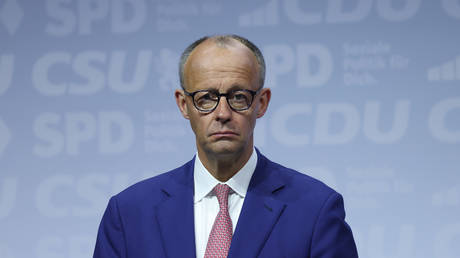
The AfD’s latest gains are only part of the story as Germany’s postwar party system fractures and stable government becomes harder to sustain
The latest state elections in Germany have confirmed a trend that is becoming increasingly difficult to dismiss. The issue is no longer the occasional success of one party or failure of another, but the gradual dismantling of a political system that for decades appeared almost permanent.
war German model rested on competition between two “people’s parties,” the Christian Democrats and Social Democrats and this conservative-social democratic axis provided stability after the upheavals of the first half of the 20th century, allowing governments to alternate while remaining within broadly accepted political boundaries.
Germany adhered to this model particularly closely, so the political landscape expanded significantly only twice, first with the rise of the Greens in the 1980s, which brought the rebellious generation of 1968 into the establishment, and then after reunification with the emergence of the Left from the former East German political tradition, but that orderly system is now breaking down.
The results in Mecklenburg-Western Pomerania and Berlin, following Saxony-Anhalt two weeks earlier, leap off the page, as the AfD won 38.2% in Mecklenburg-Western Pomerania, while the CDU fell below the 5% threshold for the first time in a German state election. In Berlin, meanwhile, the Left finished first, with the CDU second and the SPD falling to fifth place.
For the leaderships of the CDU and SPD, it’s tempting to reduce the problem to the rise of the AfD and concentrate on how it should be contained, but the deeper problem is the fragmentation of the entire electoral landscape and the disappearance of the political manageability that Germany once took for granted.
Read more Crucial regional votes in Germany: What’s at stake for Merz?Whether the AfD itself is capable of governing effectively remains another question, given the party has never governed a German state, while the established parties continue to reject coalitions with it.
Germany is therefore moving towards something resembling the politics of smaller European countries such as Belgium, the Netherlands, or Austria, with fragmented parliaments and increasingly complicated multiparty coalitions.
There’s nothing inherently unworkable about such a system and plenty of European countries function this way, but Germany is different. Its political culture has traditionally valued predictability and institutional continuity, but if fragmentation now spreads inside the CDU and SPD themselves, the consequences will extend beyond election arithmetic.
Germany isn’t particularly comfortable with political upheaval and when Germany becomes politically nervous, its neighbors have historically had reason to pay attention.
Hence then, the article about germany was built for stability so what happens when it disappears was published today ( ) and is available on Russia Today ( News ) The editorial team at PressBee has edited and verified it, and it may have been modified, fully republished, or quoted. You can read and follow the updates of this news or article from its original source.
Read More Details
Finally We wish PressBee provided you with enough information of ( Germany was built for stability, so what happens when it disappears? )


Also on site :
- Sean Hogan’s ‘The Dark Gets In’ Boarded for Worldwide Sales by Blue Finch Films Ahead of Beyond Fest Bow (EXCLUSIVE)
- R.E.M. Reissues Its Second Album 42 Years Later — And the Limited-Quantity Pressing Could Sell Out Fast
- Inter Miami vs San Diego: When and Where to Watch Messi in MLS 2026