
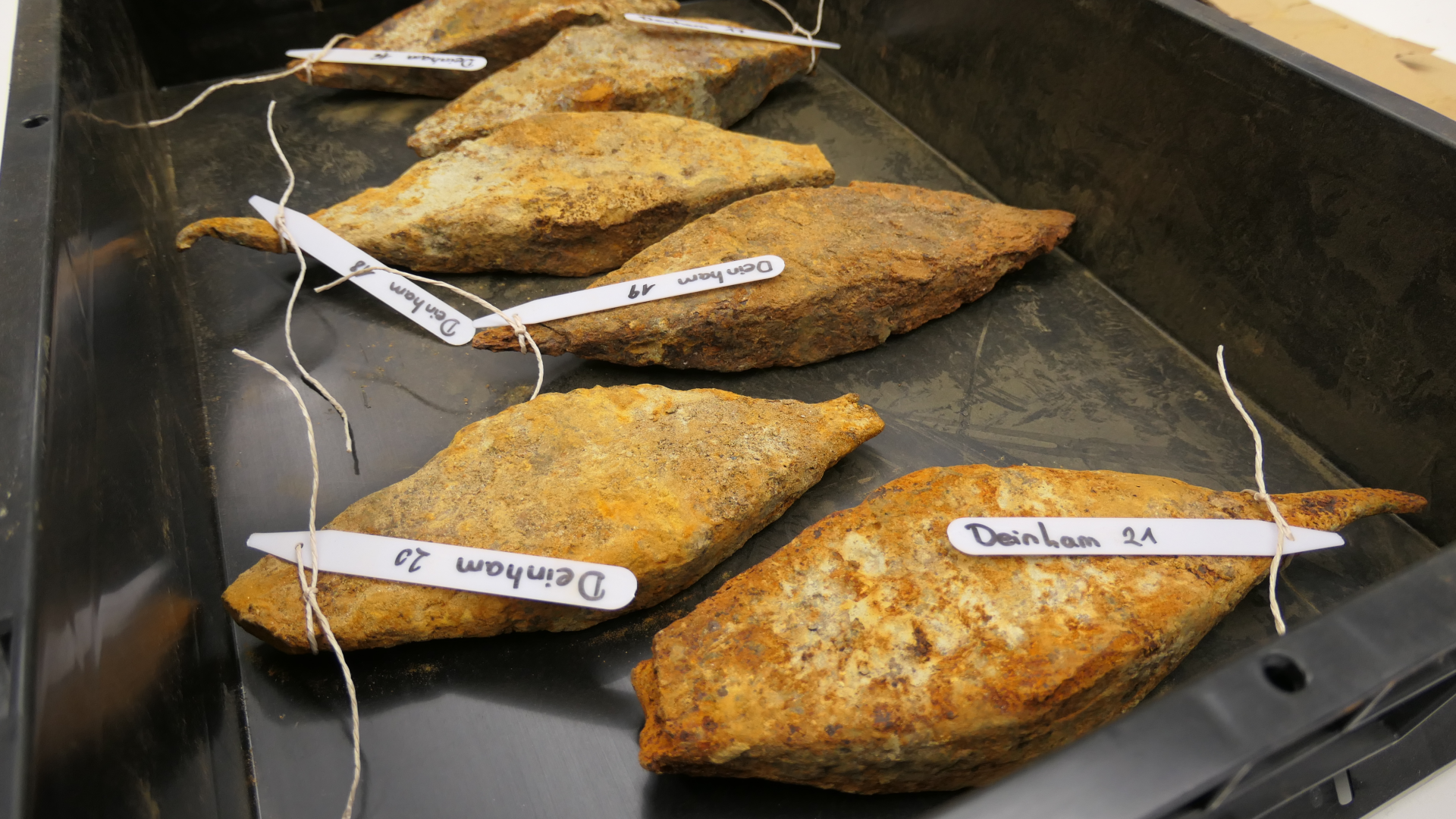
More than two millennia ago, a ship carrying a wealth of iron sank in the Danube River in what is now Austria. Archaeologists have identified the "rusty treasure" as a collection of 500 iron bars — the largest cache of ancient iron ever discovered in Europe and enough metal to equip an army.
The assortment was discovered in 2019, when workers who were extracting gravel from the river near the village of Deinham spotted a few unusual double-pointed iron objects and reported them to the Austrian monument authority.
"It is nothing short of a minor miracle that the largest mass find of prehistoric iron bars in Europe did not end up at scrap dealers," Peter Trebsche, an archaeologist at the University of Innsbruck in Austria, said in a statement.
In a study published Monday (Sept. 21) in the journal Antiquity, Trebsche and co-author Marion Berranger, an archaeologist at the University of Technology of Belfort-Montbéliard in France, detailed their analysis of the extraordinary collection of ancient iron, which dates to the third to second centuries B.C.
Archaeological divers examine a gravel pit where 500 ancient iron bars were discovered. (Image credit: Heinz Gruber, Bundesdenkmalamt)From the hundreds of iron fragments recovered from the gravel heaps, Trebsche and Berranger identified 193 complete iron bars and 307 partial bars, for a total of at least 500 bars that were lost centuries ago in the waters of the Danube. On average, the complete bars were 11.2 inches (28.5 centimeters) long and around 4.5 pounds (2 kilograms). Combined, the collection weighed around 2,200 pounds (1 metric ton).
But the Deinham iron bars did not represent finished products. Rather, the double-pointed, semifinished bars — sometimes called ingots — were rough-shaped, intermediate goods that a blacksmith eventually would have forged into other objects.
The semifinished iron bars would have been enough to forge approximately 500 swords, Trebsche said in the statement. "The iron from Deinham would have been sufficient to equip a large group of warriors with weapons," he said, or to produce up to 8,000 iron nails.
Because the iron was found during gravel extraction with a large bucket excavator, the original context of the archaeological find was destroyed. This erased archaeologists' opportunity to figure out how the metal ended up in the Danube.
RELATED STORIES5 'extremely rare' iron shackles discovered in France highlight Celtic slave trade 2,300 years ago16th-century gallows and dozens of skeletons discovered in FranceUnusual burials of Celtic 'warriors' discovered in France point to violent deaths
"The possibility of ritual deposition cannot be excluded," the researchers wrote in the study, but "most studies on river finds have concluded that iron bars are losses incurred during transport." Before the invention of trains, most ancient cultures transported heavy goods via waterways.
If the iron bars were indeed lost in a shipwreck, they were probably produced somewhere upstream of the archaeological site, the researchers noted. Similar iron bars have been found in Manching, Germany, about 125 miles (200 kilometers) away, so it is plausible that the Deinham bars were forged in Bavaria, the team wrote in the study. Researchers are currently analyzing traces of elements in the bars, which may help to clarify their geographical origin.
"It is incredible that such a large quantity of iron was transported at once and was available in a single exchange transaction in the Late Iron Age," Trebsche said. "This finding demonstrates the increased capacities of iron production that were reached in the 3rd/2nd century BC in the Danube region."
Can you identify these historical objects of war? Test your smarts with our weapons of the world quiz!
Hence then, the article about nothing short of a minor miracle rusty treasure found in the danube is full of 2 000 year old iron bars that could equip an entire army with weapons was published today ( ) and is available on Live Science ( Middle East ) The editorial team at PressBee has edited and verified it, and it may have been modified, fully republished, or quoted. You can read and follow the updates of this news or article from its original source.
Read More Details
Finally We wish PressBee provided you with enough information of ( 'Nothing short of a minor miracle': 'Rusty treasure' found in the Danube is full of 2,000-year-old iron bars that could equip an entire army with weapons )


Also on site :
- Greg Evigan Shares Sweet ‘My Two Dads’ Throwback With Paul Reiser and Staci Keanan: ‘I Adore These 2 People!’
- Carole King Wrote ‘Will You Love Me Tomorrow’ at 18 and It Became the First No. 1 Song by Any Girl Group; She Sang It 11 Years Later on Tapestry
- Aaron Sorkin Says Jeremy Strong Treated His Co-Stars ‘The Way He Imagines’ Mark Zuckerberg Treats People While Shooting ‘The Social Reckoning’