
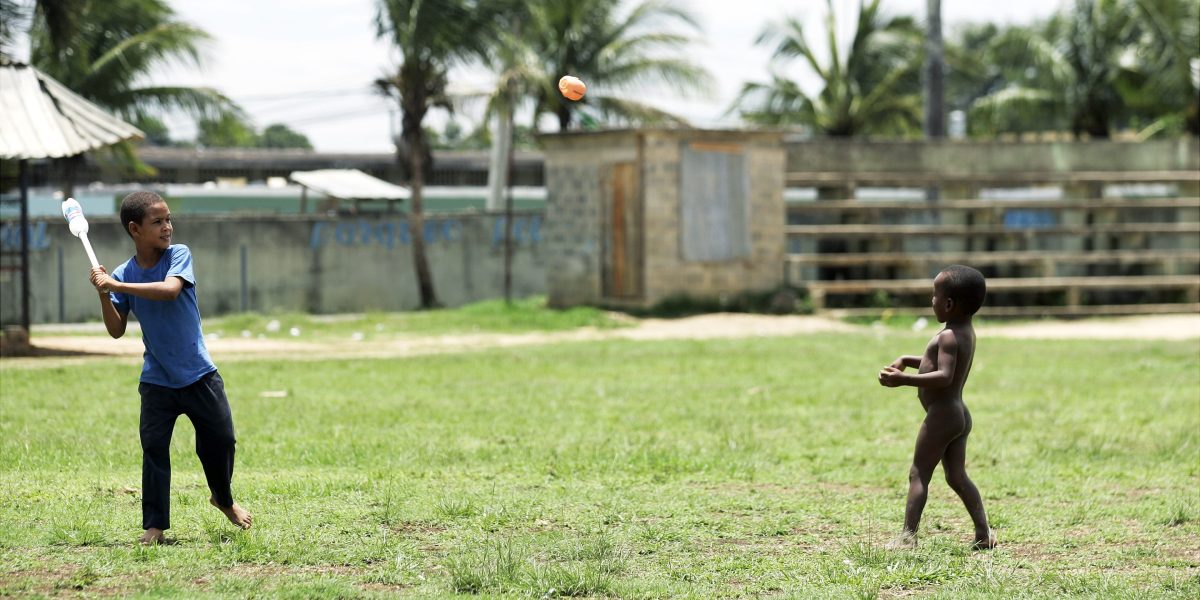
Baseball is just as much a Dominican sport as it is an American one. For generations, the MLB has relied on the small island country for a steady stream of young talent. Now, a new investigation by ProPublica may explain why: boys barely old enough to swing a bat are reportedly being promised multimillion-dollar deals. They’re training for professional careers all before they’re legally eligible to sign contracts, which often leave them vulnerable if they do succeed in the big leagues.
The Dominican Republic has become baseball’s largest talent pipeline outside the U.S. In 2025, 144 players born in the country appeared in the major leagues, accounting for roughly 10% of MLB players. Baseball America calculates Dominican-born players accounted for 10.5% of MLB plate appearances that season through September.
The country’s importance begins well before the players even reach the majors. MLB’s international signing system generally doesn’t allow teams to sign international amateurs until they are 16 (players are eligible if their 16th birthday falls before September 1 of the year they sign). But reports from ProPublica allege that teams routinely negotiate informal agreements with Dominican prospects years before they are eligible to sign.
ProPublica claims families and young players would receive advanced payments in handshake agreements before their signing bonuses arrive—often carrying interest rates that would be illegal under U.S. usury laws. One player profiled by the investigation later was found to have received about $2,500 at a rate of 30% every two weeks.
And the repayment also carries over to big league money, according to the report. Up to 35% of signing bonuses from major league clubs are allegedly fair game for these lenders, and the contracts signed by the young players can restrict their ability to step away from baseball—according to ProPublica’s report.
And this isn’t new: a whistleblower made the same claims to the FBI in 2020, according to USA Today. The Department of Justice previously investigated the recruitment system in 2018, finding documents of multiple MLB teams involved in a “mafia”-like system in the country.
The FBI did not immediately respond to a request for comment from Fortune regarding its investigation.
Baseball is everything
MLB teams sign roughly 450 Dominican prospects each year, and fewer than two-thirds make it to the lowest levels of the U.S. minor leagues. From the minor leagues, roughly 10% appear in an MLB game.
The Dominican pipeline often sees children spend much of their adolescence preparing for a career that may never materialize. And many see education fall by the wayside as the young players move between academies and training.
The issue has not gone unnoticed: the MLB has acknowledged that the Dominican system needs reform—League Commissioner Rob Manfred has argued for years that an international draft could eliminate the early-deal system by preventing teams from knowing which prospects they will be able to sign until a formal draft takes place.
“My own view—and it’s been this view for a long time—is that sooner or later, it would be better if players, no matter from where they hail, enter the game through the same type of system, and that is a draft system,” Manfred said in a press release from 2016.
But an international draft has faced opposition from both players and major league clubs. The MLB Players Association argued it would reduce the players’ ability to choose their teams and eliminate bidding wars that drive up bonuses—and teams want the freedom to scout international prospects. And for the fans, they appear split—many agree with both sides: an international draft can limit player freedom, but a system without it can create unchecked exploitation. Many even believe an international draft won’t solve the problem.
The issue has remained unresolved since the idea’s inception, and the league has reintroduced the international draft for negotiation in June.
“The discussion of an international draft is about how to divide players,” Mets shortstop Francisco Lindor—an alternate association player representative of the Players’ Association executive subcommittee—posted on X. “I’ve been in bargaining sessions for months…This issue is bigger than just Latin players or amateur players. It’s about all players and about the future of the game. We need to get it right.”
The MLB and its Department of Investigation did not immediately respond to a request for comment from Fortune.
We’ve already seen the ramifications
The financial consequences from the “predatory” contracts given to young prospects has already been seen. San Diego Padres star and Dominican Republic native has become one of the most prominent examples of what can happen to a young player who trades their future for the present.
When Tatis Jr. was 18 and playing in the minor leagues in 2017, he signed an agreement with Big League Advance—receiving $2 million in exchange of 10% of his future professional baseball earnings.
Tatis eventually became one of baseball’s highest-paid players, however. In 2021, he signed a 14-year, $340 million contract with the Padres. Under the BLA agreement, that contract potentially put $34 million on the hook for repayment to the company. Tatis stopped making payments in 2024 and sued BLA in 2025, arguing the company had used exploitative and predatory practices against young athletes, according to court documents.
“As unlicensed finance lenders, defendants have built a business model that preys on young, financially unsophisticated athletes,” the filing read, “offering lump-sum advances in exchange for significant portions of their future earnings.”
The star’s legal fight failed, however. In May 2026, a judge rejected his effort to overturn an arbitration decision requiring him to pay BLA $3.74 million in back payments, interest and other costs. Reuters reported that Tatis had plans to appeal the result, and the court’s proceedings included findings relevant to whether BLA could be considered a lender under California law.
Fernando Tatis Jr. and his agent did not immediately respond to a request for comment from Fortune.
That’s just the tip of the iceberg
And the behind-the-curtain deals to get around MLB’s rules are just the beginning. The Dominican farm system has had multiple scandals before—ranging from PED use in children and age and ID fraud. ESPN reported that a 14-year old Dominican prospect had died in April after allegedly being injected with performance-enhancing drugs from a baseball academy—and another Dominican prospect was suspended by the MLB in August for faking a birth certificate to appear two years younger.
According to Baseball Almanac’s database of baseball players who have received suspensions from the MLB, over 52% of all PED suspensions in the league’s history have been enforced on Dominican-born players.
This story was originally featured on Fortune.com
Hence then, the article about the mlb and its dominican pipeline is selling false promises and shady contracts to children as young as 11 was published today ( ) and is available on Fortune ( Middle East ) The editorial team at PressBee has edited and verified it, and it may have been modified, fully republished, or quoted. You can read and follow the updates of this news or article from its original source.
Read More Details
Finally We wish PressBee provided you with enough information of ( The MLB and its Dominican pipeline is selling false promises and shady contracts to children as young as 11 )


Also on site :
- I Happily Paid All of My Girlfriend’s Housing and Travel Costs for Two Years. Then I Learned Something Outrageous.
- Iconic Singer-Songwriter, Who Played Alongside Paul Simon and David Bowie, Disappeared From the Public Eye for Almost 20 Years
- Cruz Azul vs Inter Miami: Kickoff Time, Channels and Live Streaming Details